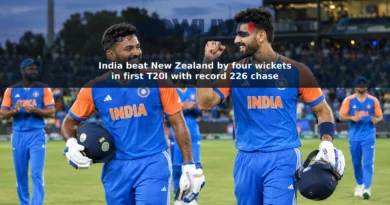
Sanju Samson’s 33-Ball 67 Powers India Past New Zealand in T20 Opener

India began its five-match T20 international series against New Zealand with a four-wicket victory, with Sanju Samson providing the innings’ defining burst. Samson scored 67 from 33 balls, including eight fours and four sixes, according to match coverage. His pace through the middle of the chase helped India keep the required rate within reach and gave the opener an attacking shape. A successful first match does not settle a series, particularly in the T20 format, where a short passage of play can swing a result. It does, however, give India a positive platform and offers selectors fresh evidence about combinations, roles and how quickly the batting order can adapt under pressure.
A fast innings changed the chase
Samson’s 33-ball 67 was the innings’ standout contribution. The number of deliveries matters as much as the final score in a T20 chase: a batter who scores quickly can reduce the pressure on partners and change how the fielding captain uses bowlers. His eight fours and four sixes indicate that the innings combined boundary access with a high scoring rate. That does not mean every attacking shot was low risk, and it does not explain the entire result by itself. Partnerships, running between the wickets, wickets in hand and the target all affect the shape of a chase. Samson’s innings was the clearest individual driver in a team result that still required contributions from the rest of the batting line-up.
Why the opening game matters
The opener sets a reference point for the remainder of a five-match series. A win gives the team one point in the sequence and lets management evaluate what worked under match conditions, while the losing side can adjust its plans before the next contest. India’s four-wicket margin suggests the result was not a runaway victory, and close finishes often give teams more to review than a one-sided game. Captains may look at powerplay options, batting-order flexibility, boundary protection and the use of spin or pace in the middle overs. Those tactical changes can matter more than the emotional narrative of a series lead.
T20 cricket rewards flexible roles
In the shortest international format, players are expected to solve several problems within a small number of overs. Openers may need to attack early while preserving wickets, middle-order batters may face an elevated required rate, and finishers often need to produce boundaries in carefully defined situations. A successful innings can depend on recognising when to take on a matchup and when to rotate strike. Samson’s brisk contribution gives India another data point about his ability to influence a chase. The sample remains one match, however, and teams generally assess players over role-specific situations rather than a single headline score.
New Zealand’s response will shape the series
New Zealand have the opportunity to study the bowling plans India faced and the scoring areas Samson found available. Teams can alter their fields, lengths and pace variations between matches, but a tactical change is only useful if it holds up under conditions on the day. New Zealand’s batting approach in the next game will also matter: a total can look competitive on paper and still prove vulnerable if the opposition manages the chase well. The opener therefore provides both a result and a set of clues. Fans should be careful about declaring a series decided from one performance, especially when both teams can change personnel and plans.
Selection questions after an injury update
Coverage also reported that Ishan Kishan was ruled out of the second T20 international with a low-grade right adductor strain, opening a possible route for Vaibhav Sooryavanshi to enter the playing XI. That is a separate selection development from the first-match result and should be treated as an update rather than a confirmed replacement until the team announcement. Injuries can alter a planned batting order and role allocation even when the affected player’s absence is expected to be temporary. A substitute must also fit the match situation and the team’s balance. The official lineup before the next match is the reliable way to know how India responds.
What the scoreline does not tell fans
A winning result can conceal areas for improvement. Analysts may review dot-ball percentages, boundaries conceded, dropped chances, use of the death overs and how the team handled pressure after losing wickets. The final score does not tell whether a bowling plan was consistently effective or whether the chase benefited from a favorable matchup. Likewise, an expensive over does not necessarily mean the bowler performed poorly throughout. Match analysis works best when it connects a moment to the overall context: field restrictions, batters at the crease, pitch behavior and the target remaining. Samson’s score deserves attention, but it should sit within a broader account of the game.
How to follow the five-match contest
For readers following the series, the most useful checkpoints are the confirmed squad, toss and playing XI, the powerplay score, wickets in hand at the midpoint, and the runs needed in the final overs. Those markers help explain a T20 match without reducing it to a sequence of viral shots. The next fixture can bring different conditions and a different matchup, so the opening game’s pattern may not repeat. Scorecards and official team updates also help separate confirmed selections from pre-match speculation. With India leading after the first game, the series now becomes a test of adaptation as much as execution.
The takeaway from the opener
India’s four-wicket win is an encouraging start, and Samson’s 67 supplies a clear headline for fans. The series remains open, though, and one fast innings cannot guarantee continued success. The next match will reveal whether New Zealand can blunt the same scoring options and how India adjusts if personnel change. For a T20 side, consistency comes from repeatable decision-making under changing conditions, not from expecting one player to deliver every time. The best reading of the opener is straightforward: India won the first contest, Samson gave the chase its most explosive push, and both teams now have concrete evidence to use when preparing for the next game.