Israel Votes in High-Stakes Election as Netanyahu Faces Eisenkot and Turnout Surges
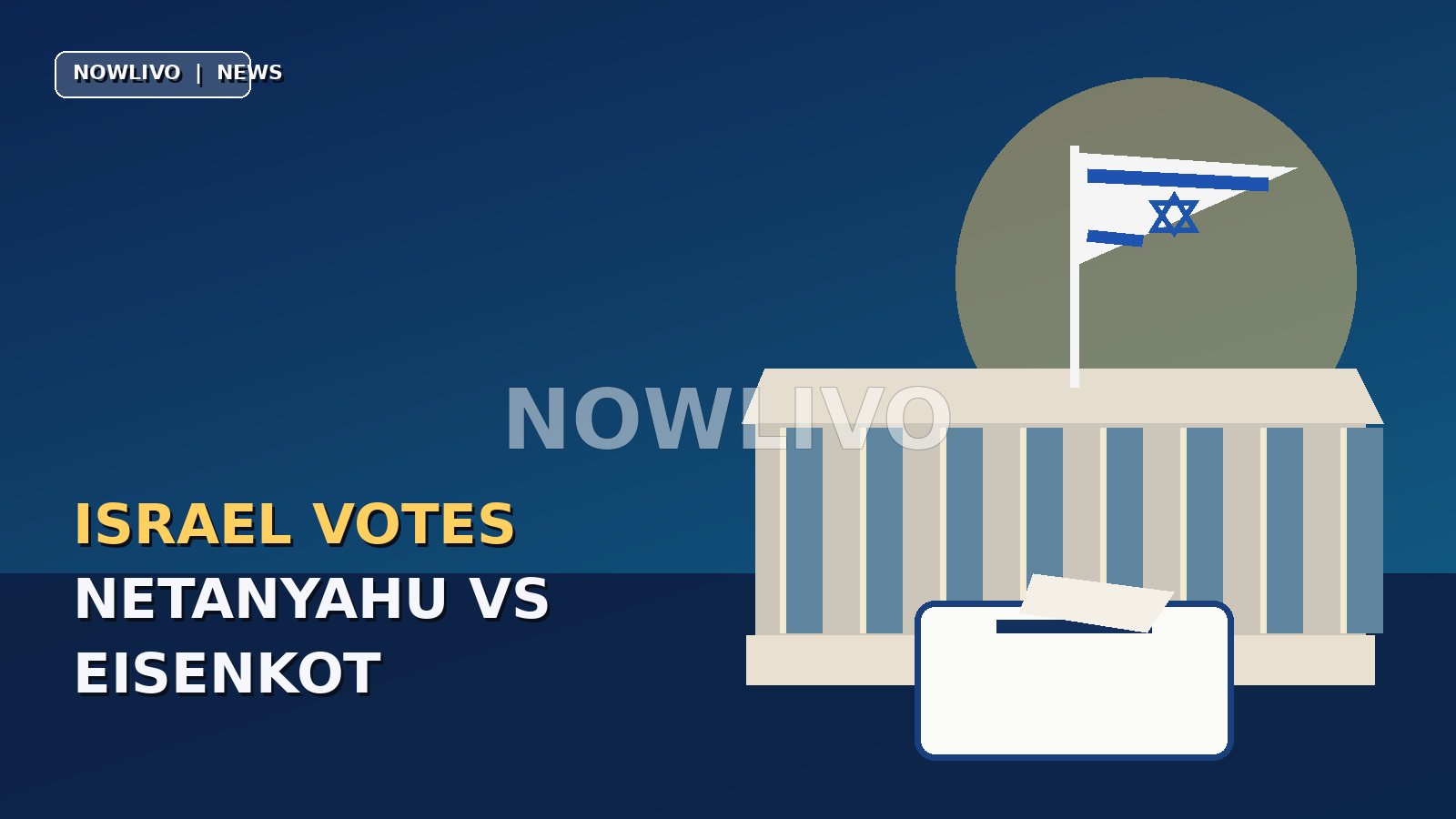
Israelis voted on Tuesday, October 27, in a national election that could reshape the country's leadership after years of war, security crises and political division. Reuters reported unusually rapid early participation, with turnout reaching 16.7 percent during the first three hours of voting, the fastest comparable early pace since 1981. Prime Minister Benjamin Netanyahu faced a major challenge from former military chief Gadi Eisenkot. The central question was not only which party would win the most seats, but whether either side could assemble a workable governing coalition in the 120-seat Knesset.
The election is the first national vote since the Hamas-led attacks of October 7, 2023, and the subsequent conflicts in Gaza, Lebanon and Iran. Those events have reshaped voters' priorities and made security leadership a central campaign issue. Netanyahu has defended his record and argued that he is best positioned to confront Israel's enemies. Opponents have focused on accountability for security failures and the direction of the country's wartime decisions. The result will reflect a complicated mix of those concerns rather than a single yes-or-no referendum on one policy.
A fast start at polling stations
The reported 16.7 percent turnout in the opening three hours indicates strong early engagement. It does not by itself predict the final result, because voting patterns vary by community, time of day and party organization. High turnout can help different blocs for different reasons. Analysts will be watching whether the early pace continues and how participation differs among Jewish and Arab voters, secular and religious communities, and areas where party competition is especially close.
Reuters reported that Arab citizens' participation could be particularly consequential. The composition of the next Knesset may depend on small shifts in turnout among several communities, especially because Israel's proportional representation system produces multiple parties rather than a simple two-party contest. A party's success in the popular vote does not automatically translate into control of government. Negotiations after polling can be as important as election-night rankings.
Netanyahu's argument and the opposition challenge
Netanyahu, Israel's longest-serving prime minister, has emphasized his experience, nationalist priorities and relationships with foreign allies. He has also highlighted support from U.S. President Donald Trump, who publicly backed him during the campaign. His opponents argue that his government should face scrutiny for the failures preceding the October 2023 attacks and for decisions made during the wars that followed. Both the security record and the future course of regional relations have become defining themes.
Eisenkot, a former chief of staff of Israel's military, has sought to present himself as a credible alternative on security. Reuters reported that he criticized the government's handling of the Gaza campaign and pledged a different approach to dismantling Hamas's military and governing capacity. Those are campaign commitments, not achievements that have already occurred. Voters must weigh promises against experience, the likely makeup of coalition partners and the practical constraints facing any incoming government.
The coalition puzzle could outlast election night
A parliamentary election can produce a clear ranking of parties without producing a governing majority. In Israel, a coalition generally needs support from at least 61 of the Knesset's 120 members. Smaller parties can therefore gain leverage over policy and cabinet positions. Reuters noted that neither Netanyahu nor Eisenkot had an easy path to a majority before voting. If negotiations fail, Netanyahu could remain caretaker while the political system searches for another arrangement or moves toward a further election.
That uncertainty is especially important for readers following live results. An early projection showing one bloc ahead is not the same as a formal government being formed. Exit polls, partial counts, final seat allocations and coalition agreements are separate stages. Coverage should identify which stage a figure represents and avoid declaring a new prime minister before the necessary political steps have occurred.
Foreign policy and domestic accountability
The campaign has unfolded against a backdrop of international criticism, regional instability and debate about Israel's diplomatic future. Reuters reported that the main camps both oppose a two-state solution, although they differ over settlement-related issues and the conduct of government. Netanyahu's ties to Trump are a campaign asset among supporters but can also sharpen debate over whether Israeli decisions should depend on a particular U.S. administration.
For many voters, accountability remains just as important as geopolitics. Calls for a national inquiry into the October 2023 security failures have become a dividing line, with opposition figures promising scrutiny and Netanyahu's government resisting certain proposed approaches. The election may change the political balance around that demand, but a vote alone does not establish legal responsibility or settle contested historical claims.
The strongest immediate story is the unusually brisk turnout in a highly consequential election, not an invented victory announcement. Final results and coalition talks will determine whether Israel experiences a change of leadership or another period of political deadlock. Until official tallies are available, the most accurate coverage distinguishes voter participation, campaign claims and coalition arithmetic from the outcome that has yet to be established.