Jamia Students End Protest as University Sets 2027 Union Election Timeline
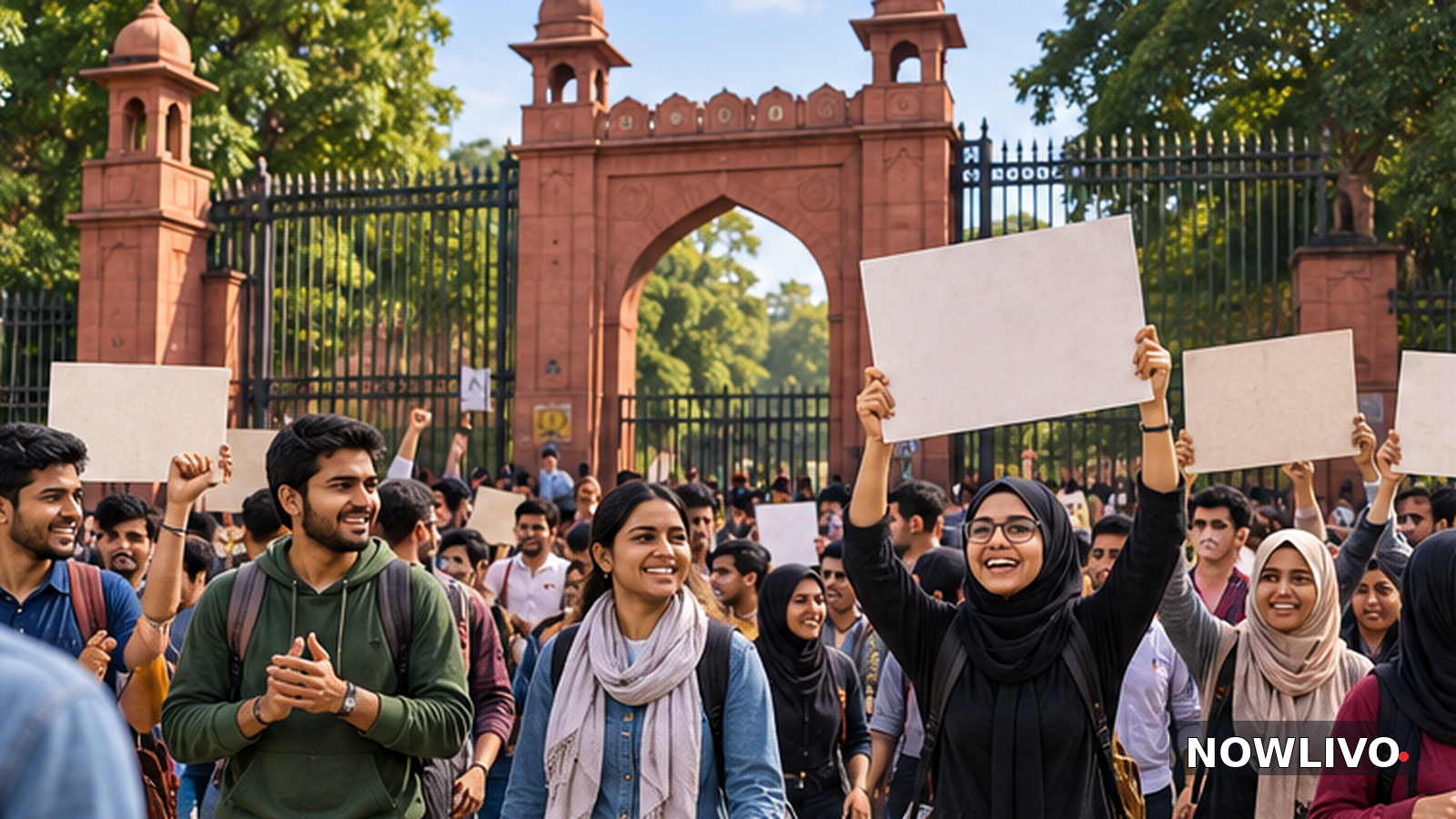
A prolonged confrontation over student representation at Jamia Millia Islamia has reached a decisive turning point. On Thursday, October 29, the New Delhi university agreed to a dated process for restoring its students’ union, prompting demonstrators to end an agitation that had included hunger strikes and disrupted campus activity. The change is not an immediate election. It is a commitment to approve the union’s constitution by May 15, 2027, and conduct voting within approximately six weeks of the next academic session beginning in July. For students who had rejected earlier promises without a firm timetable, those dates were the central breakthrough.
The university’s latest order also addresses the fate of students disciplined during the agitation. According to reporting on the registrar’s announcement, show-cause notices and disciplinary proceedings linked to the protests are to be withdrawn, alongside suspension, expulsion and campus-entry restrictions. That commitment matters independently of the election schedule. Students had argued that they could not reasonably end their campaign while some participants still faced sanctions for taking part. The revised settlement therefore links two questions that had been treated separately: when representation would return and whether protesters would be allowed to resume university life without pending penalties.
Why the latest agreement succeeded where the earlier one failed
An October 26 proposal had described elections taking place after a constitution was approved, but it did not settle when that approval would happen. Protesters said an open-ended sequence was not enough after years without a union. Some also objected to conditions concerning apologies and the removal of social-media material. The subsequent negotiations focused on turning general assurances into dated steps. The October 29 announcement supplies a deadline for the constitution and ties the poll to the opening of the next academic year. It remains possible that administrative details will need clarification, but the central calendar is now public.
The students’ union has been absent since 2006, a period long enough that many current students were children when the last elected body ceased functioning. Administrators have previously cited campus violence and legal complications in explaining the suspension of elections. Student groups have challenged the idea that those circumstances justify an indefinite absence of representative institutions. That history made the current dispute about more than a single vote. It became a test of whether students could secure a durable process for representation rather than another statement of intent that could be postponed without a visible deadline.
What happens next on campus
The next formal milestone is the union constitution. It will need to define the election machinery, who can stand, who can vote and the rules for campaigning and dispute resolution. The reported plan sets May 15 as the date by which that document is to be approved and implemented. Elections are expected roughly six weeks after the academic session starts, placing them around August 2027 if the anticipated July start holds. That is an indicative window rather than a polling date printed on a ballot. A final election notice will still be needed for nominations, voting arrangements and the result.
Academic operations are also part of the immediate recovery. The university indicated that in-person classes and examinations would resume after the Diwali break, around November 8, following a period of online arrangements during the unrest. Students returning to campus will be looking not only for ordinary timetables but for written implementation of the disciplinary amnesty. A promise in a settlement has practical meaning only when relevant notices, restrictions and records are actually updated. Both sides now have an interest in preventing the reopening of a dispute that has already absorbed weeks of campus attention.
The wider significance of a student-union election
Student unions can offer an organised channel for complaints about academic conditions, fees, accommodation, safety and access to campus services. They can also become contentious political arenas, which is why election rules and institutional neutrality matter. The challenge for Jamia will be to build a structure that allows campaigning and criticism without repeating the confrontations that administrators cite from the past. Students will judge the outcome by whether the new body has a meaningful mandate and whether ordinary students, not only established groups, can participate on fair terms.
The latest development also follows similar demands for union elections at other universities, making it relevant beyond Jamia’s gates. That does not mean all campuses have the same legal position or history. Jamia’s arrangement is a specific agreement between its administration and protesting students. Its wider importance lies in the principle of converting a disputed demand into an accountable timetable. Supporters see that as a victory for sustained collective action; university officials now face the more technical task of delivering a workable electoral framework.
By early Friday, the immediate story was therefore no longer simply that students were protesting or that the administration had offered talks. The concrete news is that an agreement with dates has been announced and the protest has ended. The remaining questions are measurable: whether the constitution is completed by May, whether disciplinary actions are fully revoked and whether an election is held within the promised window. Those milestones will determine whether October 29 becomes the end of a long dispute or merely the beginning of another round of arguments over implementation.