Kiren Rijiju and Naseeruddin Shah Clash Over “Dimagi Naxal” Video and Jamia Protests
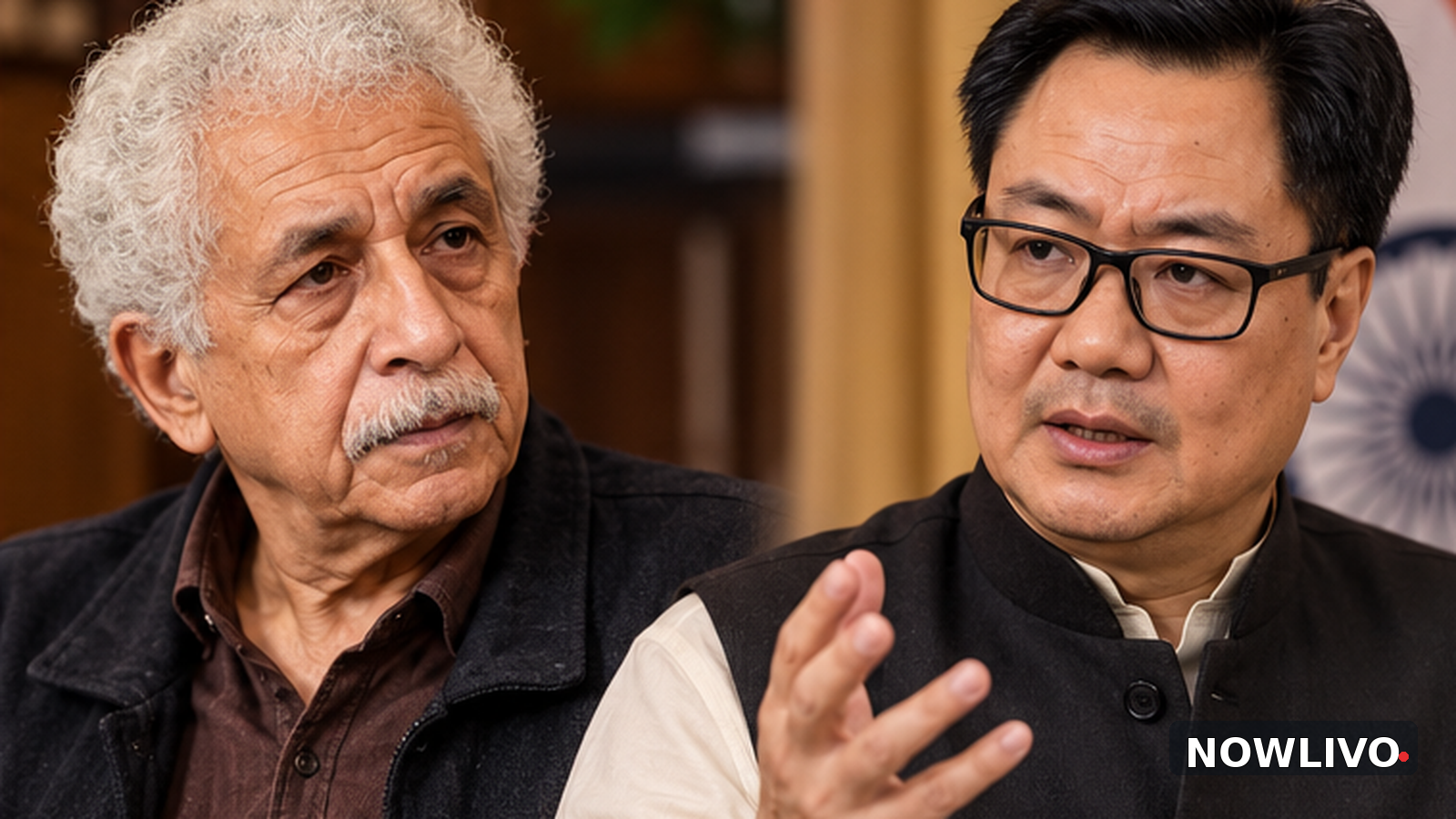
A political argument over student dissent has become a high-profile public clash between Union minister Kiren Rijiju and veteran actor Naseeruddin Shah. The dispute intensified on October 29 after Rijiju criticised a video in which Shah supported students seeking restoration of the Jamia Millia Islamia students’ union and referred to himself as a 'dimagi naxal'. The exchange spread quickly because it joined three subjects that often command intense attention in India: a recognisable film personality, a senior government figure and the question of how authorities respond to campus protest. Neither side’s remarks should be mistaken for a legal finding about the other.
Shah’s video was framed as support for students who had been protesting at the Delhi university. He used a provocative political label to question the way dissenters are described and to criticise the treatment of young people and the education system. Rijiju answered in a public social-media post, saying he had previously respected the actor but regarded his views as harmful to democracy. The minister’s words were a forceful political judgment, not an announcement of criminal charges or an official designation. The distinction matters because language used in a heated exchange can easily be repeated online as if it describes a formal status.
How a campus dispute became a national controversy
The immediate backdrop was Jamia’s long-running absence of an elected students’ union. Students had mounted a sustained campaign, including hunger strikes, seeking a definite restoration timetable. The university had previously offered a process without dates that protesters considered adequate. Against that background, Shah’s intervention carried a recognisable message: a public figure was using his platform to endorse the students’ demand. Rijiju’s response shifted attention from the administrative mechanics of an election to the broader political meaning of the actor’s rhetoric.
There is an important chronological development. Later on October 29, Jamia administrators announced a timeline for approving a union constitution and holding elections in 2027, and protesters celebrated an agreement. That settlement is a separate piece of news from the Shah–Rijiju exchange. It does not resolve their disagreement about political language or criticism of government. But it changes the context in which the argument is being read: the students’ practical demand now has an announced administrative route, even as the public quarrel about dissent continues.
Why the wording has become the story
Political labels often carry more emotional force than policy details. In this case, Shah’s self-description was presented as a deliberate response to the labels he believes critics of the government face. Rijiju treated the same language as evidence of views he strongly opposes. Supporters of the actor may see satire and a defence of democratic criticism; supporters of the minister may see rhetoric that unfairly maligns public institutions. Those are competing interpretations of publicly made statements. Reporting them accurately does not require adopting either interpretation as established fact.
The episode also illustrates how easily short clips can escape their original setting. A phrase detached from a longer video may appear to mean something different when paired with a reaction post. Readers trying to understand the exchange should distinguish the actor’s own description of his position from the minister’s criticism of it. Neither a viral caption nor a screenshot can substitute for the sequence of statements. The reporting available on October 29 establishes the video, the minister’s reaction and their link to the Jamia protests; it does not establish a broader private dispute between the two men.
What the row means for students and public figures
For students, the risk of the celebrity controversy is that the practical questions disappear from view. A student-union constitution still needs to be approved, election rules need to be written and disciplinary action arising from the protests needs to be withdrawn. Those tasks will determine whether the agreement works. A high-profile argument may amplify the underlying demand, but it can also turn a campus governance question into a symbolic fight that is difficult to resolve. Students and administrators will have to work through the institutional details regardless of which public figure dominates the headlines.
For actors and other cultural figures, the exchange is another example of the attention that follows political commentary outside their professional work. Speaking on a university dispute is not the same as acting in a film, and the audience may include people who know the speaker chiefly through cinema. Ministers, meanwhile, face scrutiny over whether their responses address the underlying issue or mainly the personality making the criticism. Both have the right to express views, and both can expect those views to be challenged publicly.
As of the latest reporting, this is a dispute conducted through public statements, not a court proceeding between Shah and Rijiju. The fresh news is the minister’s explicit reaction to the actor’s video, coupled with the rapidly changing Jamia situation. Any further response from Shah, clarification from Rijiju or new official action would represent a separate development. Until then, the most accurate description is a sharply worded political disagreement over a student protest and the language of dissent.