Japan and US Launch Keen Sword Drills Near Southwestern Islands
A large military exercise begins
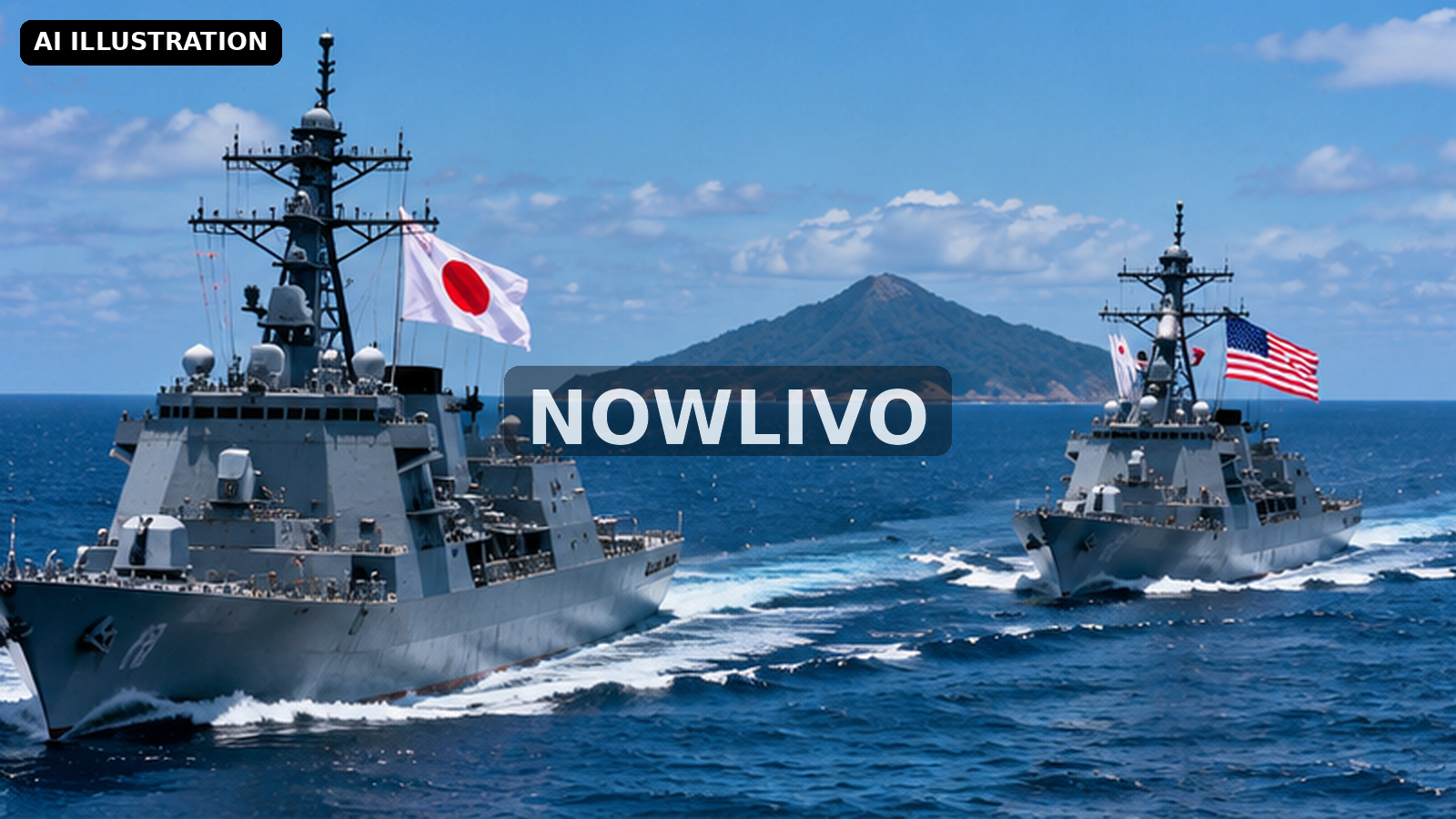
Japan and the United States have begun Keen Sword 27, a major joint military exercise focused on the defence of Japan’s southwestern islands. The Associated Press reported on October 19 that the drills involve tens of thousands of Japanese and American personnel and participation from several other partner countries. Activities include amphibious operations, air and missile defence, logistics and medical evacuation. The exercise is a planned training event, not evidence that armed conflict has started. Its significance lies in the capabilities being practised and the messages governments send through their participation.
The reported scale includes approximately 45,000 Japanese troops and 12,000 US personnel, with seven additional nations involved. Some participating countries are joining for the first time, reflecting wider security cooperation. Such exercises are designed to test communication, command structures and practical movement of forces under simulated pressure. The numbers help convey scale, but they do not reveal every operational detail or the readiness of units outside the exercise. Training success and real-world performance are related but not identical.
Why the geography matters
The southwestern Japanese islands lie near strategically important sea routes and Taiwan, making them central to regional defence planning. Remote islands pose logistical challenges because equipment, fuel, medical supplies and reinforcements must move across water and sometimes through contested airspace. Amphibious landings and casualty evacuation drills address those practical difficulties. Exercises in such locations can also be watched closely by neighbouring governments, which may interpret them through the lens of their own security concerns.
Japan’s security policy has evolved as it responds to military activity by China, North Korea and Russia. The United States maintains a treaty alliance and a substantial military presence in Japan. The drills therefore sit within an established relationship rather than representing a sudden new alliance. The presence of European and Indo-Pacific partners illustrates how security cooperation can extend beyond immediate neighbours. It does not mean every participating state has agreed to the same response in a future crisis.
Equipment and public debate
The AP report describes new systems being used in the training, including Japanese coastal-defence missiles and American mobile anti-ship and air-defence equipment. These systems are relevant because defending islands requires detecting threats and denying access across large maritime spaces. Their deployment during an exercise is not the same as their use in combat. Claims about what they could achieve in an actual conflict depend on factors that public demonstrations cannot fully establish, including intelligence, logistics and adversary responses.
The exercise also unfolds amid local debate about US bases, especially in Okinawa. Residents may support deterrence while objecting to noise, safety risks or the social consequences of a large military presence. Those concerns deserve separate attention from the governments’ strategic arguments. A credible account of regional security should include both the stated purpose of military readiness and the costs borne by communities that host facilities and training activity.
What to watch during the drills
Keen Sword 27 is scheduled to run through October 29, according to the report. Public updates may describe the completion of particular exercises, participation by partner forces and any safety incidents. Such announcements should be read as descriptions of training objectives and outcomes, not as predictions of a future war. Regional governments may issue statements in response, but rhetoric alone does not establish that an escalation is imminent. Concrete changes in force posture or official policy would be more consequential.
The October 19 launch highlights the balance Japan and the United States seek between deterrence and avoiding miscalculation. Training can improve coordination, yet highly visible exercises can also intensify diplomatic tensions. The most useful coverage will explain what is actually being practised, where the activity occurs and how local communities are affected. It should avoid presenting simulated scenarios as events that have already happened or assuming that one exercise determines the course of regional security.
Further context and unresolved questions
Joint exercises are also a test of mundane capabilities that rarely appear in dramatic footage. Forces must agree on radio procedures, identify friendly aircraft and ships, coordinate refuelling and move supplies across national systems. A plan that looks convincing in a briefing can fail if spare parts or medical evacuation routes are unavailable. Keen Sword gives participants an opportunity to discover such problems in a controlled setting. Observers should therefore pay attention to the variety of activities rather than only the most visible missile systems or landing craft. The involvement of new partner countries may be especially important for learning how units with different equipment and procedures can work together. The exercise can improve interoperability without proving that every challenge has been solved.
The location near Japan’s southwestern islands inevitably attracts attention because of Taiwan and competing territorial concerns in the region. Governments may describe the training as defensive, while others interpret its scale as a signal of pressure. Both descriptions are political perspectives; the observable facts concern participants, equipment, locations and scheduled activities. A balanced account should also include the concerns of residents living near bases and training areas. Noise, transport disruption and safety procedures are tangible effects even when no crisis occurs. The next meaningful information will come from official exercise reports, any reported incidents and the statements of neighbouring governments. None of those should be exaggerated into proof that a conflict is imminent.
Additional perspective
Military exercises are generally announced with dates and broad objectives, but detailed operational information is often restricted. That limits what independent observers can conclude from photographs or short videos. A vessel appearing in one location does not prove that it completed every assigned task. Coverage should focus on the publicly confirmed training programme and avoid inventing tactical results that officials have not released.