J&K Assembly Seeks Statehood, but Vote Does Not Change Residents’ Legal Status
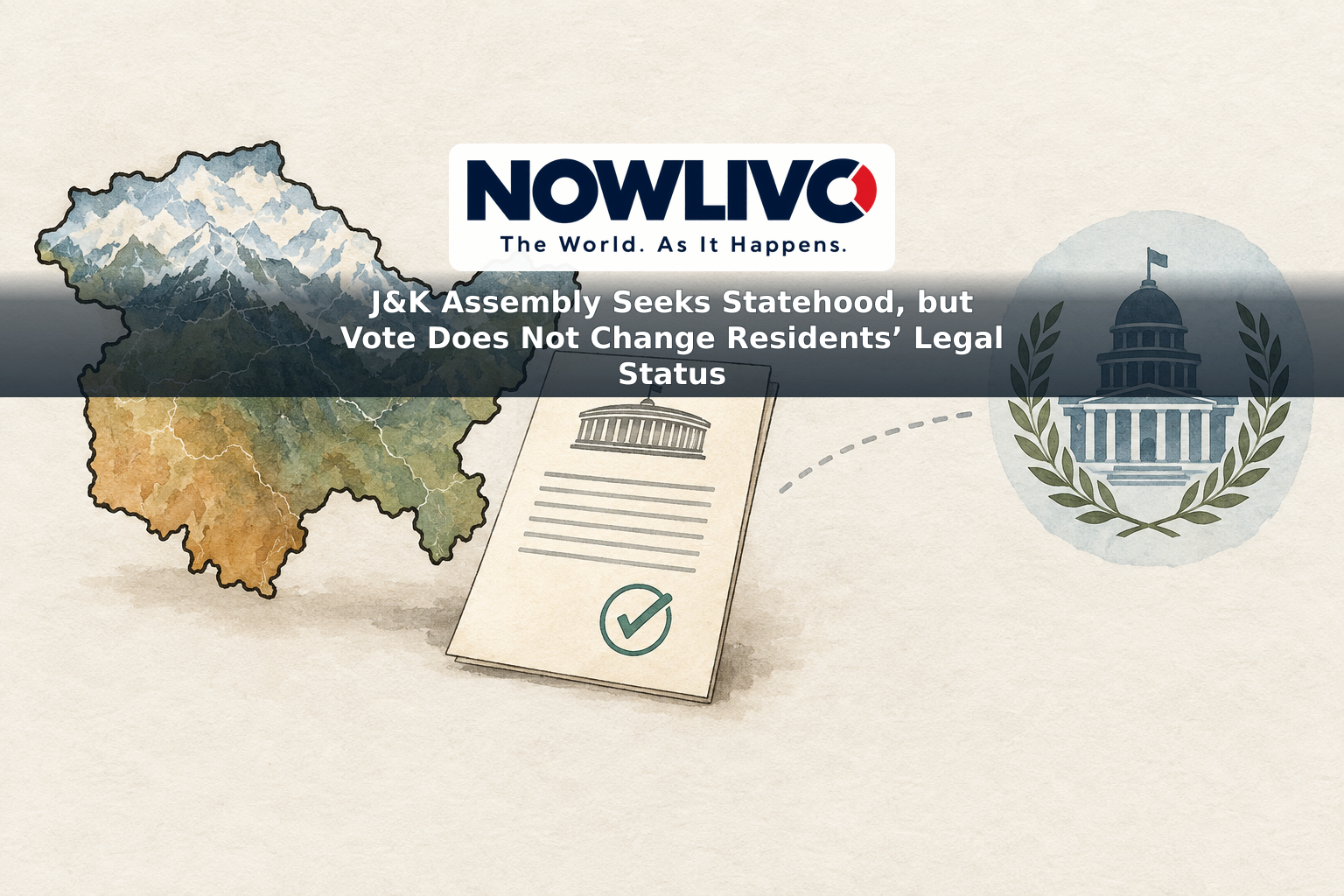
The Jammu and Kashmir Legislative Assembly passed a resolution on September 28, 2026, calling for the immediate restoration of full statehood. Chief Minister Omar Abdullah’s proposal was adopted by voice vote after a heated debate and a walkout by Bharatiya Janata Party legislators. For residents, the central distinction is between what the Assembly has requested and what has changed in law: Jammu and Kashmir remains a Union Territory.

What does the resolution ask for?
The resolution calls on the Government of India to restore full statehood to Jammu and Kashmir urgently and says the Assembly’s request should be forwarded to the central government. It also refers to two earlier Assembly resolutions: one passed on June 26, 2000, concerning autonomy, and another passed on November 6, 2024, seeking dialogue on the restoration of special status and constitutional guarantees.
Those references became the focus of the dispute. The operative request in this resolution is for statehood. It does not separately ask the Assembly to vote on restoring Article 370 or Article 35A, the former constitutional provisions associated with Jammu and Kashmir’s special status. Nor does mentioning the earlier resolutions put their proposals into effect.
Abdullah introduced the resolution on September 25. His government argues that statehood is necessary for an elected administration to exercise fuller authority. Speaking during the debate, he described difficulties in governing under the Union Territory arrangement and questioned how long residents should wait for the central government to act on its commitment to restore statehood.
Why did the debate end in a walkout?
BJP legislators objected to the references to the earlier autonomy and special-status resolutions. Opposition leader Sunil Sharma said his party supported the restoration of statehood but rejected the wording of Abdullah’s proposal, particularly its connection to the pre-2019 constitutional debate. BJP members protested during the proceedings and left before the voice vote.
The disagreement was not confined to the government and the BJP. Legislators from several parties proposed amendments that would have made references to Article 370, Article 35A and other demands more explicit. Those amendments were withdrawn, leaving the statehood resolution’s original wording to be voted on. Abdullah argued during the debate that the vote should remain focused on statehood rather than become a vote on those separate constitutional questions.
The Assembly adopted the resolution after the BJP walkout. That means the voice vote should not be read as proof that every party in the House endorsed its wording. Equally, the walkout should not be confused with a vote against statehood itself: the BJP’s stated objection was to the resolution’s references and framing.
What changes for residents now?
Nothing changes immediately in residents’ legal status because of this vote. The resolution is an expression of the elected Assembly’s position and a request to the central government, not legislation that can turn a Union Territory into a state. A change to statehood requires action at the national level through the constitutional and legislative process; the J&K Assembly cannot accomplish it by resolution alone.
The current division of governing powers therefore remains in place. Jammu and Kashmir still has an elected Assembly and government, but the Union Territory framework limits their authority. Under the Jammu and Kashmir Reorganisation Act, the Assembly cannot legislate on public order and police, and Parliament retains the power to make laws for the territory. The resolution does not transfer those powers, alter who administers them or give the elected government new authority over them.
It also does not restore Article 370 or Article 35A, reinstate the pre-2019 constitutional arrangements, or immediately change rules affecting jobs, property or public services. Residents should not treat the vote as notice of a new entitlement or a change in the rules they must follow.
The broader question remains before the central government. In its December 2023 judgment on Article 370, the Supreme Court recorded the government’s assurance that Jammu and Kashmir’s statehood would be restored at the earliest. The Assembly’s latest vote renews that demand and sets out its political case. Whether, when and on what terms statehood is restored remains a separate decision yet to be made.