Maruti Suzuki Reports Record October Sales of 2.76 Lakh Vehicles, Up 25%
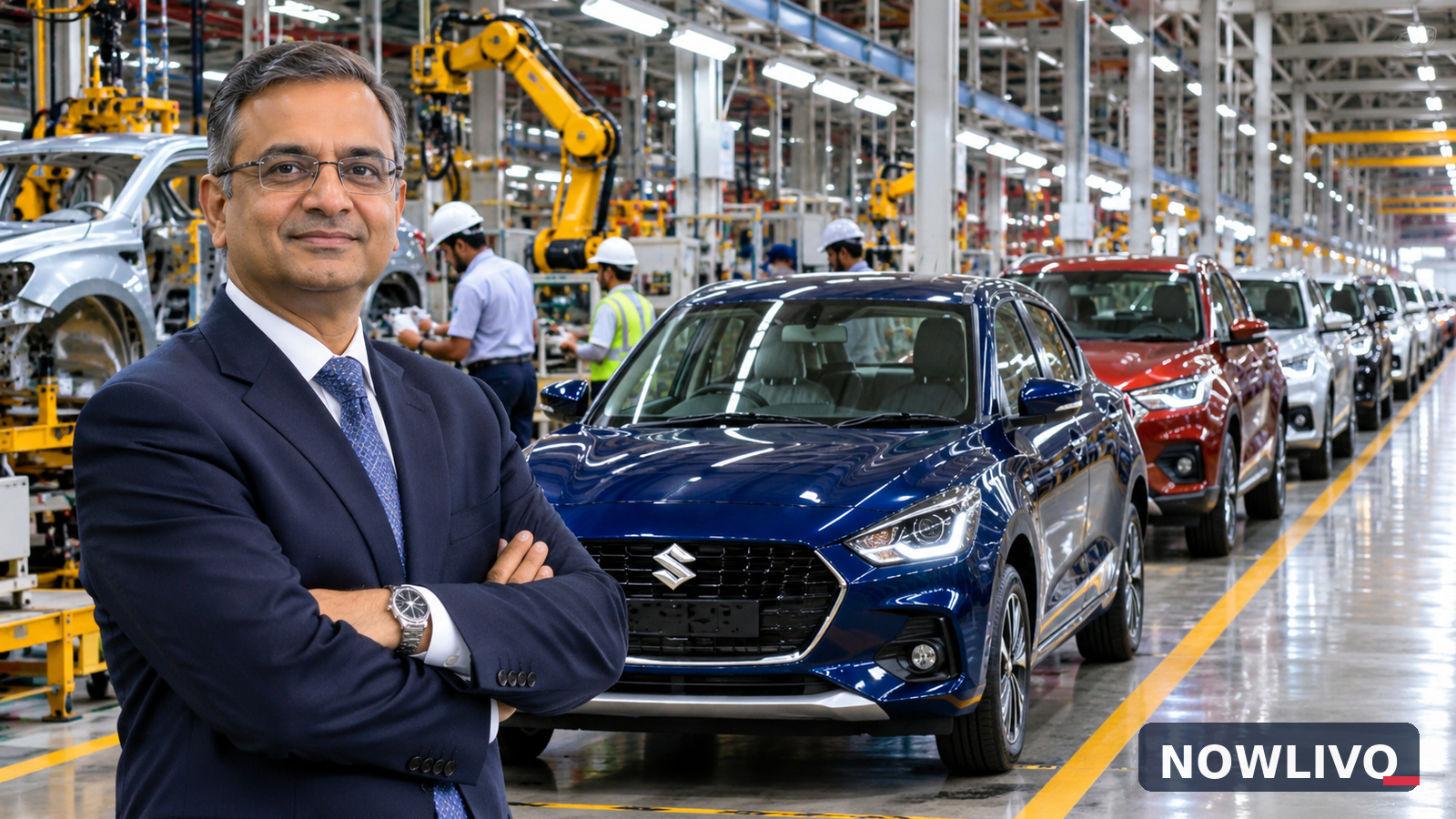
Maruti Suzuki India reported its highest-ever monthly sales volume in October 2026, with 276,120 vehicles sold across its domestic, original-equipment-manufacturer and export channels. The total was 25% higher than the 220,894 units recorded in October 2025, according to the company's November 1 announcement. The record gives India's largest carmaker a significant business headline as investors and the automobile industry assess October performance at the start of a new trading week.
The headline number includes more than cars sold to individual buyers in Indian showrooms. It combines domestic sales, supplies to other manufacturers and exports. That distinction matters because company dispatch figures are not identical to retail registrations, which are recorded when a buyer registers a vehicle. A strong wholesale month can reflect demand, dealer replenishment or a combination of factors, and it should not be presented as proof that every vehicle has already reached a final customer.
The record total and its components
Maruti Suzuki's official release put October domestic sales at 216,789 units, supplies to other original equipment manufacturers at 9,459 and exports at 49,872. Together, those categories add to the reported 276,120 units. Domestic sales plus OEM supplies totalled 226,248, a figure that some reports describe as domestic including other-manufacturer deliveries. Readers comparing publications should check whether the OEM category is counted separately.
The year-on-year comparison is substantial. The October 2025 total was 220,894 units, making the latest month's gain roughly 55,000 vehicles. The company described the October 2026 volume as its highest monthly tally. That is a completed corporate disclosure, not a forecast of how the next month will perform.
Passenger cars and utility vehicles both contribute
Within the domestic passenger-vehicle business, Maruti reported 212,384 units, compared with 176,318 in October last year. Utility-vehicle sales rose to 97,787 from 77,571, while passenger-car sales reached 100,877 against 85,210. Van sales were comparatively steady at 13,720, up from 13,537. The figures show that growth was not confined to one type of vehicle.
Utility vehicles remain an important category because consumer preferences have shifted toward taller, more versatile body styles. At the same time, the passenger-car numbers show continued demand for smaller and conventional cars. The data describe the mix of Maruti's sales, but they do not by themselves establish the profitability of each category or the precise reasons behind every buyer's choice.
Exports rose more sharply than domestic volume
Exports reached 49,872 units, up from 31,304 a year earlier, according to the company's release and business reporting. That represents growth of roughly 59%. Export demand therefore contributed disproportionately to the overall increase, even though domestic sales still formed the majority of volume.
The export performance matters for an Indian manufacturer with production and distribution exposure beyond the domestic market. It also means that interpreting the entire 25% increase as a pure reflection of Indian retail demand would be misleading. International shipments, domestic dispatches and retail registrations answer different questions and should be reported with their own labels.
Why the timing matters for the market
October included important festival-season buying activity, a period when Indian car sales can be influenced by the timing of Navratri, Dussehra and Diwali. Comparing one October with another therefore requires some care: festival dates and dealer stocking patterns can shift from year to year. The official company figures remain valid, but a single month's percentage change is not a complete picture of the longer-term market.
The report arrived alongside October updates from other carmakers, giving investors new information before Monday's trading. Reuters noted that auto companies would be watched after the latest dispatch numbers. That is a statement about market attention, not a guarantee that any company's share price will rise. Share-price reactions depend on expectations, margins and broader market conditions as well as sales volumes.
What the record does and does not prove
A record monthly total is a clear operational achievement, especially with growth across domestic passenger vehicles and exports. It does not automatically translate into a record profit, nor does it establish that retail registrations increased by the same percentage. Profitability depends on prices, costs, product mix and other factors that the monthly unit report does not settle.
For readers, the strongest verified development is the new 276,120-unit record and the 25% year-on-year rise, supported by the company's published breakdown. The next useful comparison will come from retail registration data, future sales reports and financial results, rather than treating a single wholesale record as the final word on India's automobile market.
Sources reviewed: www.marutisuzuki.com, economictimes.indiatimes.com. Reporting reflects information available on the morning of 2 November 2026 (IST).