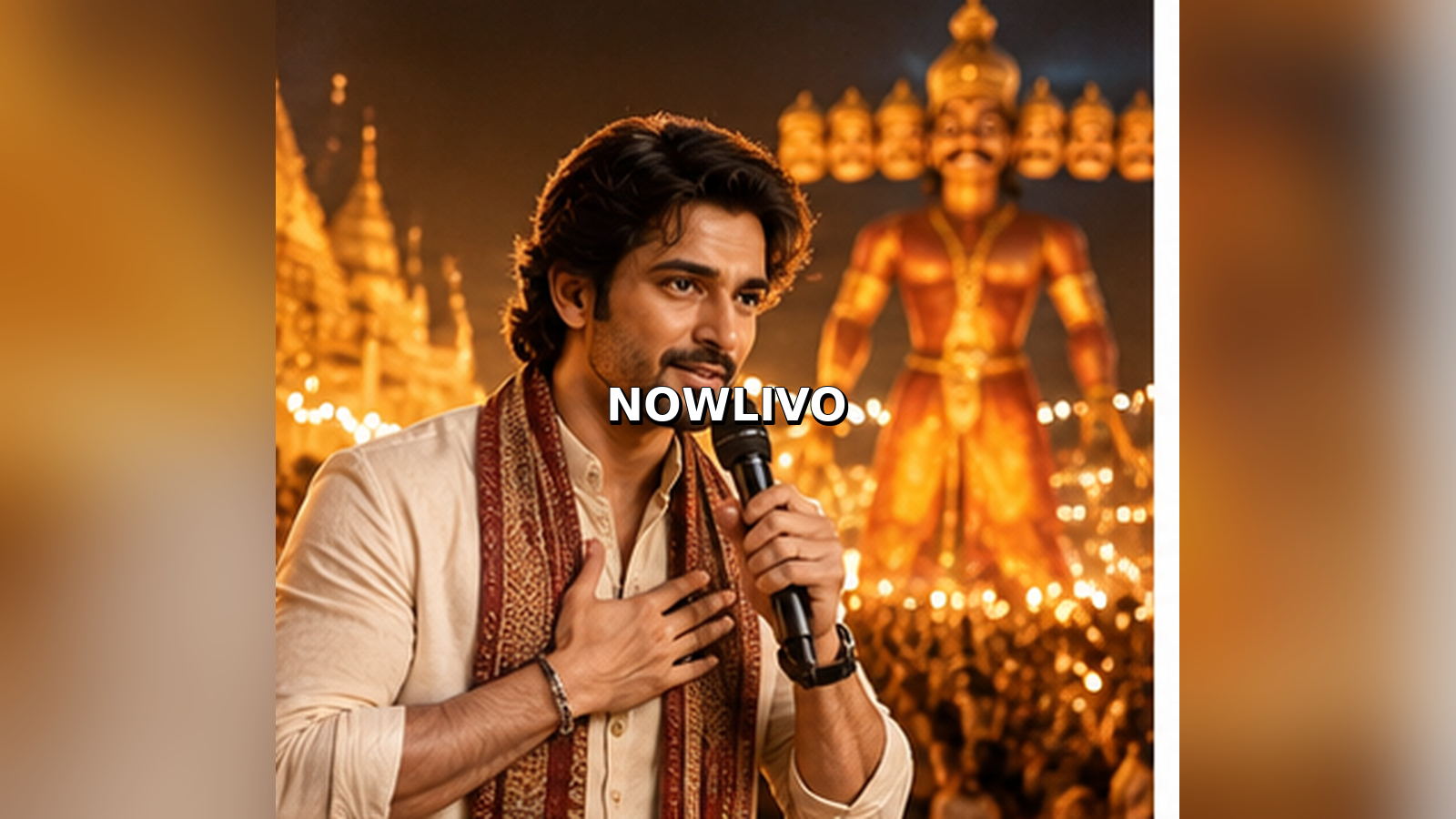
Ranbir Kapoor has publicly apologised after mixing up two Hindi words while speaking about Dussehra at a promotional appearance in Kolkata. The actor addressed the viral mistake the following day, October 21, during a Chennai event for his forthcoming film Ramayana. His clarification was direct: he said he had intended to describe the victory of truth and goodness over evil, but instead used a word that reversed the intended meaning. The moment became a talking point because the film casts him as Lord Ram, making the festival setting and his choice of words unusually prominent. The apology, not an unverified interpretation of the clip, is the central development.
What did Ranbir Kapoor actually say?
At the Kolkata appearance on October 20, Kapoor was discussing Dussehra's familiar moral theme. Video circulated showing him using <em>ant</em>, meaning an end, where he meant <em>jeet</em>, meaning victory. The difference is small in the flow of a public speech but substantial in meaning. Viewers familiar with the festival's symbolism quickly noticed the reversal. Short excerpts of the speech travelled across social platforms, with some users laughing at the slip and others questioning how it happened at a promotional event closely connected with the epic's imagery. A clip establishes the spoken words; it does not, by itself, establish an intention to offend.
How did he explain the mistake in Chennai?
Kapoor told the Chennai audience that he had experienced a slip of the tongue and offered the sentence he had meant to communicate: however powerful evil may be, truth and goodness ultimately win. He apologised rather than insisting that the phrase had been misunderstood. Reporting from the October 21 music event also describes him referencing the song <em>Jo Bhi Main</em> from his earlier film <em>Rockstar</em>, a self-deprecating way of acknowledging the distance between what someone wants to express and the words that come out. That reference shifted the conversation from an isolated viral clip to his own response to it.
Why did the clip attract so much attention?
An ordinary verbal mix-up can become a major entertainment story when timing, subject and celebrity converge. Dussehra explicitly commemorates the triumph of good over evil in widely observed traditions. Kapoor is playing Lord Ram in one of the most closely watched upcoming Indian films. A few seconds of imprecise speech therefore became more shareable than a longer explanation of the production. Social-media users also encountered the clip through captions, jokes and reactions, some of which emphasised the error without including the correction. That editing choice matters because it can make a moment appear more deliberate or more dramatic than the longer record supports.
The Ramayana promotion behind the headlines
The Chennai event on October 21 was billed as a major musical presentation linked to <em>Ramayana</em>. The planned film, directed by Nitesh Tiwari, features Kapoor as Ram, Sai Pallavi as Sita and Yash as Ravana. Its first part has been announced for a November 5, 2026 theatrical release. Promotion at this stage is particularly visible: songs, appearances and cast remarks can reach audiences far beyond people who normally follow film-industry publicity. The controversy arose during that broader campaign. The mistake is newsworthy as a public moment, but it should not be confused with an announcement about the screenplay, release plans or the film's religious interpretation.
What is confirmed, and what remains opinion?
The documented sequence is straightforward. Kapoor spoke at the Kolkata event, a clip of his wording spread online, and he apologised at the Chennai appearance the next day. The degree of offence felt by different viewers cannot be objectively measured from scattered comments. Nor is there evidence in the reported apology that the wrong phrase was deliberate. Descriptions such as 'backlash' should therefore refer to visible criticism or jokes rather than suggesting that every audience member shared the same response. Readers can reasonably disagree about how carefully a star should speak at a culturally significant event while accepting those basic facts.
The challenge of live film promotion
Actors frequently take questions, speak at rallies of fans and explain films across languages and cities. Those unscripted moments can humanise performers, but they also generate snippets that circulate independently of context. A short phrase can be extracted from a long event, replayed with commentary and turned into a separate news cycle within hours. Kapoor's decision to address the mistake in public is therefore important for anyone tracing the complete story. It creates a later, attributable statement that belongs beside the first clip when the incident is discussed, rather than allowing the viral portion alone to serve as the entire record.
Will this affect the release of Ramayana?
No announced change to the film's release has been linked to the speech slip in the reporting reviewed for this article. That is a narrower conclusion than predicting that public opinion will have no impact. The practical information for audiences remains the planned theatrical date and the film's ongoing promotional activity. Viewers interested in the finished adaptation will still want to judge its performances, music and storytelling once those are available. A promotion-stage error is a distinct event from the quality or accuracy of a film not yet in cinemas.
What happens next?
The most immediate question has already been answered: Kapoor acknowledged his words and explained what he intended. Further debate may continue online, but fresh claims about consequences or reactions should be checked against attributable statements rather than inferred from reposted jokes. With the release approaching, attention is likely to return to the movie's soundtrack, cast and theatrical plans. For now, the clearest account is also the simplest: a mistaken word went viral, and the actor apologised publicly at the next day's Chennai event.