Starlink India approval row: What Elon Musk, Rahul Gandhi and the government actually said
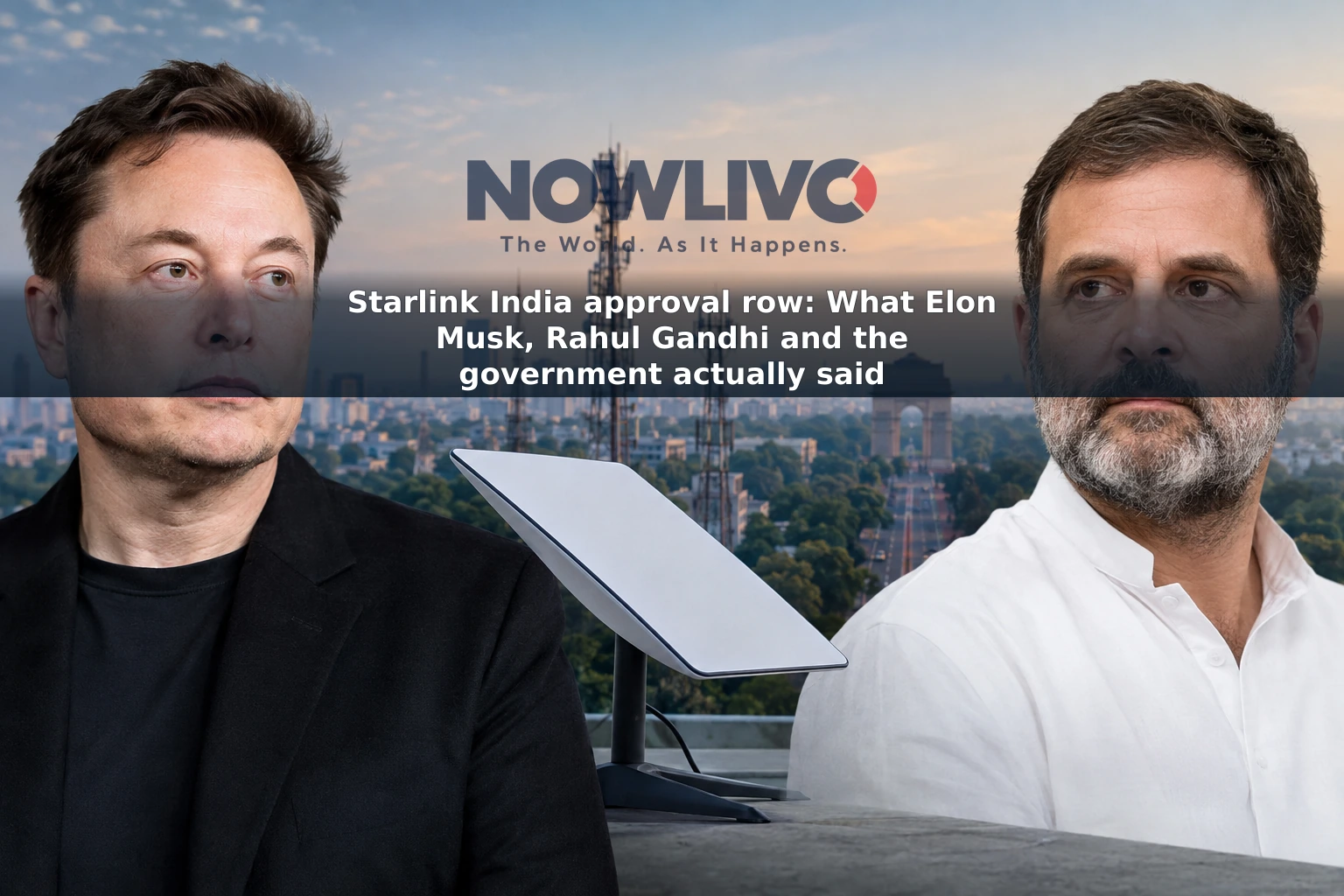
Elon Musk’s public criticism of Starlink’s delayed launch has turned India’s satellite internet approval process into a political argument. Rahul Gandhi joined the exchange on October 8, 2026, but the underlying question remains a regulatory one: Starlink has an Indian telecom licence, yet it has not completed the steps needed to begin commercial service. India’s government says the same security process applies to all three licensed satellite operators.
What did Musk say about Starlink in India?
On October 7, Musk alleged that unnamed wealthy interests were blocking Starlink to protect their position in the Indian market. The next day, he questioned why the company could not launch after years of work to meet Indian requirements and asked whether Reliance Industries chairman Mukesh Ambani held undue influence. Musk has not publicly established that Ambani or anyone else caused the regulatory delay.
Gandhi, the leader of the opposition in the Lok Sabha, replied to Musk on X with a pointed remark about an unspecified “other guy.” Musk thanked him. Gandhi’s post brought a prominent Indian politician into the exchange, but it did not say that Starlink should be exempt from Indian rules or identify who, if anyone, had interfered with its application.
Does Starlink already have an Indian licence?
Yes. India’s Department of Telecommunications granted Starlink a unified telecom licence with satellite-service authorisations on June 6, 2025. That is an important distinction from permission to start selling commercial service. Starlink still needs to demonstrate compliance with applicable security conditions and then seek an assignment of spectrum.
In an October 8 statement, the Ministry of Communications said security assessments were underway for all three licensed satellite operators: Starlink, OneWeb India Communications and Jio Satellite Communications. It said the companies were at broadly the same regulatory stage and rejected the suggestion that its framework was being applied unfairly.
The government’s response addresses the claim of discriminatory treatment; it does not, on its own, settle every question about how long the assessments should take. Nor does Musk’s frustration with the timetable establish that a competitor is controlling it.
Why does the approval process matter?
Satellite internet could help connect places where conventional networks are difficult to build, including remote and mountainous areas. That potential benefit does not remove the need for scrutiny of a communications service or give any operator an automatic right to launch. Under the process described by the ministry, a licence holder must satisfy security requirements before moving to spectrum assignment.
This is also why the dispute cannot accurately be described as America declaring war on India. Musk is an American business leader arguing publicly about his company’s access to the Indian market, not speaking for the United States in a declaration of war. Equally, a political reply to Musk is not evidence that Gandhi has betrayed India.
India can welcome competition while requiring Starlink and its rivals to meet the same rules. The practical test now is whether each operator completes the required checks and receives the remaining approvals—not which side produces the sharpest social-media post.