Trump Denies Offering Iran Relief as Mediators Press for a Deal
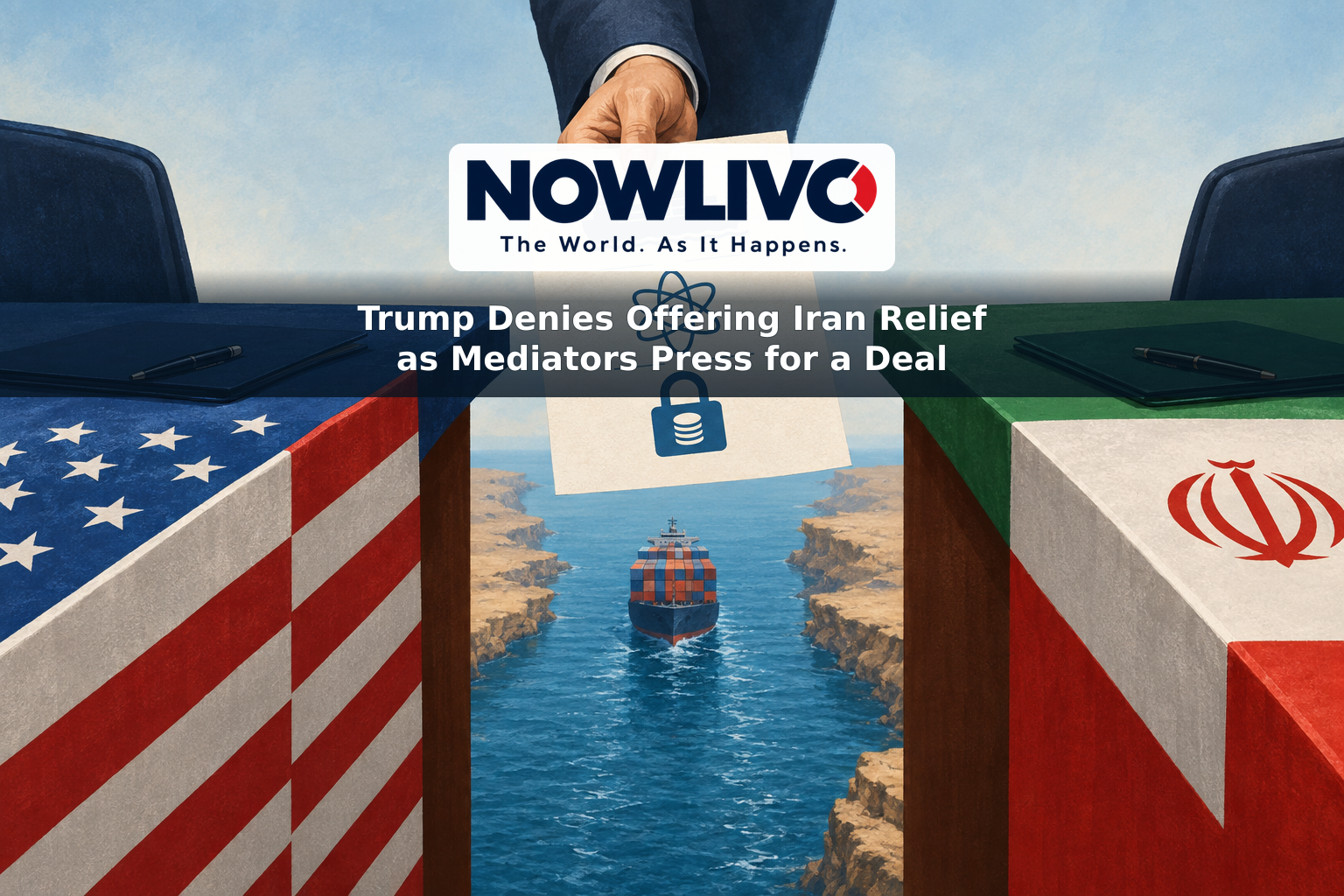
President Donald Trump has rejected accounts that he was prepared to ease sanctions on Iran or allow access to frozen Iranian funds in exchange for steps on Tehran’s nuclear program. His denial has sharpened a question at the center of renewed diplomacy: whether economic relief is available if Iran makes concessions, and, if so, when.
“I offered them NOTHING!” Trump wrote in a September 28 social media post. He called the accounts untrue. His statement followed descriptions from U.S. officials familiar with indirect negotiations who said he was willing to consider sanctions relief and the release of some frozen funds if Iran made concrete progress on nuclear issues.
Those descriptions and Trump’s denial should not be treated as proof of a completed offer. The officials described a possible bargain under discussion, not an announced agreement or a confirmed transfer of money. Trump, for his part, explicitly denied having offered Iran anything. The precise message conveyed to Tehran through mediators has not been publicly established.
What the two sides are seeking
The dispute comes during efforts to end months of fighting and restore dependable passage through the Strait of Hormuz. Iran has pressed for the United States to lift its naval blockade of Iranian ports, ease restrictions on oil sales and release frozen assets. Tehran has proposed reopening the strait within seven days if Washington accepts its conditions, while leaving room for renewed nuclear negotiations.
Trump said on September 26 that he rejected Iran’s latest proposal. That did not end contacts through intermediaries. Iranian Foreign Minister Abbas Araghchi remained engaged with mediators in New York, and Qatar says meetings and exchanges of messages have continued around the United Nations General Assembly.
Washington’s stated priority is a deal that addresses Iran’s nuclear program. U.S. officials involved in discussions have said a settlement cannot proceed without nuclear steps from Tehran. The difficult question is sequencing: Iran wants relief from economic and maritime pressure, while the United States wants assurances on the nuclear issue. Officials familiar with the talks say the parties remain far apart over which commitments would come first.
Iran says its nuclear program is peaceful and that it does not seek nuclear weapons. Trump said on September 29 that his aim is to prevent Iran from obtaining one. A proposal that both governments can accept would have to bridge not only their positions on nuclear activity, but also their disagreement over sanctions, shipping and the timing of each side’s actions.
Qatar keeps the channel open
Qatar’s Foreign Ministry said on September 29 that it was continuing to mediate between Washington and Tehran and supporting Pakistan’s mediation efforts. Spokesperson Majed Al Ansari said recent days had brought meetings and exchanges of messages, including in New York. He acknowledged obstacles to an agreement but said contacts were ongoing.
Al Ansari identified freedom of navigation in the Strait of Hormuz as a current focus, alongside the region’s security concerns. His account confirms that diplomacy remains active; it does not confirm that Washington has made the financial offer Trump denied.
The term “frozen funds” also requires care. It can refer to Iranian assets held under different restrictions, not a single pool of cash that would automatically become available under a deal. Qatar has previously said that funds held through a humanitarian arrangement it administers are intended for approved purchases, and that changes to their treatment depend on agreement between the parties. Neither Trump’s denial nor the officials’ descriptions publicly specified which assets might be involved.
For now, U.S. economic pressure is continuing. On September 29, the Treasury Department announced sanctions on 10 people and entities that it said had supported procurement for Iran’s military. That action does not settle what might be negotiable in a future agreement, but it shows that no broad easing of pressure accompanied this round of talks.
The clearest public position from Trump remains his denial. The clearest confirmation from a mediator is that messages are still moving between the parties. Whether those contacts produce a written proposal, an agreed sequence of steps or any sanctions relief remains unresolved.