
Netanyahu’s Iran Warning Meets Truce Hopes as Oil Retreats
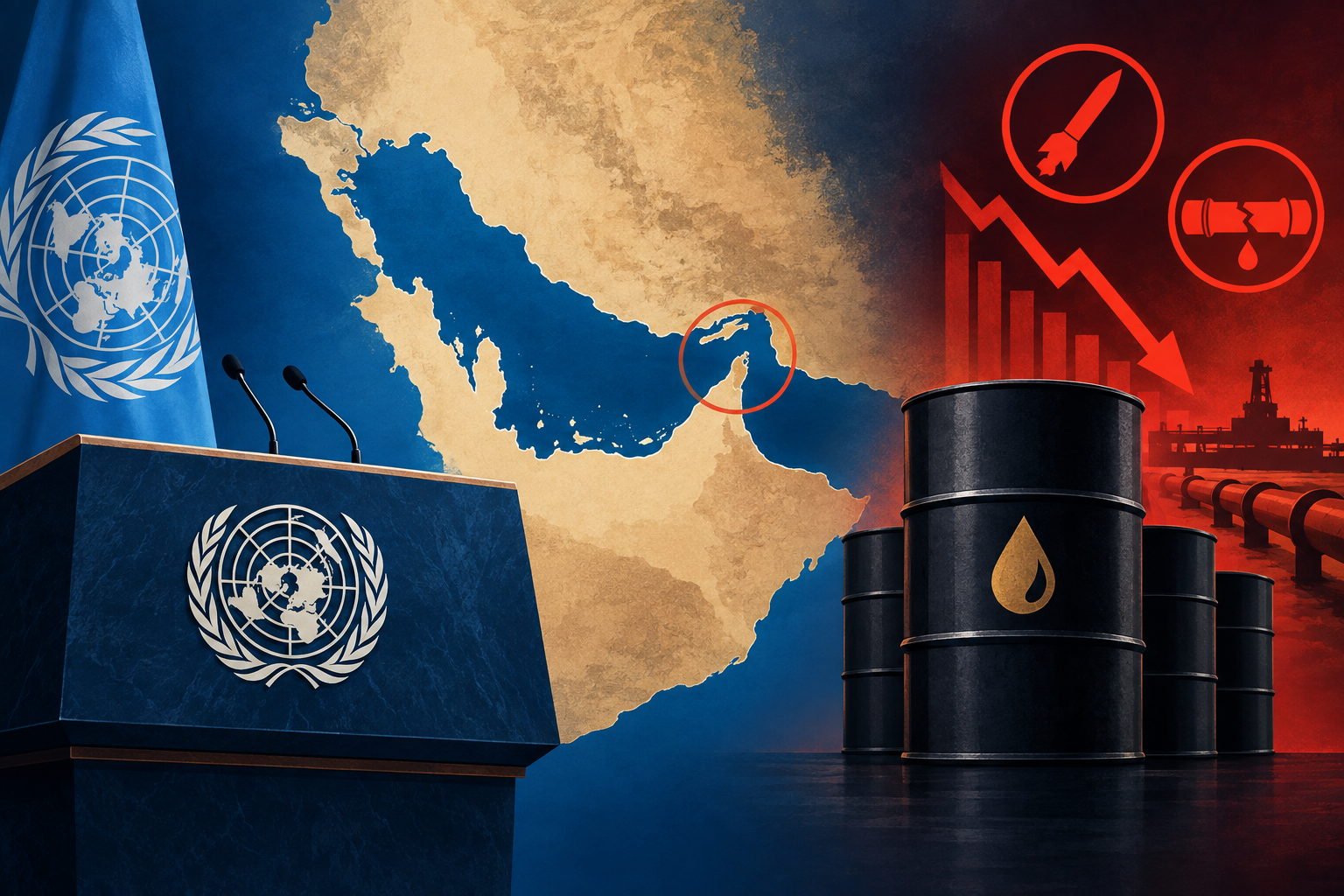
Israeli Prime Minister Benjamin Netanyahu’s latest warning about Iran arrived as diplomats explored a possible route toward de-escalation and oil traders weighed sharply conflicting signals. Netanyahu delivered his address in New York on September 24, although much of the market reaction unfolded on September 25.

The Israeli leader told the United Nations General Assembly that Israel and the United States had dealt severe blows to Iran’s military and nuclear facilities. He also predicted that Iran’s current system of government would eventually fall under pressure from its own people. Those statements represented Netanyahu’s political assessment and Israel’s account of the conflict, not an announcement of a new military operation or a negotiated diplomatic position.
What is known about the possible truce?
A senior Iranian official said Tehran could reopen the Strait of Hormuz within seven days if the United States reduced military pressure and lifted its blockade of Iranian ports. The official said Iran’s proposal had been delivered through mediators and that its delegation in New York had authority to revive diplomacy.
Separately, people described in a September 24 diplomatic report as close to the discussions said American and Iranian negotiators were examining a phased arrangement. Under that outline, Iran would restore navigation through the strait while Washington would remove its economic blockade, potentially in stages.
The White House, however, said President Donald Trump remained willing to talk only under the right circumstances and argued that Washington held the stronger position. No joint declaration, signed ceasefire or implementation schedule had been announced by either government as of September 25. The reported discussions therefore amount to exploratory diplomacy rather than a confirmed truce.
That distinction matters because an agreement on shipping and blockades would not automatically resolve the wider conflict. It also would not, by itself, settle disagreements over Iran’s nuclear activities, sanctions, regional armed groups or the future security role of the United States and Israel.
Why oil prices moved lower
A September 25 oil-market report showed Brent crude falling about 2.8% to $103.64 a barrel by 12:12 p.m. Eastern time, while West Texas Intermediate dropped about 3% to $91.75. The report said traders were reducing part of the geopolitical risk premium as hopes for a US-Iran arrangement increased.
Preliminary ship-tracking figures from energy analytics firm Kpler showed 33.7 million barrels of crude moving out through the Strait of Hormuz during the week beginning September 20, roughly matching the previous week’s pace. The data suggested that some exports were continuing despite the conflict, but it did not eliminate the possibility of future disruption.
The retreat in crude prices should not be read as proof that the supply danger has passed. Oil markets frequently move on expectations before governments conclude or implement agreements. A failed negotiation, renewed military action or damage to a major export facility could quickly reverse the decline.
Why energy infrastructure remains the key risk
The Saudi-led coalition said its air defenses intercepted six ballistic missiles launched by Yemen’s Houthi movement on September 24, including weapons directed toward the wider Yanbu area. Yanbu contains major refining, pipeline and Red Sea export infrastructure.
Saudi authorities had also said earlier in September that attempted Houthi attacks targeted civilian infrastructure around Yanbu and other locations. The Houthis separately claimed attacks on Saudi energy facilities, while Saudi officials said several attempted strikes were intercepted. Riyadh also shut the East-West oil pipeline after a drone attack, according to the Saudi government’s account.
That pipeline is especially important because it allows Saudi crude to reach the Red Sea without passing through Hormuz. Any prolonged restriction affecting both Hormuz and the alternative Red Sea network would reduce the region’s ability to redirect exports during a crisis.
What it could mean for drivers and markets
The US Energy Information Administration says crude oil is normally the largest component of retail gasoline prices. A sustained fall in crude could therefore ease pressure at American filling stations, but the effect would not necessarily be immediate or uniform. Refinery margins, inventories, transportation costs, taxes and local supply conditions also influence what consumers pay.
Lower oil prices could reduce inflation pressure and operating costs for airlines, freight companies and manufacturers. Conversely, another infrastructure outage could lift crude, diesel, shipping and insurance costs while weighing on businesses that depend heavily on transportation or imported energy.
For diplomacy, the central question is whether Washington and Tehran can secure a limited shipping arrangement despite their broader confrontation. Netanyahu’s UN message pointed toward continuing pressure on Iran’s leadership, while Tehran’s proposal focused on reciprocal steps involving Hormuz and the blockade. Bridging those positions would require governments to distinguish a practical energy-security deal from a comprehensive political settlement.
Until a written agreement is confirmed by both sides and attacks on regional infrastructure subside, markets are likely to keep alternating between truce optimism and supply-disruption fears.