Large Review Links Higher Ultra-Processed Food Intake to Cardiovascular Risk
A large research review has linked greater consumption of ultra-processed food with higher rates of cardiovascular events and several other chronic health outcomes. The paper was published on September 22, 2026, and drew wider attention on September 25.

The most prominent figure was a 14% higher relative cardiovascular-risk estimate for every additional 100 grams of ultra-processed food consumed per day. That number needs careful interpretation: it describes an association calculated across populations, not a guaranteed change in any individual’s health and not a 14-percentage-point increase in absolute risk.
How the study was conducted
The researchers performed a systematic review and dose-response meta-analysis, combining results from 51 prospective cohort studies. Together, the studies included 8,819,894 adults from the Americas, Europe, Asia and Oceania. Average participant ages in the individual cohorts ranged from 23 to 77, while follow-up periods ranged from two to 32 years.
Prospective cohorts generally record people’s diets and other characteristics, then follow them to see who develops particular health problems. In this analysis, food intake had been measured through food-frequency questionnaires, 24-hour recalls or dietary histories. Researchers used statistical methods to examine whether health risks tended to rise as reported ultra-processed food intake increased.
Cardiovascular events included outcomes such as heart attack, stroke, transient ischemic attack, coronary artery disease and cardiovascular death. In the dose-response calculation, each additional 100 grams per day was associated with a hazard ratio of 1.14, or a 14% higher relative risk estimate. The analysis also identified smaller dose-related associations for cancer, metabolic syndrome or diabetes, and death from any cause.
This was observational, not a causal experiment
No participants were randomly assigned to eat an extra 100 grams of ultra-processed food. The review pooled observational studies in which people made their own dietary choices. It can therefore show that higher intake and higher disease rates occurred together, but it cannot establish that the food itself directly produced those outcomes.
People who consume more ultra-processed food may differ in other important ways, including smoking, exercise, sleep, income, access to health care and the overall nutritional quality of their diets. Individual studies attempt to adjust for such factors, but statistical adjustments cannot remove every difference. Combining millions of records improves precision, yet it does not eliminate biases already present in the underlying studies.
What counted as ultra-processed food?
The studies generally used the NOVA classification, which focuses on the extent and purpose of industrial processing. Ultra-processed products are typically ready to eat or heat and are formulated with refined ingredients, extracted substances and additives that are uncommon in home cooking.
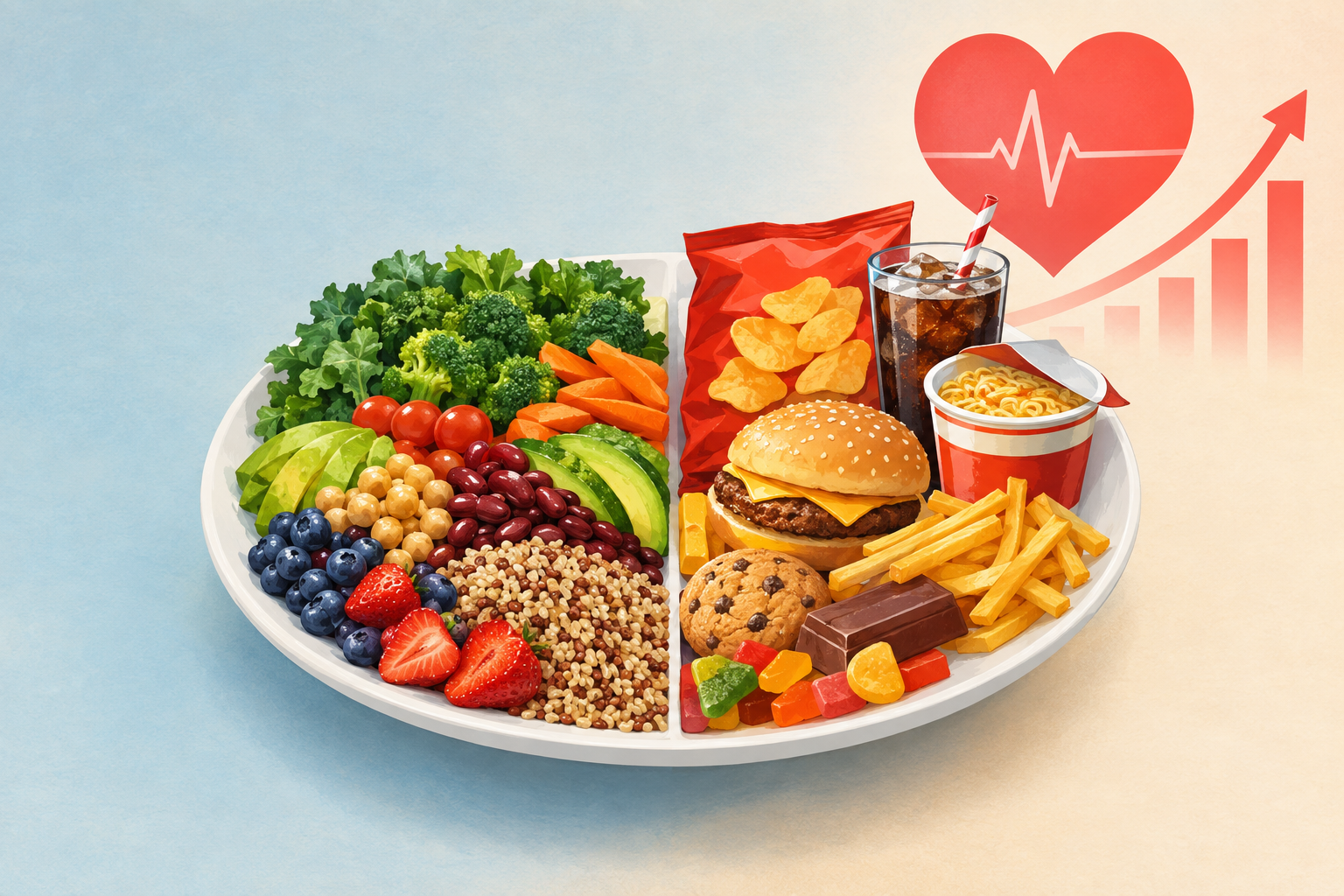
Common examples include sugar-sweetened drinks, packaged chips and snacks, candy and chocolate confectionery, packaged cookies, instant noodles, many ready-made meals, some processed meats and certain mass-produced breads. Flavors, colors, emulsifiers, sweeteners and other additives may help distinguish these formulations.
However, packaging or processing alone does not automatically make a food ultra-processed. Frozen vegetables, canned beans, pasteurized milk and plain yogurt can be minimally or moderately processed. Classification can also vary by formulation: two breads or breakfast cereals may fall into different groups depending on their ingredients.
Important limitations
Dietary information was largely self-reported, making it vulnerable to forgotten foods, inaccurate portion estimates and changes in eating habits during follow-up. The included studies also used different questionnaires, intake measures and classification procedures. Ultra-processed food is a broad category containing products with very different nutritional profiles, so the analysis cannot identify which specific foods or features drove the associations.
The review excluded people younger than 18, and its conclusions should not automatically be applied to children. The authors rated the overall evidence as low to moderate in certainty, reinforcing that the results should not be treated as proof of cause and effect. Proposed explanations involving additives, processing byproducts, inflammation, insulin resistance or changes to the gut microbiome remain possible mechanisms rather than mechanisms demonstrated by this analysis.
What readers can reasonably do
The findings support a practical focus on overall dietary patterns rather than fear of an exact 100-gram threshold. That quantity was a statistical unit used to compare intake across studies, not a newly established daily limit.
Readers who want to reduce intake can begin with frequent, easily replaceable sources: choose water instead of sugary drinks, fruit or nuts instead of packaged sweets, and simple meals built around vegetables, beans, whole grains, eggs, fish or other minimally processed staples. Affordable convenience options such as frozen produce and low-sodium canned beans can still fit that approach.
There is no need to remove every packaged product overnight. Gradual substitutions that work within a person’s budget, culture and schedule are more realistic. People managing heart disease, diabetes, eating disorders or other medical conditions should discuss substantial dietary changes with a qualified health professional.