
Edible-Oil Duty Cut May Ease Prices, but Relief Will Not Be Immediate
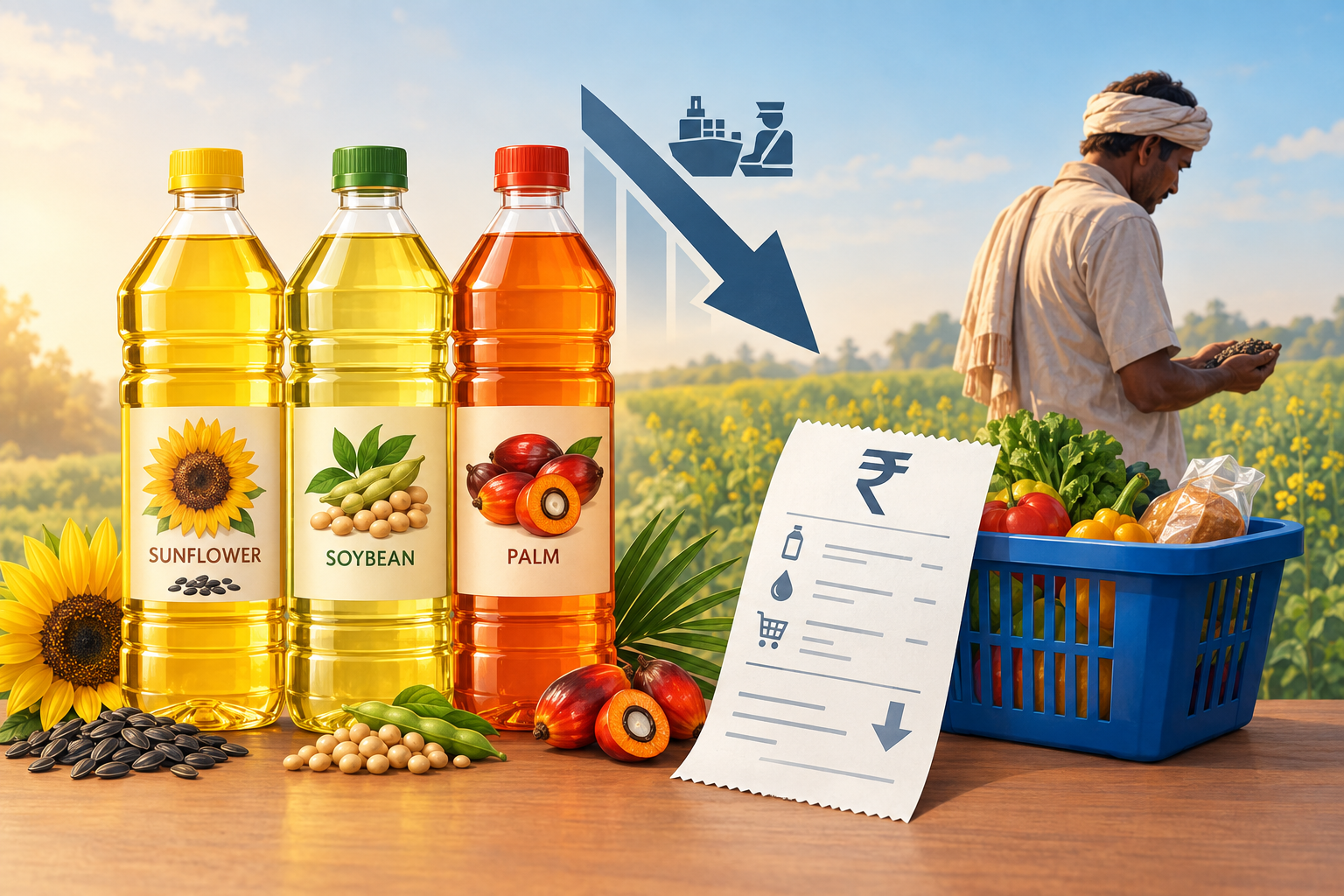
Indian households could see some relief from high cooking-oil prices after the central government reduced customs duties on imported sunflower, soybean and palm oils. The change lowers a significant component of import costs, but it does not guarantee an immediate or equally large reduction at retail stores.

The Ministry of Finance’s Department of Revenue issued Notification No. 31/2026-Customs on September 23, 2026. The revised rates came into force on September 24, 2026, through an amendment to the broader customs exemption framework established by Notification No. 45/2025-Customs.
What exactly changed?
| Imported oil | Previous basic duty | New basic duty |
|---|---|---|
| Crude sunflower oil | 10% | Nil |
| Crude soybean oil | 10% | 5% |
| Crude palm oil | 10% | 5% |
| Refined sunflower oil | 32.5% | 22.5% |
| Refined soybean oil | 32.5% | 27.5% |
| Refined palm oil | 32.5% | 27.5% |
The widely reported “zero duty” applies specifically to the Basic Customs Duty on crude sunflower oil. It does not mean crude sunflower oil enters India entirely free of import levies. Other applicable charges, including the agriculture infrastructure cess and related surcharge, can still apply.
After including these additional components, the effective duty is estimated to fall from 16.5% to about 5.5% for crude sunflower oil. For crude palm and soybean oil, the effective burden falls from about 16.5% to 11%. The government has retained a 19.25-percentage-point effective duty difference between crude and refined oils.
Will cooking oil become cheaper?
The direction is favourable for consumers because lower duties reduce the landed cost of newly imported oil. On a simple tax-inclusive calculation, the change could lower the import-stage cost of crude sunflower oil by roughly 9% and that of crude palm or soybean oil by nearly 5%, assuming international prices, freight and the rupee exchange rate remain unchanged.
The eventual reduction on a retail bottle is likely to be smaller. Refining, packaging, transport, distributor margins and retailer margins remain part of the final price. International commodity prices or a weaker rupee could also absorb part of the duty benefit.
Timing will vary. Companies and distributors may still hold stocks imported under the previous duty structure. Fresh cargoes must be shipped, cleared, refined and moved through the supply chain before the lower cost is fully reflected. Competitive brands may reduce distributor prices sooner, but broader retail relief could take several days or weeks. The government has asked edible-oil businesses to revise prices to distributors and maximum retail prices in line with the reduced costs.
Who gains and who faces pressure?
Consumers stand to benefit if refiners and retailers pass on the savings. Sunflower-oil buyers may receive the largest relative benefit because its basic duty was cut by 10 percentage points rather than five.
Importers and domestic refiners gain from lower landed costs and reduced tax-related working-capital requirements. Import volumes could rise if overseas oil becomes more competitive. However, traders holding expensive stocks cleared under the old rates may initially face inventory losses or may delay reductions while those stocks are sold.
Maintaining the duty gap between crude and refined oil favours Indian refining. It makes importing crude oil for processing inside India more attractive than bringing in finished refined oil, supporting refinery utilisation, employment and domestic value addition.
Domestic oilseed farmers face the clearest downside. Cheaper imported oils can put downward pressure on domestic soybean, sunflower, mustard and other oilseed prices because different edible oils compete in the same market. The impact will depend on harvest conditions, government procurement, minimum support prices and global markets. If farm-gate prices weaken significantly, the measure could also reduce incentives to expand oilseed cultivation.
What it means for inflation
The duty cut should have a cooling effect on food inflation because cooking oil is purchased directly by households and is also a major input for packaged foods, snacks, restaurants and sweet makers. Lower input costs may therefore provide indirect relief beyond retail oil bottles.
The overall effect on headline inflation is likely to be moderate rather than dramatic. Edible oil is only one part of the household consumption basket, and its price continues to depend heavily on international markets, freight and currency movements. The measure is best viewed as a buffer against rising global costs—not a guarantee that cooking-oil prices will fall by the full amount of the duty reduction.