Delhi High Court Orders Meta to Remove Morphed Image of Woman With PM Modi
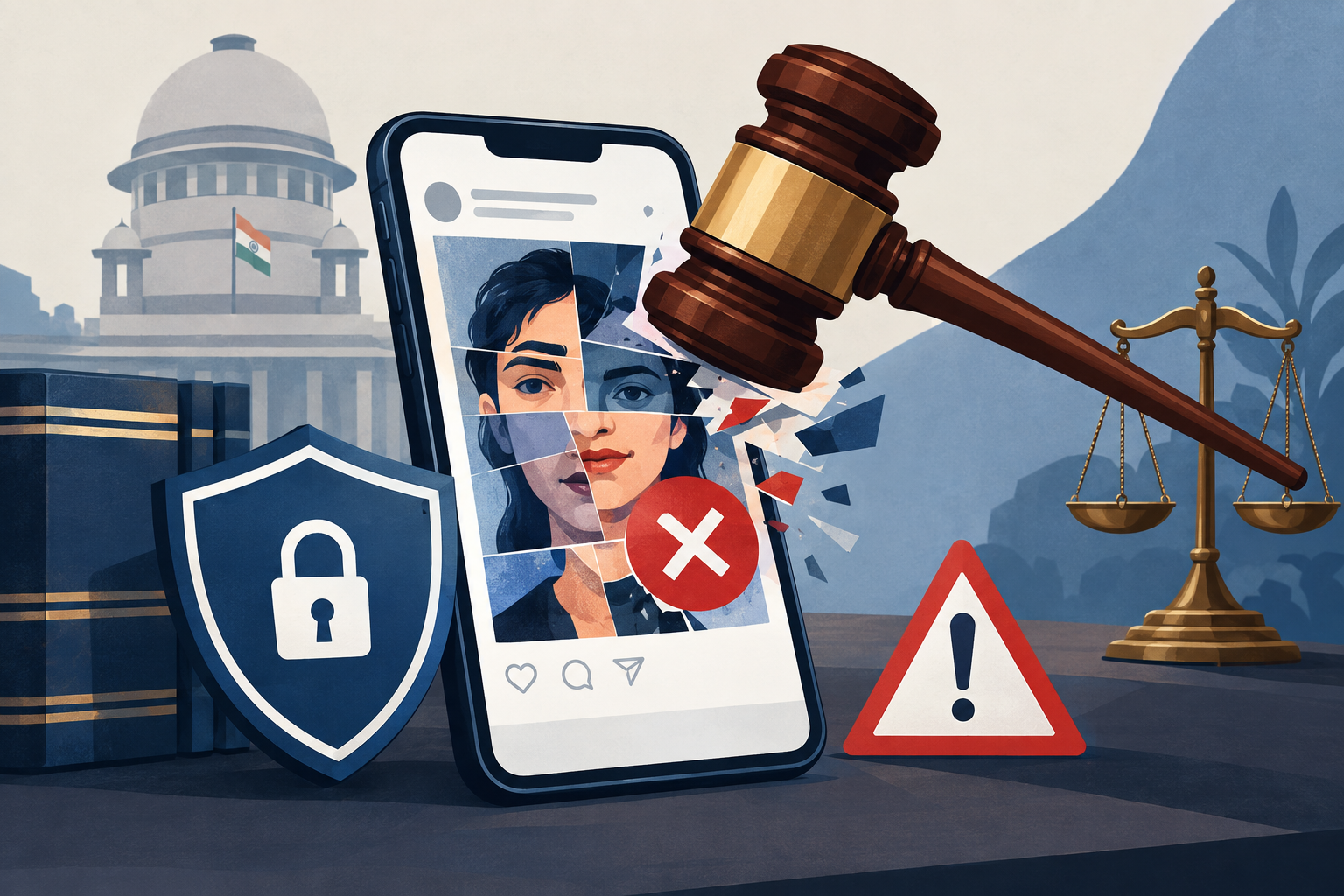
The Delhi High Court has directed Meta Platforms to remove an objectionable morphed image depicting a woman alongside Prime Minister Narendra Modi, intervening after the woman said the fabricated material was circulating online without her consent.

Justice Girish Kathpalia issued the direction on Friday, September 25, 2026, and required Meta to disable access to the identified content immediately and within no more than 24 hours. The court also ordered the Delhi Police to provide the woman with protection after she reported receiving threats connected to the image’s circulation.
The woman’s petition alleged that her personal photograph was obtained without permission and manipulated using artificial intelligence or face-swapping technology to place her in a vulgar and compromising depiction. She further alleged that the image appeared on material associated with a protest and was shared through social media posts and videos.
Those allegations have not been finally adjudicated. The court issued notices to the respondents named in the petition, including figures associated with the Cockroach Janta Party, but the issuance of notice does not establish who created, uploaded or distributed the image.
What the court ordered
Along with the takedown direction, the court told the investigating officer to privately obtain the woman’s residential address and send it to the station house officer responsible for her area. The local police were instructed to ensure her protection in all practical ways.
The Delhi Police must also submit a status report describing the steps taken in the investigation. To limit further exposure, the court directed its Registry to redact the disputed web links from the case papers available through the judicial record. The woman was asked to provide the relevant files, videos and links directly to investigators.
The court also clarified that the proceedings would not prevent her from pursuing other remedies available under law, including a possible compensation claim. The immediate order is therefore protective and interim in nature rather than a final determination of liability.
Meta’s responsibilities
For Meta, the direction creates a clear obligation to locate and disable access to the content specified in the case. Compliance involves more than removing a single visible post when the same material appears through reels, reposts, mirrors or other accounts identified by investigators.
India’s intermediary rules treat a competent court order as formal knowledge of potentially unlawful information. The rules also impose special grievance-handling duties for content involving nudity, sexual depictions, electronic impersonation or artificially morphed images. Platforms must maintain accessible complaint systems, respond quickly and preserve relevant records so that removal does not destroy evidence required for an investigation.
The rules introduced for synthetically generated information in 2026 also require stronger measures against unlawful AI-generated material. They contemplate technical safeguards, action against violating accounts and prominent labels for permissible synthetic content. Labelling, however, does not legitimise material that violates privacy, depicts a person sexually without consent or is otherwise unlawful.
Privacy, dignity and reputation
The dispute illustrates why a morphed image can cause harm even when viewers understand that digital manipulation is possible. A person may have shared an ordinary photograph publicly, but that does not amount to consent for the face to be placed in a sexualised or degrading context.
India’s constitutional protection of privacy under Article 21 is closely connected to dignity, autonomy and an individual’s ability to control the use of personal identity. Manipulating someone’s likeness can interfere with that control while exposing the person to harassment, social stigma and threats.
A knowingly false visual portrayal may also raise defamation concerns if it damages reputation or causes viewers to form a false and harmful impression. Depending on the evidence and circumstances, a victim may seek civil relief such as an injunction and damages, while criminal provisions may also become relevant. Those questions will depend on findings about creation, intent, publication and responsibility for distribution.
Wider implications for manipulated images
The order reflects an increasingly urgent challenge for courts and technology companies: harmful synthetic content can spread faster than conventional legal remedies. By the time a victim identifies every post and account, copies may have moved across several services and into private groups.
Effective relief therefore requires rapid takedowns, evidence preservation and cooperation between platforms and investigators. It may also require tools capable of detecting substantially identical copies rather than relying on victims to report each upload individually.
At the same time, broad removal systems need safeguards for legitimate satire, art, political criticism and clearly disclosed parody. The central distinction is not simply whether an image has been edited, but whether it deceptively appropriates a real person’s identity, violates consent or creates unlawful harm.
The Delhi case shows that courts are prepared to prioritise immediate protection when manipulated media threatens privacy and dignity. It also places platforms on notice that hosting infrastructure cannot remain passive once a specific unlawful image and its locations have been formally identified.