
Iran’s Seven-Day Hormuz Plan Meets Reported US Rejection
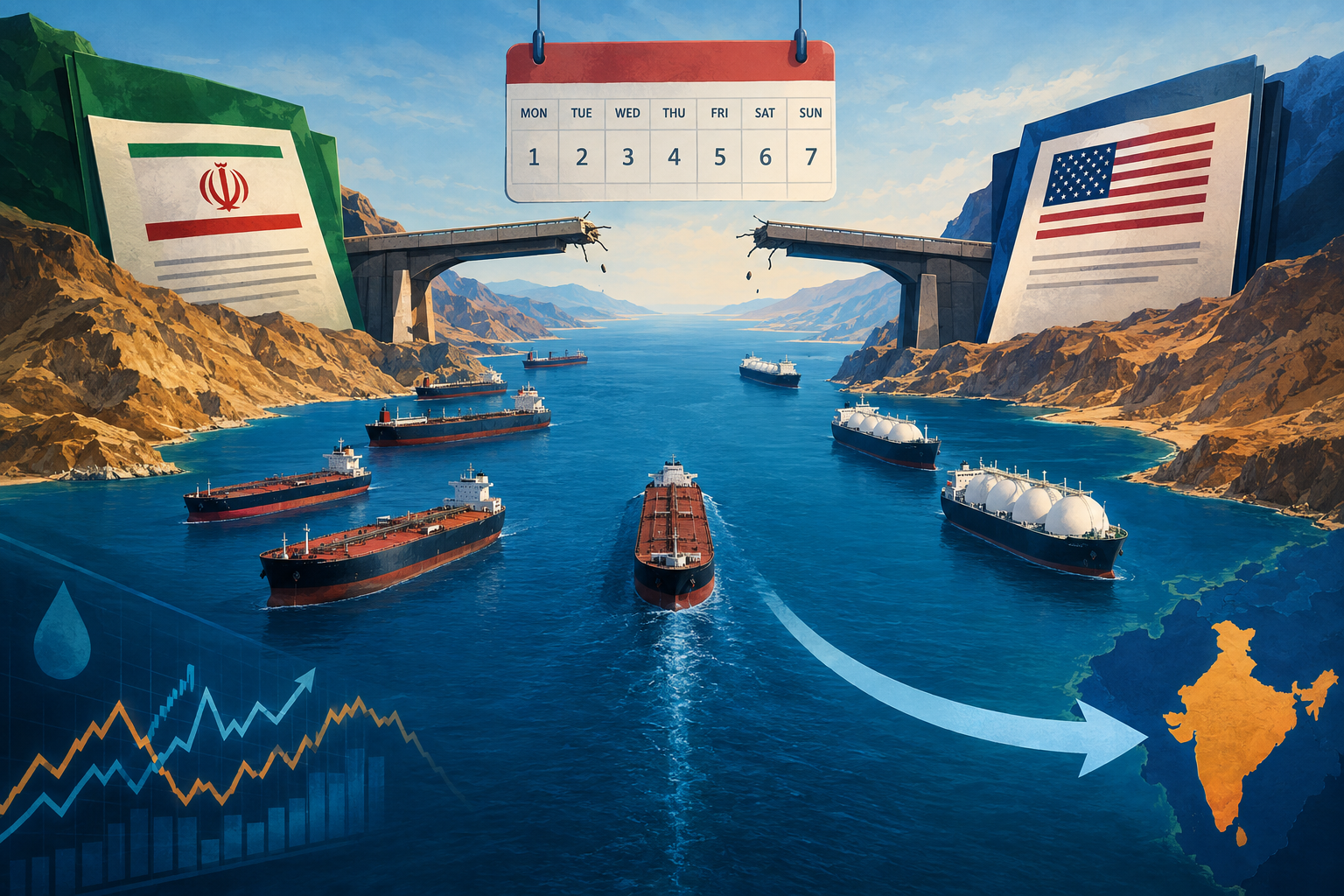
Iran has presented the United States with a proposed seven-day framework aimed at easing their conflict, restoring commercial passage through the Strait of Hormuz and restarting negotiations over a longer-term agreement. However, reports citing unnamed US officials say President Donald Trump has rejected the plan, leaving the diplomatic opening uncertain.

Iranian Foreign Minister Abbas Araghchi said the proposal was conveyed to Washington through mediators and would begin once the United States accepted its terms. Tehran’s conditions reportedly include an end to US military pressure, the lifting of the naval blockade on Iranian ports, temporary relief from restrictions on Iranian oil sales and observance of a wider ceasefire that includes Lebanon.
According to Araghchi’s description, the first reciprocal measures would be completed over four or five days. Iran would then reopen the Strait of Hormuz by the sixth day, with negotiations on a final settlement beginning on the seventh. Those talks could cover Iran’s nuclear programme and other issues agreed by both sides.
The proposal should not be read as an agreed ceasefire or a guaranteed reopening of the waterway. It is Iran’s stated negotiating framework, and its implementation depends on Washington accepting the conditions and both sides carrying out a tightly sequenced set of steps.
US position remains unclear
A separate report published on September 26, citing unnamed US officials, said Trump had rejected the seven-day plan and remained doubtful that Iran would satisfy Washington’s demands. The officials also reportedly said the president had discussed the possibility of renewed military strikes after the US midterm elections in November.
There has not been a detailed public White House announcement confirming a final rejection of every element of Iran’s proposal. The administration has separately said US representatives are holding positive and constructive discussions with mediators. That creates an important distinction: the reported presidential rejection suggests the current terms are unacceptable, but continued indirect contact means diplomacy may not have ended.
Major differences remain over the order of concessions, Iran’s nuclear activities, oil sanctions, control of maritime security and whether a ceasefire would extend to other regional fronts. A previous interim understanding reached in June was intended to reopen the strait and create time for negotiations, but it broke down within weeks. That history has deepened distrust on both sides.
Why the Strait of Hormuz matters
The Strait of Hormuz is a narrow maritime passage connecting the Persian Gulf with the Gulf of Oman and the Arabian Sea. It is the main export route for oil producers including Saudi Arabia, Iraq, Kuwait, the United Arab Emirates, Qatar and Iran.
Before the current disruption, nearly 15 million barrels of crude oil a day passed through the strait, representing roughly one-third of internationally traded crude. About one-fifth of global liquefied natural gas trade also used the route, led by shipments from Qatar.
Even when the waterway is not completely closed, attacks, military warnings and uncertainty can affect markets. Shipowners may delay voyages, crews may demand additional protection and insurers can sharply increase war-risk premiums. Tanker rates and fuel costs can consequently rise, while longer or less efficient supply routes add pressure to consumer prices.
Alternative pipelines can carry some Gulf oil around the strait, but they do not have enough capacity to replace all normal maritime traffic. Qatar’s LNG exports are especially difficult to reroute because they depend heavily on tankers passing through Hormuz. A sustained disruption can therefore affect electricity generation, industrial production and household energy costs across Asia and Europe.
India’s exposure
India is particularly sensitive because it imports most of the crude oil it consumes and relies on overseas supplies of LNG and liquefied petroleum gas. Before the conflict disrupted established trade patterns, energy cargoes originating inside the strait accounted for about 60% of India’s combined crude oil and LNG imports and roughly 85% of its LPG imports.
New Delhi and Indian companies have since diversified purchases, increased supplies from countries outside the Persian Gulf and adjusted shipping routes. Those measures reduce immediate dependence but do not eliminate the risk. Replacement cargoes can be more expensive, take longer to arrive or require competition with other importers seeking the same supplies.
Higher oil prices also affect India’s import bill, the rupee, inflation, transport costs and government fuel finances. Disrupted LNG can raise costs for fertiliser plants, factories, power producers and city gas networks, while pressure on LPG supplies can have direct consequences for household cooking fuel.
A proposal, not yet a breakthrough
Iran’s seven-day timetable offers a defined sequence for de-escalation, but the reported US rejection and absence of a jointly confirmed agreement mean the Strait of Hormuz remains vulnerable to renewed disruption. Mediators may still try to modify the terms or develop another framework, particularly because both sides have economic and strategic reasons to avoid an indefinite confrontation.
For energy markets and governments including India’s, the decisive signal will not be the existence of another proposal. It will be verifiable action: reduced military activity, safer passage for commercial vessels, lower insurance risk and sustained negotiations capable of preventing the strait from becoming leverage in the next diplomatic crisis.