
Snap Specs Preview: Impressive Standalone AR, but Not a Phone Replacement Yet
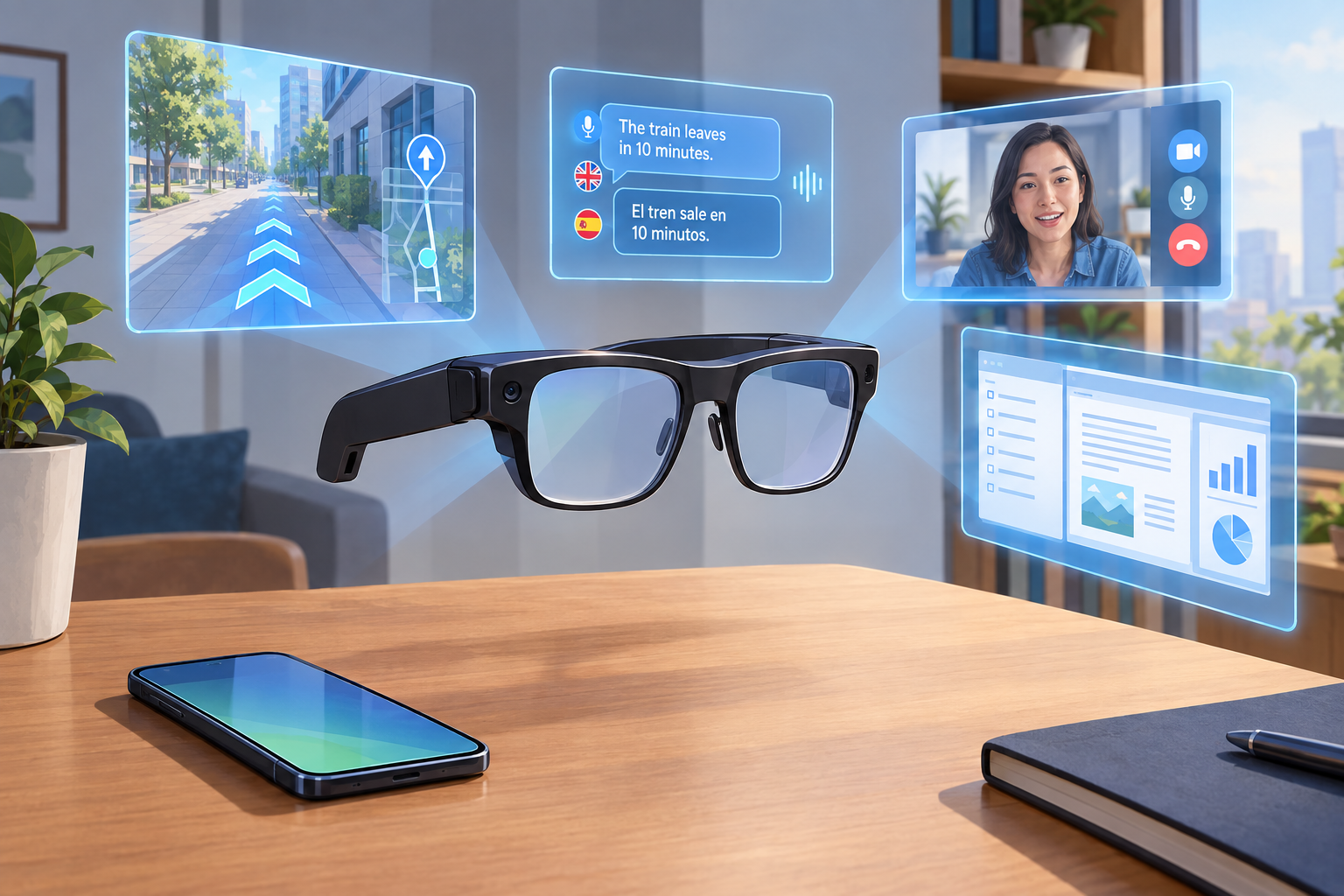
Snap’s new Specs attempt something more ambitious than adding a camera, speakers or a small notification display to familiar-looking eyewear. These augmented-reality glasses contain their own processors, displays and tracking hardware, allowing them to place interactive digital objects within the wearer’s view without relying on an external computing puck.

That standalone design is the product’s most important achievement. Apps, which Snap calls Lenses, run on the glasses, while built-in cameras and sensors track the wearer’s hands and map the surrounding environment. A phone can still be paired for calls, notifications and music, but it is not responsible for powering the central AR experience.
Brief demonstrations indicate that Specs can deliver a convincing taste of spatial computing in a relatively portable form. However, those early sessions took place in controlled settings and should not be treated as definitive testing of comfort, battery endurance, outdoor visibility or long-term reliability.
What Snap Specs can do
The glasses use transparent waveguide displays with a 51-degree field of view and support 16 million colors. Digital windows and three-dimensional objects can be positioned around a room, while electrochromic lenses can shift from clear to tinted when moving between different lighting conditions.
Users primarily interact through voice commands and hand gestures. Raising a hand can reveal controls on the palm, while pointing, pinching and dragging are used to select buttons or move virtual windows. Early impressions describe the interface as understandable and generally responsive, although gesture recognition reportedly missed some movements and occasionally required a second attempt.
Snap is presenting Specs as a broad computing platform rather than a single-purpose accessory. Planned experiences include walking directions overlaid on the surroundings, translated captions attached to a speaker, real-world measurement tools, web browsing, streaming video and virtual work displays. The glasses can also support Bluetooth keyboards and connect to other devices for expanded-screen uses.
Entertainment and learning are central to the pitch as well. Lenses can provide sports instruction, educational visualizations, shared games and Snapchat features. Built-in speakers provide open-ear audio, while an external indicator illuminates when the wearer deliberately records photos, video or audio.
Price and expected availability
Specs are available to pre-order for $2,195, with a $200 refundable deposit. Shipping is expected to begin in fall 2026 in the United States, United Kingdom and France, although buyers should remember that an expected window is not the same as a guaranteed delivery date.
The base package includes a charging case capable of replenishing the glasses while away from an outlet. Snap has also announced a $2,395 connected bundle with a cellular-enabled charging case. In the United States, compatible mobile-data service is expected to be offered through Verizon, with financing options intended to make the unusually high upfront price easier to spread over time.
The first-generation compromises
Despite looking more like eyewear than a headset, Specs remain large and conspicuous. The two frame sizes weigh approximately 132 and 136 grams, several times more than conventional glasses and substantially more than many camera-focused smart glasses. Initial comfort may therefore say little about how they will feel after several hours.
Battery life is rated at up to four hours of mixed use. The case can provide four additional charges, but users will still need to remove and recharge the glasses during a full day. Intensive AR applications may also produce different results from lighter activities such as listening to audio.
The display has another unavoidable limitation: virtual content only appears within its defined field of view. Large objects and windows can be clipped when the wearer looks away, and visual artifacts may reduce the appeal of lengthy reading or detailed desktop work. Specs also lack eye tracking, leaving users dependent on repeated hand movements for many selections. That could become tiring in applications requiring frequent interaction.
Can Specs replace a smartphone?
Not for most people, at least in this generation. A smartphone remains easier for typing, private communication, photography, banking, app discovery and tasks requiring a dependable all-day battery. Specs are also too expensive and visually distinctive to become an effortless replacement for a device already carried by billions of people.
The stronger case is as a complement. Navigation, translation, instruction and hands-free assistance can be more useful when information appears in context rather than on a screen held below eye level. Specs may also appeal to developers and enthusiastic early adopters who want to explore full spatial AR without wearing an enclosed headset.
Early demonstrations suggest Snap has built a credible standalone AR computer, but the purchasing decision will depend on questions that short previews cannot settle. Independent, extended testing will be needed to judge real battery life, fit, software depth and whether the glasses remain useful after their novelty fades.