Nagaland Police Confirm 19 Deaths as Suspected Adulterated-Liquor Probe Widens
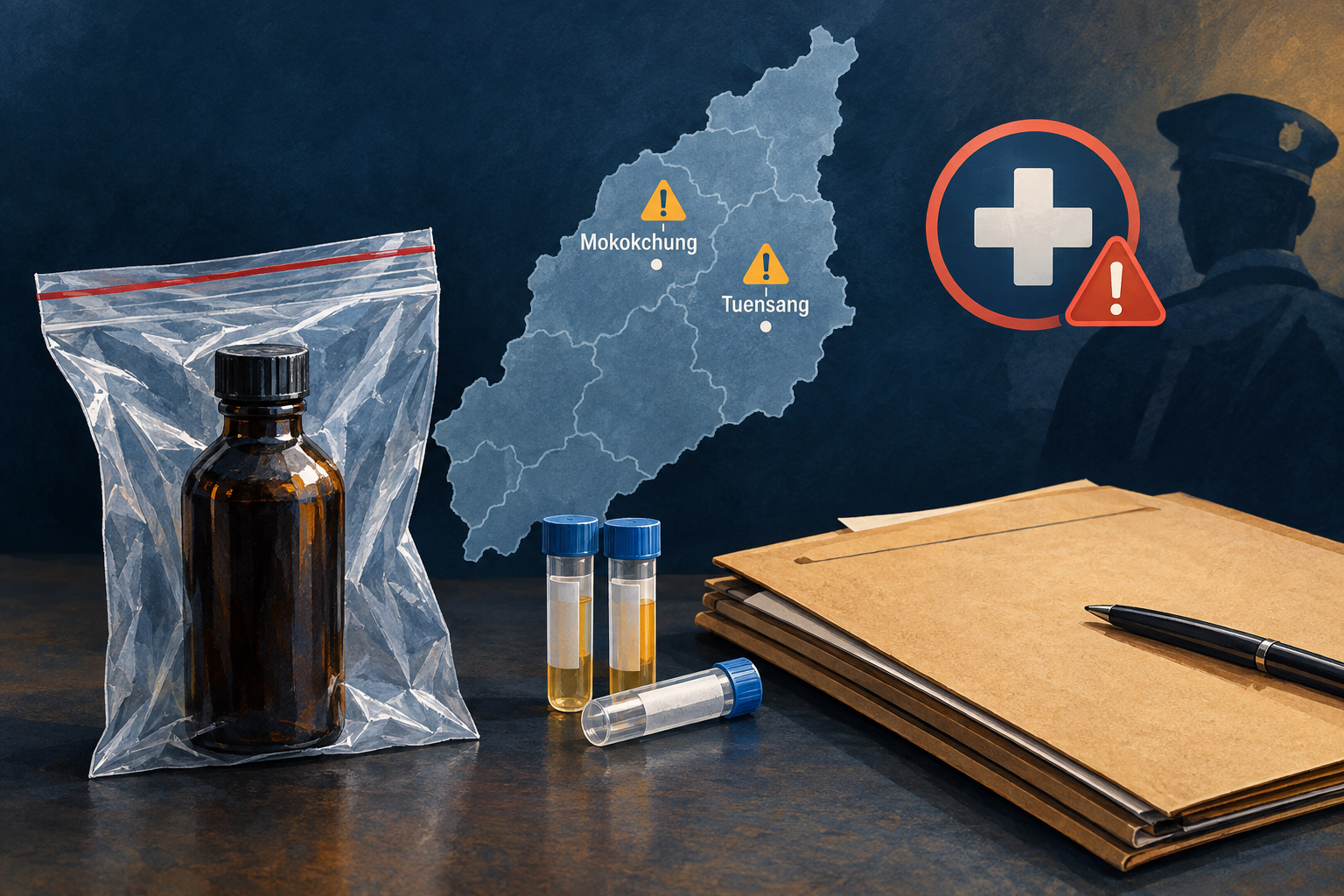
MOKOKCHUNG, September 26, 2026: Police in Nagaland have confirmed 19 deaths across Mokokchung and Tuensang districts amid investigations into a suspected connection with illicit or adulterated liquor. Officials have stressed that the cause has not been scientifically established and will remain suspected until forensic, medical and investigative findings are available.

Eight deaths have been confirmed in Mokokchung district. Six were reported from Mangkolemba subdivision, while two were recorded in an area under Mokokchung Police Station-II. The cases emerged over several days, with the first known death in the Mangkolemba area reported on September 19 and further fatalities confirmed through September 25.
In Tuensang district, police have confirmed 11 deaths associated with the earlier cluster reported around September 10 to 12 in Tuensang town and Chendang Saddle. Preliminary inquiries found that several of those who died had reportedly consumed alcohol before developing serious symptoms. Police described the available connection as circumstantial and said it was not sufficient to establish adulterated liquor as the medical cause.
SIT tasked with tracing suspected supply chain
Mokokchung Police have constituted a Special Investigation Team headed by Additional Superintendent of Police I Bunglang Chang. The team has been directed to examine the circumstances surrounding the deaths and trace the source, transportation and distribution chain of the liquor under suspicion.
A criminal case has been registered at Mangkolemba Police Station under Section 105 of the Bharatiya Nyaya Sanhita and relevant provisions of the Nagaland Liquor Total Prohibition Act. Police have conducted raids across Mokokchung town and the district’s subdivisions, made multiple arrests and seized large quantities of liquor for examination.
Police said investigators had obtained preliminary leads, including indications that some of the suspected liquor may have entered Nagaland from a neighbouring state. Any interstate enforcement response will depend on evidence from the investigation and forensic tests. Authorities have not announced a final finding about the product’s origin, contents or responsibility for the deaths.
Post-mortem examinations have been conducted in the Mokokchung cases. Biological samples and seized liquor are being prepared for examination at a forensic laboratory in Guwahati. The testing is expected to determine whether the seized alcohol contained toxic substances or had been adulterated.
The Tuensang investigation presents additional challenges because post-mortem examinations were not conducted in most of the initial cases before funerals took place. Police are therefore relying on medical records, witness accounts, information about possible alcohol consumption and scientific examination of seized products. Raids in Tuensang town and Chendang Saddle resulted in the seizure of hundreds of liquor bottles and beer cans.
Health and public-safety warnings issued
The Nagaland Excise and Prohibition Department has advised residents to strictly refrain from consuming liquor while inquiries continue, particularly liquor obtained from unknown, unauthorised or unregulated sources. The department has also asked the public to report suspected manufacture, storage, transportation or sale of illicit liquor to the nearest Excise office or police station.
The Mokokchung district administration has announced zero tolerance for the sale, transportation and storage of liquor and said enforcement operations will be intensified with assistance from village councils, ward authorities, town bodies and civil society organisations.
Residents who have consumed alcohol, especially during the preceding 48 hours, have been told to seek immediate medical attention if they experience warning signs. These include:
- Dizziness, severe headache or sudden weakness
- Blurred or impaired vision
- Nausea, vomiting or severe abdominal pain
- Breathing difficulty or bluish discolouration of the skin
- Confusion, loss of consciousness or rapid deterioration
Health authorities have warned people not to consume, share, discard or tamper with bottles suspected of containing unsafe liquor. Such containers should instead be preserved and reported to police or health officials, as they may be important to the investigation.
Officials have also urged residents not to circulate rumours, unverified casualty figures or unsupported claims identifying particular sellers or products. The confirmed position as of September 26 is that 19 people have died across the two districts and that alcohol consumption is being investigated as a possible common factor. Whether adulterated liquor caused the deaths will be determined only after forensic analysis and the completion of the police and medical inquiries.