Jaishankar Warns UN of a World Economy Turned Into a Weapon
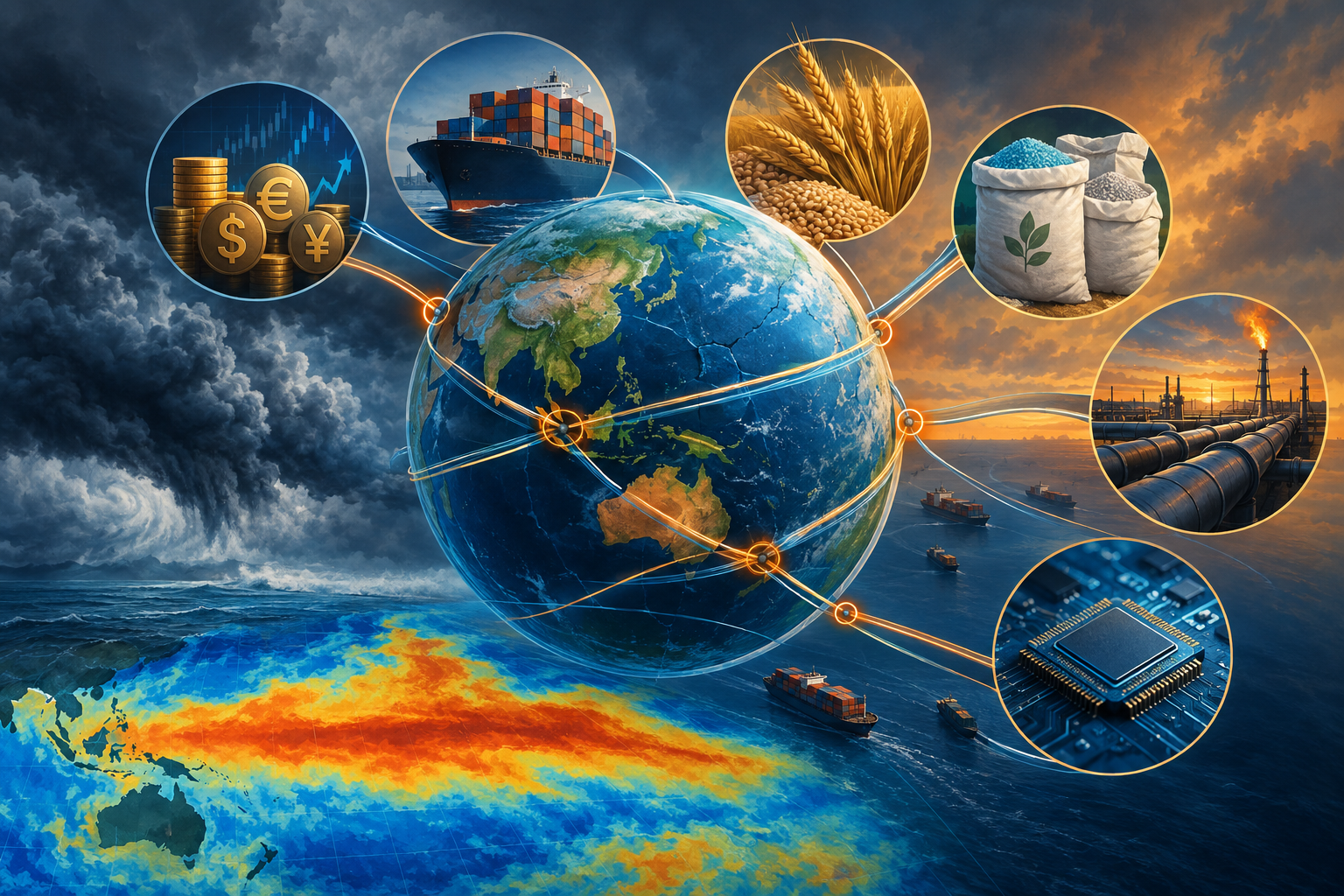
External Affairs Minister S. Jaishankar warned the United Nations General Assembly on September 26 that economic interdependence was increasingly being converted into geopolitical leverage, with finance, market access, supply chains and technology used to pressure other countries.

Addressing the General Debate of the UN General Assembly’s 81st session in New York, Jaishankar described a global environment in which extreme competition was weakening trust and creating strategic choke points. He said governments were responding by diversifying suppliers, reducing critical dependencies and protecting themselves against disruptions.
His argument extended the idea of national security beyond borders and military power. In the framework presented by Jaishankar, access to credit, payment systems, essential technologies, raw materials and international markets can influence a country’s ability to make independent decisions.
What the warning means
For households and businesses, the diplomatic language points to practical risks. Restrictions on energy, shipping, financial transactions or industrial inputs can raise transport and production costs. Limits on technology transfers can delay infrastructure projects and make digital or manufacturing expansion more expensive. Barriers affecting agricultural commodities can eventually appear in food prices.
Jaishankar said the consequences were especially serious for the Global South, where many governments have less financial room to absorb external shocks. He characterised their predicament as a “4F crisis” involving the security of food, fuel, fertiliser and finance.
According to the minister, a severe El Niño weather pattern, tighter fertiliser availability and obstacles to the movement of grain were adding to the danger. He also argued that pressure on development finance and restricted access to markets could slow progress towards the Sustainable Development Goals and weaken the ability of developing economies to industrialise.
Climate agencies describe El Niño as a warming of the central and eastern tropical Pacific that can alter rainfall and temperature patterns across several regions. Its effects vary by country, but drought, excessive rain or disrupted planting seasons can reduce agricultural output. When such weather pressure coincides with expensive fertiliser, higher fuel costs or interrupted shipping, the resulting food-price risk can become more difficult for importing countries to manage.
Conflict travels through the economy
Jaishankar told the Assembly that countries far from active conflicts were being penalised despite having little influence over the decisions that caused them. He said those suffering the greatest economic impact frequently had the least voice in international decision-making.
The minister connected that concern to threats facing commercial shipping and seafarers in the Gulf, Red Sea and Black Sea regions. In his assessment, insecurity along major maritime routes could disrupt the movement of energy, grain, fertiliser and other essential goods. Because many developing economies depend on imported commodities and ocean freight, even a distant confrontation can affect domestic inflation, public spending and foreign-exchange reserves.
The address reflected India’s broader diplomatic effort to present itself as a representative of developing-country concerns while retaining strategic autonomy among competing power blocs. New Delhi has repeatedly argued that international rules should not allow a small group of powerful states to control access to capital, technology, resources or markets.
At the same time, India has pursued closer economic and security relationships with the United States, Europe, Japan and Australia while maintaining important links with Russia and expanding engagement with Africa, West Asia and other parts of the Global South. That multi-directional approach supports the diversification strategy Jaishankar advocated at the UN.
India’s proposed role
Jaishankar said India had undertaken about 600 major development projects across 78 countries, covering fields including infrastructure, agriculture, manufacturing, information technology and capacity building. He presented those programmes, along with India’s humanitarian assistance and supplies of essential goods, as evidence that developing countries could create practical partnerships without reproducing restrictive dependencies.
He also highlighted India’s domestic development experience, including digital public infrastructure and improvements in access to basic services, as a possible model for other countries. These claims formed part of his case for giving the Global South a larger role in institutions that govern finance, trade, technology and international security.
The central message of the speech was that peace could not be measured only by the absence of direct warfare. Jaishankar argued that continuous economic pressure, disrupted trade and insecurity around essential supplies could also leave the international system dangerously unstable. His warning placed the cost of geopolitical rivalry not only in diplomatic chambers or military theatres, but in borrowing rates, factory inputs, farm yields and household bills around the world.