Iran Claims It Seized US Underwater Vehicle in Strait of Hormuz; US Denies Claim
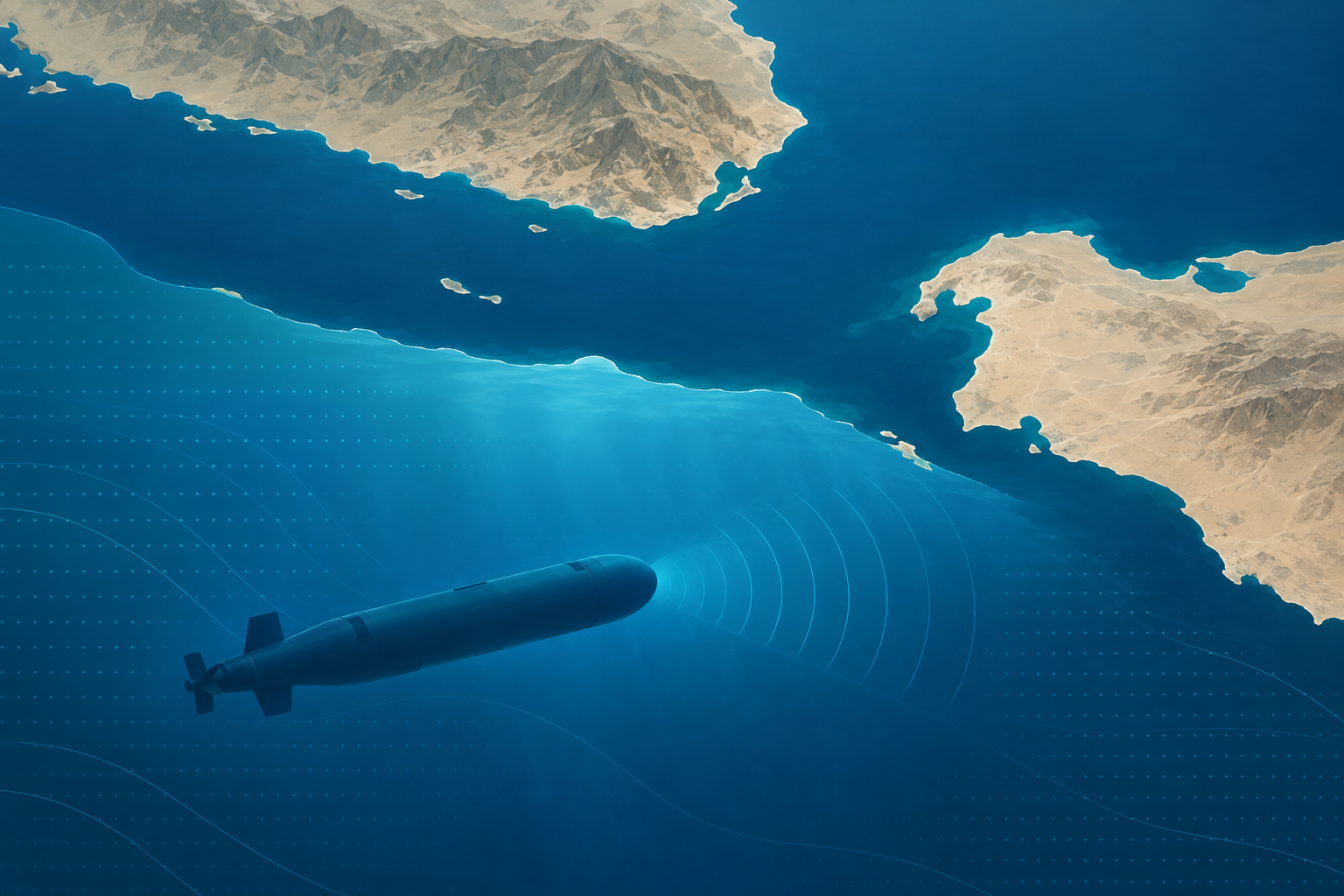
Iran’s Islamic Revolutionary Guard Corps said on September 27, 2026, that its naval forces had seized a US autonomous underwater vehicle in the Strait of Hormuz and handed it to specialists to recover data. The Guard identified the vehicle as a REMUS 600 and alleged that it had been conducting espionage. Those are Iranian claims, not independently established facts.

US Central Command disputed the account. Its spokesperson, Captain Tim Hawkins, said US forces maintained control of all their operational drone assets and rejected the Guard’s assertion. The competing statements leave fundamental questions unresolved, including whether a vehicle was seized, who owned or operated anything Iran may have recovered, and what data it might have carried.
What Iran says happened
The Guard said its naval personnel captured the underwater vehicle through an operation involving intelligence work and electronic warfare. It described the craft as American and said Iranian specialists were seeking to retrieve information from it. The statement did not provide independently verifiable details establishing the vehicle’s identity, its mission, its precise location when recovered or the circumstances in which it came into Iranian hands.
Those distinctions matter. Identifying a type of equipment would not, by itself, establish who was operating a particular unit. Nor would recovering an underwater craft establish that it was intercepted while functioning normally: such vehicles can also be found after a malfunction or at the end of a mission. There is no confirmed account of what happened to the specific vehicle described by Iran.
What is a REMUS 600?
The REMUS 600 is a real class of autonomous underwater vehicle, or AUV. Unlike a crewed submarine, an AUV travels underwater without people aboard, following a programmed mission and collecting readings through whatever sensors have been fitted to it. The REMUS 600 was developed for longer missions and greater operating depth than smaller vehicles in the same family. Woods Hole Oceanographic Institution, which helped develop it, describes the model as capable of operating at depths of up to 600 meters.
Its modular design allows sensors to be selected for different jobs. Depending on its configuration, a REMUS 600 can support underwater surveying, environmental research or work involving sonar and mine detection. US Navy materials describe a REMUS 600-based vehicle developed for mine-countermeasure missions, and the Navy has documented use of the platform in testing. These established uses explain why the model would draw military interest, but they do not verify Iran’s identification of the reported craft or its allegation about the craft’s purpose.
A name or outward resemblance also cannot reveal what a particular vehicle recorded. The information available from any recovered AUV would depend on its installed equipment, whether it completed a mission, what remained stored aboard and whether the data could be accessed. Iran has said it intends to recover information; it has not established publicly that useful information was recovered.
Why the strait matters
The Strait of Hormuz lies between Iran and Oman, linking the Persian Gulf to the Gulf of Oman and the Arabian Sea. It is a narrow route for vessels entering and leaving the Gulf, making activity there significant well beyond the immediate encounter between two militaries.
It is also a critical energy passage. The US Energy Information Administration estimated that oil flows through the strait averaged 20.9 million barrels a day in the first half of 2025, roughly one-fifth of global petroleum liquids consumption at the time. That figure is a historical measure of the strait’s importance, not an estimate of traffic on September 27, 2026; shipping through the waterway has since faced substantial disruption.
The location makes any claim involving military surveillance or control of the waterway consequential. Underwater vehicles can gather information without putting a crew directly at risk, while a reported recovery creates questions about equipment and stored data. In this case, however, the immediate conclusion is narrower: Iran says it seized a US REMUS 600 for data recovery, and the US rejects that account. The available confirmation of what a REMUS 600 can do does not confirm that this seizure occurred.