
U.S. Import Ban on Selected Canadian Goods Takes Effect
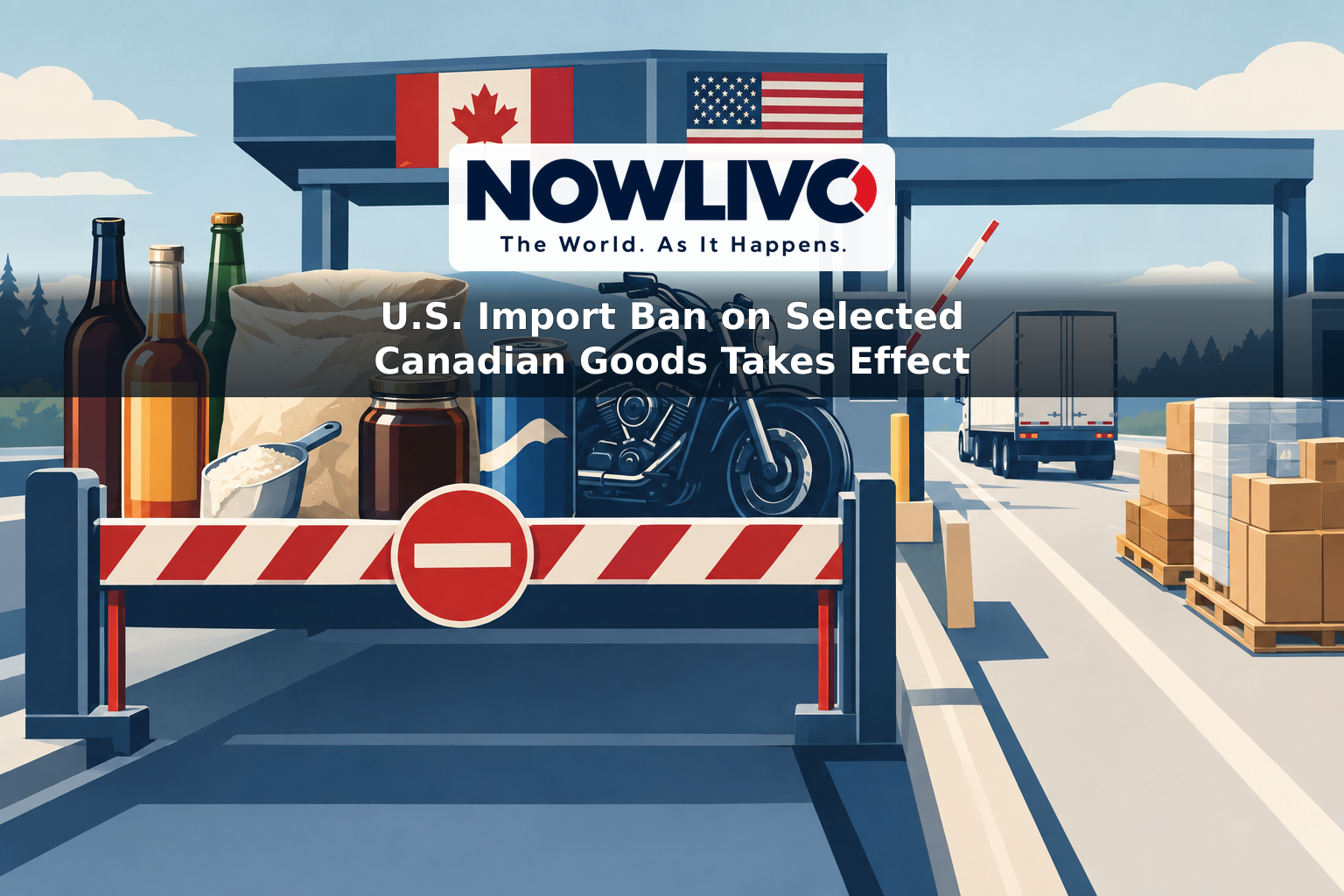
A U.S. import ban on selected Canadian goods took effect at 12:01 a.m. Eastern time on September 29, 2026. It covers specified alcoholic beverages, whey products, molasses, nonalcoholic beer and motorcycles with engines larger than 800 cubic centimeters. The restrictions are the latest step in a trade dispute that began before this week; they are not a blanket ban on Canadian food, drinks or vehicles.

President Donald Trump signed three proclamations establishing the exclusions on September 8. The listed goods had already faced an additional 50% U.S. duty under earlier measures. For covered imports, the change is consequential: paying the tariff is no longer an option for bringing newly imported goods into the U.S. market.
Which products are covered?
The alcohol list includes specified Canadian beer, wine, cider and spirits. It covers products in listed customs classifications, with an important qualification for some categories: the ban applies only when they are packaged in bottles, cans, boxes, kegs or similar containers intended for direct consumption. It should not be read as prohibiting every Canadian alcohol-related ingredient or bulk shipment.
A second list includes whey protein concentrates and several forms of modified, fluid and dried whey. It also names particular types of molasses and nonalcoholic beer. Despite the dairy-related rationale for that proclamation, the ban does not extend to every Canadian dairy product. Shoppers should not assume that Canadian milk or cheese is prohibited simply because whey appears on the list.
The vehicle restriction is narrower still. It applies to Canadian motorcycles and similar cycles fitted with reciprocating internal-combustion engines exceeding 800 cc. It does not amount to a ban on Canadian-made passenger cars or on every motorcycle. Whether a particular shipment is covered depends on its origin and customs classification, not just a familiar brand name.
The proclamations also address goods that had reached the United States before September 29 but had not yet been entered for consumption or withdrawn from a warehouse for consumption. Those goods remain subject to the earlier 50% duty rather than the new exclusion. Businesses handling shipments near the cutoff will therefore need to check their entry records closely.
Why did Washington impose the ban?
The Trump administration says Canada has maintained measures that disadvantage U.S. exporters. Its stated objections concern provincial restrictions on U.S. alcoholic beverages, the way Canada allocates dairy import quotas and Canada’s treatment of U.S. motor vehicles. The administration invoked Section 338 of the Tariff Act of 1930, first imposing additional duties that took effect on August 22 and then selecting some tariffed products for outright exclusion.
Canada disputes Washington’s characterization of the broader conflict. The Canadian government says it negotiated in good faith but rejected proposed U.S. terms it considered harmful to Canadian workers and businesses. It imposed counter-tariffs on selected U.S. goods effective September 8. Those Canadian tariffs are separate from the U.S. import ban that began September 29.
What might shoppers and businesses notice?
For U.S. consumers, the clearest possible effect is less choice over time in the specific covered categories. A retailer may still have stock that entered before the ban; the measure does not order stores to remove goods already on their shelves. Future availability will depend on existing inventories, alternative suppliers and how long the restriction remains in place. Price increases are possible where substitutes are scarce, but they are not an automatic or uniform result.
Importers and distributors face a more immediate task: identifying covered products before arranging new shipments and checking whether contracts or orders can be fulfilled. Canadian producers that sell into the United States may need to find other buyers or adjust production plans, while U.S. retailers and manufacturers using affected ingredients may need to review their supply chains. The distinction between a tariff and a ban matters most to those firms: a costly shipment could previously proceed after duty was paid, but a newly arriving covered product now cannot enter under the listed provisions.
The precise scope rests on the product classifications and limitations in the U.S. proclamations. That makes a broad label such as “Canadian dairy” or “Canadian alcohol” an unreliable guide to what is actually barred. The September 29 effective date marks a new restriction within a longer-running dispute, not the start of the trade conflict itself.