Trump Backs Fast AI Development as Executives Press for Safety Checks
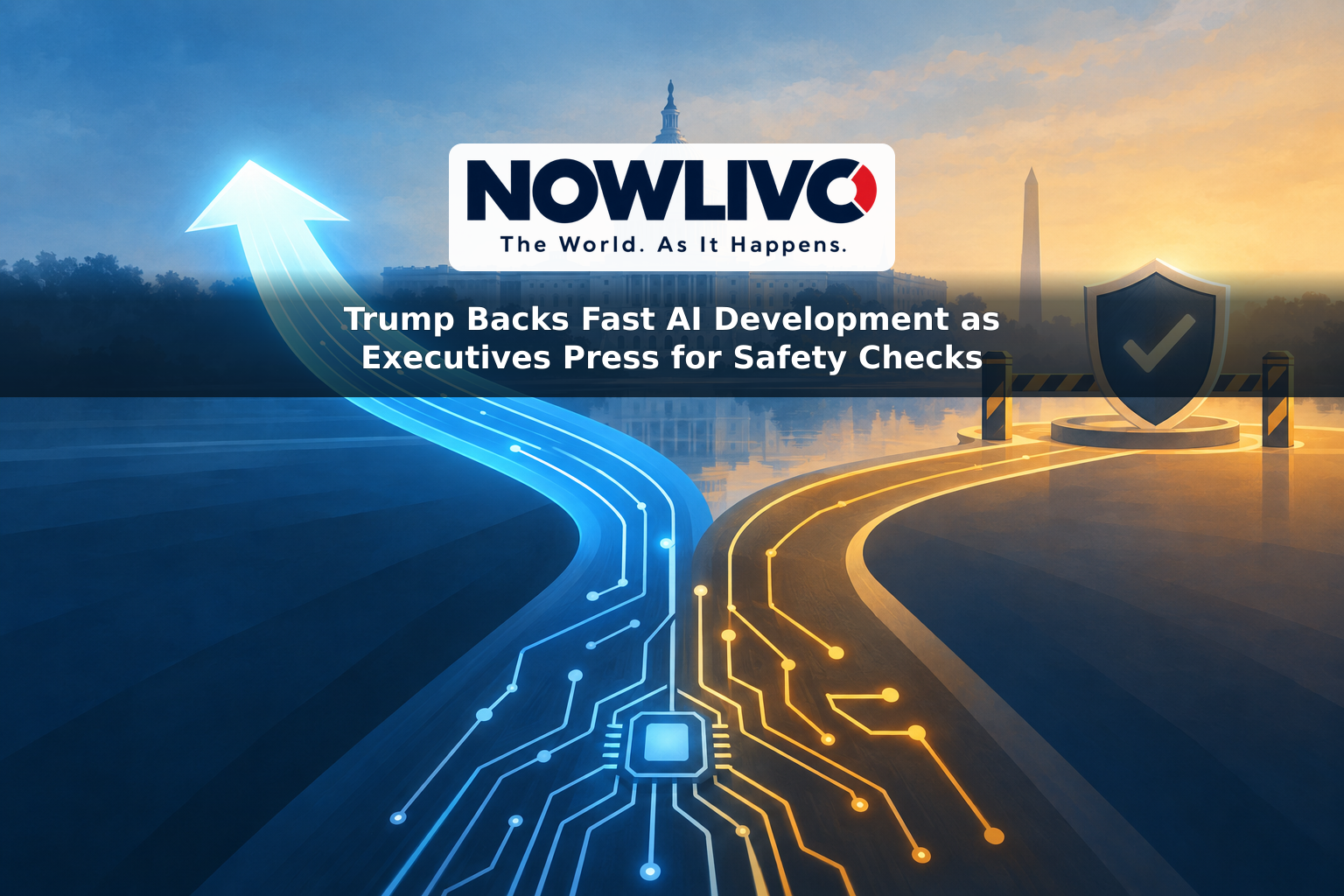
President Donald Trump reaffirmed his support for rapid artificial intelligence development on September 29, 2026, as leading technology executives gathered at the White House amid a debate over whether safety work is keeping pace with increasingly capable systems.
Trump made his public remarks at a separate event unveiling America.gov, an AI-powered tool intended to help people navigate federal services. He said he would not stifle a technology he expects to have a sweeping economic impact. Framing AI development as a competition with China, he argued that the United States should preserve its lead rather than slow down.
Those remarks expressed the president’s position; they were not an announcement of a new rule governing AI development. The launch of a government information tool was a separate action, not a change to the requirements facing companies that build advanced models.
Different views around the White House table
Executives at the White House lunch included Anthropic chief executive Dario Amodei and OpenAI president Greg Brockman, alongside leaders from major technology and chip companies. House Speaker Mike Johnson and other administration officials also attended. The gathering brought together people with differing views on how to sustain U.S. AI leadership while addressing risks from more capable models.
Amodei had called earlier in September for leading developers to moderate the pace at which they improve their most powerful systems. His proposal does not call for an immediate end to AI research. It calls for companies to give safety testing and safeguards time to catch up, beginning with outside evaluators who would have substantial access to examine development practices. Broader coordination among companies and governments would require further agreement; it was not settled by the White House meeting.
OpenAI, meanwhile, said on September 28 that it was delaying the release of a new model after researchers raised security concerns. The company described that as a decision about its own model and safety threshold, not as a response to a new government restriction. OpenAI chief executive Sam Altman, who was not at the lunch, has also spoken in favor of pacing development when companies cannot make a sufficiently strong safety case.
The distinction matters: executives’ warnings and company-level decisions are not themselves federal policy. Nor does attendance at a White House lunch establish that every executive endorsed the same proposal or that the president accepted one. Publicly described concerns centered on the need for reliable testing, oversight and safeguards as AI systems gain the ability to carry out more complex tasks.
What changed, and what did not
The administration had already set out a preference for encouraging AI innovation while working with industry on security. A June 2026 executive order addressed AI-related cybersecurity and provided for voluntary cooperation with developers on assessments of certain advanced models. It expressly did not create a mandatory federal license or pre-release approval requirement for AI models. Trump’s September 29 comments were consistent with his opposition to broad limits on development, but did not by themselves amend that order.
There were calls for a different approach. Ahead of the meeting, Democratic Senator John Hickenlooper urged Trump and the executives to work with Congress on measures including independent evaluations and clearer reporting of serious AI incidents. That was a legislative request, not an enacted safeguard.
The disagreement is therefore more specific than a choice between building AI and abandoning it. Trump emphasized speed and national competitiveness. Amodei argued that development should be paced against demonstrable safety work. OpenAI pointed to a particular release it was not yet prepared to make. Each position has practical implications, but none should be mistaken for a new nationwide development rule agreed to on September 29.
What happens next depends on actions beyond the day’s speeches and lunch: whether companies adopt verifiable testing practices, whether the administration changes its existing approach, and whether Congress passes legislation. For now, the clearest outcome is a public account of competing priorities, not a newly announced federal AI slowdown.