INDIA Bloc Plans October ‘Save Democracy’ Marches Over Voter-Roll Revision
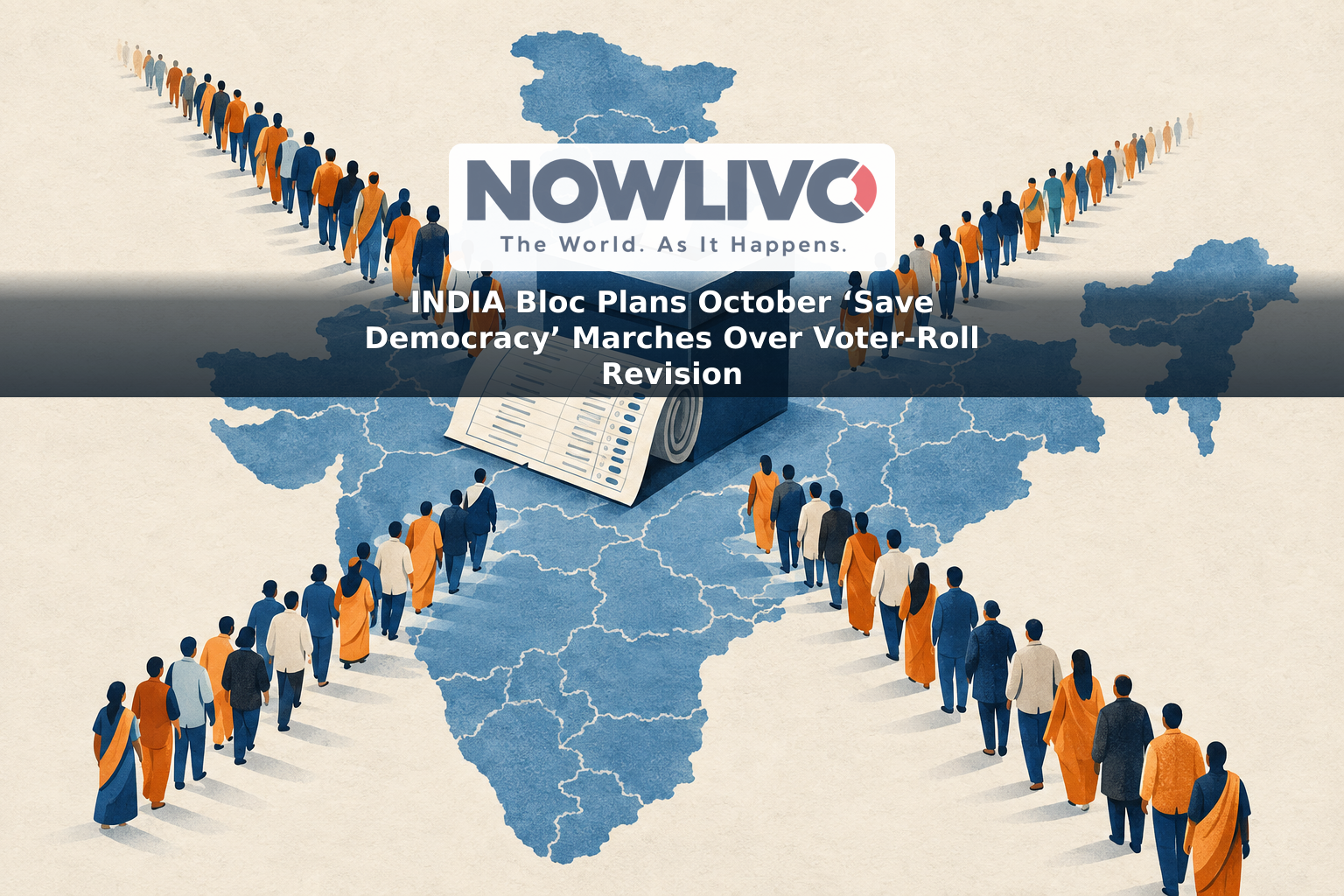
India’s opposition INDIA bloc has announced a campaign over the revision of electoral rolls, with district-level marches scheduled from October 2 to 8 and a protest by opposition lawmakers at the Election Commission on October 6. Congress president Mallikarjun Kharge outlined the programme after alliance leaders met in New Delhi on September 30.
The alliance calls the district events “Save Democracy” marches. Kharge said participants would demonstrate outside district magistrates’ offices and explain their concerns to the public. He also said opposition leaders would seek a meeting with President Droupadi Murmu in the second week of October and organise five larger rallies. Dates and venues for those rallies had not been announced when the programme was presented.
What the alliance wants
The immediate focus is the Election Commission’s Special Intensive Revision, or SIR, of voter lists. Kharge called for greater disclosure of changes to electoral rolls, including additions, deletions and corrections at constituency and polling-booth level. He said voters should receive notice and reasons before their names are removed, along with a meaningful opportunity to appeal. He also argued that registration should be straightforward for eligible first-time voters.
Kharge said the alliance favoured using electoral rolls prepared before the revision for future elections and supported a return to paper ballots instead of electronic voting machines. Those are opposition demands, not changes to election rules. The planned October 6 march is intended to take the bloc’s objections directly to the Election Commission; the proposed meeting with the president would provide another forum for its concerns.
The bloc has framed the campaign in much broader terms. Kharge accused the government of undermining voters’ rights and democratic institutions. Congress leader Rahul Gandhi said he believed India’s democratic structure was under attack and argued that opposition parties needed to respond together. Trinamool Congress leader Mamata Banerjee called for Chief Election Commissioner Gyanesh Kumar to resign. Claims of election theft or institutional capture made by alliance leaders should be understood as their political accusations; the announcement of a protest does not establish that elections were stolen.
Who joined the discussions
The September 30 meeting brought together leaders and representatives from multiple opposition parties. Alongside Kharge and Rahul Gandhi, attendees included Congress leader Sonia Gandhi, Banerjee, Rashtriya Janata Dal leader Tejashwi Yadav, Jammu and Kashmir Chief Minister Omar Abdullah and Nationalist Congress Party (Sharadchandra Pawar) lawmaker Supriya Sule. Kharge said Shiv Sena (UBT) leader Uddhav Thackeray and Jharkhand Chief Minister Hemant Soren joined remotely. Representatives of several Left parties and other alliance members also took part.
The breadth of the meeting matters to the campaign’s prospects, but attendance at a joint discussion does not guarantee that every party will mobilise equally for every march or rally. The October 2–8 events and the October 6 lawmakers’ march are announced plans. Their turnout, the eventual locations of the five larger rallies and whether the requested presidential meeting takes place remain to be seen.
The response and what remains unresolved
The Election Commission has maintained that its orders on the voter-roll revision follow established procedures and have legal sanction. It has also said that differing views within the commission are a normal part of institutional deliberation. The bloc’s objections to the revision and the commission’s account of its process are therefore distinct positions, not a settled finding about the integrity of the rolls.
The governing Bharatiya Janata Party has challenged the opposition’s motives. Union minister Shivraj Singh Chouhan described the announced marches as an attempt to protect political dynasties rather than democracy and questioned how united the alliance was. That response, too, is a political argument rather than a measure of what the campaign will achieve.
For now, the established development is a coordinated opposition programme with specified dates for its first marches and Election Commission protest. The larger dispute—whether the voter-list exercise warrants the changes the bloc seeks—will not be resolved by the announcement alone. The coming events will show how the alliance presents its case publicly and whether its participating parties can sustain a common campaign.