US Completes Iraq Troop Withdrawal as Anti-ISIS Mission Shifts to Jordan
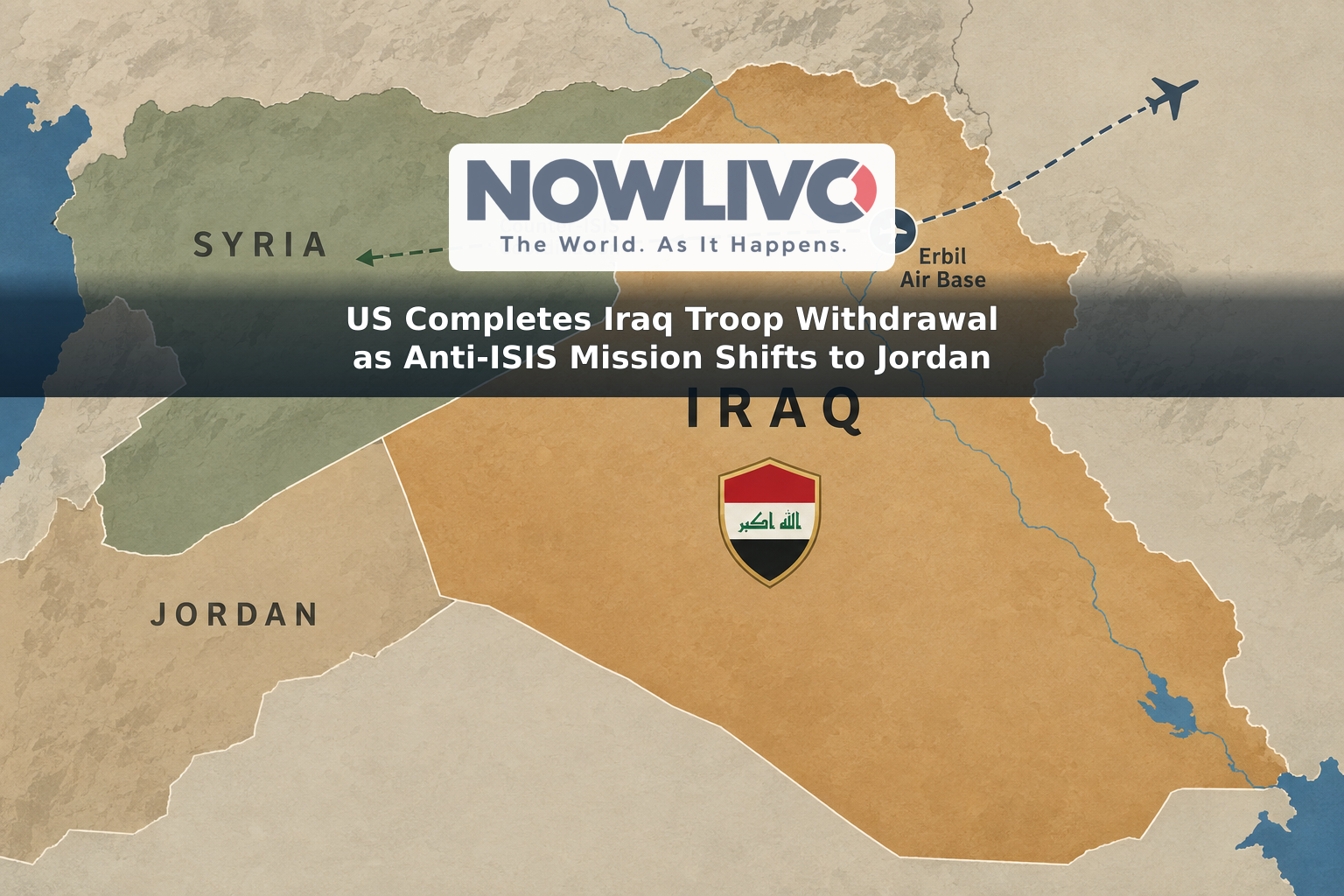
The United States has completed the withdrawal of its forces and equipment from Iraq, ending the US-led coalition’s military mission against the Islamic State group inside the country. The final departure from Erbil Air Base in northern Iraq took place on September 30, the Pentagon and US Central Command said.
The move closes the Iraq chapter of Operation Inherent Resolve, the campaign established in 2014 after Iraqi authorities sought international help against ISIS. It does not end US security cooperation with Baghdad or the coalition’s campaign against ISIS elsewhere in the region. Instead, it shifts primary responsibility for Iraq’s security to Iraqi forces and moves the coalition’s operational headquarters to Jordan.
How the withdrawal agreement worked
Washington and Baghdad set out the transition in a joint statement on September 27, 2024. They agreed to conclude the coalition’s military mission in Iraq by the end of September 2025 and develop bilateral security partnerships that would support Iraqi forces and maintain pressure on ISIS. The agreement also provided for a second phase, allowing coalition operations related to Syria to continue from an agreed platform through September 2026, subject to conditions on the ground and further consultations.
Coalition forces subsequently left positions in federal Iraq while a smaller presence remained in the Kurdistan Region to support the Syria mission. According to US Central Command, Erbil Air Base had become the coalition’s main operational hub in Iraq and hosted most of the approximately 1,500 American and coalition personnel supporting counter-ISIS operations there. Their departure completes that final phase of the drawdown.
The distinction between the two deadlines matters: the coalition mission inside Iraq was scheduled to end first, while the arrangement supporting operations in Syria ran into 2026. The September 30 departure from Erbil marks the end of the remaining US military presence under that plan, not a newly announced decision to abandon cooperation with Iraq.
What remains of the security mission
The Pentagon says Iraqi security forces will take the lead against ISIS remnants, including in the Kurdistan Region, where Peshmerga forces have been an important part of the campaign. It says the United States will continue to offer targeted training and intelligence support to Iraqi partners under a bilateral security relationship. Baghdad, rather than the US-led coalition, now has primary responsibility for addressing security challenges within Iraq.
Meanwhile, Combined Joint Task Force–Operation Inherent Resolve remains active. US Central Command says it is now headquartered in Jordan and will continue counter-ISIS work in Syria alongside coalition partners and the Syrian government. American and coalition forces elsewhere in the region will also remain prepared to respond to ISIS threats, the command said. The troop withdrawal from Iraq therefore should not be mistaken for the end of the broader campaign.
US Central Command commander Adm. Brad Cooper said Iraqi forces have developed the capacity to manage threats at home. That assessment will face a continuing test: ISIS lost its territorial hold in Iraq in 2017, but the Pentagon still identifies its remnants as a security challenge. The practical question is how effectively Iraqi forces can track and contain those cells without coalition troops based in the country.
A regional shift with different meanings
For Iraq’s government, the handover is a milestone in asserting control over its own security decisions. Prime Minister Ali al-Zaidi described it as the start of a new phase built around Iraqi sovereignty and the readiness of Iraqi institutions. He said Iraqi forces would continue the fight against ISIS and that the government would work to ensure weapons are held by the state rather than non-state groups.
The withdrawal also changes the calculations of other actors. Some officials in the Kurdistan Region have expressed concern about losing the protection associated with the US presence at Erbil, particularly amid wider regional tensions. Iran-aligned Iraqi groups have welcomed the departure, while the Pentagon has said that dealing with militias it regards as a threat to Iraqi sovereignty is now primarily Baghdad’s responsibility. Those responses show why the end of a foreign deployment does not, by itself, settle Iraq’s internal security disputes.
The United States withdrew its troops from Iraq once before, in 2011, then returned at Iraq’s invitation in 2014 as ISIS seized territory. This departure ends a different, 12-year mission. Its longer-term significance will depend less on the ceremony at Erbil than on whether Iraqi forces can sustain security at home and whether the reorganized coalition can maintain pressure on ISIS across the border.