Delhi’s adaptive traffic signals: What could change and when
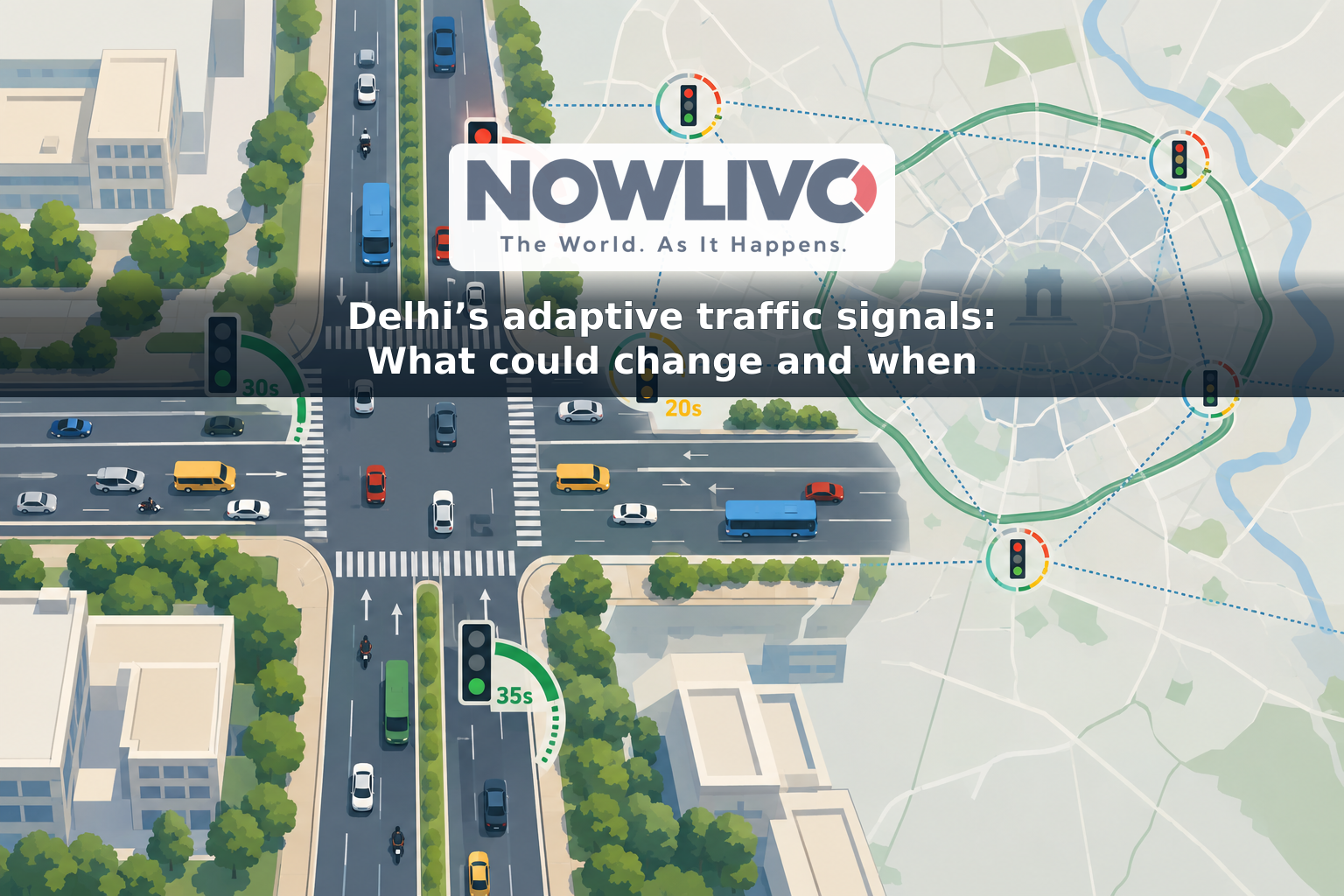
A red light on a quiet road may eventually last less time in Delhi, while a busier approach to the same junction may get a longer green. That is the practical idea behind the adaptive traffic signals planned under the city’s Intelligent Traffic Management System, or ITMS.
The Cabinet approved the ₹1,789.52-crore project on September 30, 2026. Approval does not mean the new signals are operating across Delhi. Delhi Police must select a company to install and integrate the system, and the work is planned in three phases. For commuters, the first noticeable changes would come on corridors where equipment has been installed, tested and commissioned—not at every signal at once.
How would the lights change?
Many signals currently rely substantially on preset timings, even though the number of vehicles approaching a junction can vary through the day. Under the plan, traffic data would help controllers adjust how long each direction receives a red or green light. If one approach is crowded and another is relatively clear, the signal could respond to that difference rather than repeat the same cycle regardless of conditions.
The system is also intended to coordinate lights along selected corridors. That matters because clearing one junction is of limited help if vehicles immediately meet another red light and form a new queue. Coordinated timing could reduce unnecessary stops along a stretch, although it will not remove every delay or guarantee an uninterrupted run of green lights.
Drivers may notice that a familiar signal does not give exactly the same amount of time on every trip. A green could last longer when traffic is heavy, or a red could be shorter when fewer vehicles are waiting. These are examples of what adaptive control is designed to do, not a promise of a particular change at any named junction. The timings will depend on how the system is configured and what traffic conditions it detects.
Where is the system planned?
The approved project covers 42 identified traffic corridors. Its scope includes 1,092 locations for adaptive traffic control and 1,029 locations for technology-based enforcement. Those are different functions: the enforcement network is intended to detect specified traffic violations, while adaptive control is intended to manage signal timings. The figures should not be read as a list of junctions already converted.
The initial corridor group is planned to include Ring Road, Outer Ring Road, Rao Tula Ram Marg, Teen Murti and C-Hexagon. Seven more corridors are expected in the second phase, with the rest following in the third. A corridor being named in the first group does not mean every signal along its full length will switch on simultaneously; junction-level commissioning will determine where drivers first encounter the change.
The broader ITMS plan goes beyond signal timing. It includes traffic command-and-control facilities, detection of congestion and road incidents, and information for motorists through electronic roadside signs and digital platforms. Updates could cover diversions, road conditions and parking availability. The system is also intended to support priority movement for ambulances and other emergency vehicles.
When might a regular commute feel different?
The government has set out a 24-month, three-phase implementation plan, followed by five years of operation and maintenance. Delhi Police will choose a master system integrator through competitive bidding. Each later phase is to follow an assessment of testing, commissioning and performance in the previous one.
That means there is no confirmed date on which a commuter can expect a particular junction to begin using adaptive timing. The 24-month plan describes implementation work, not an announcement that all 1,092 locations are live now or will change together on a single day. Procurement, installation and testing still stand between approval and everyday use.
For now, motorists should follow the signal displayed at each junction as usual. As sections are commissioned, the most visible difference may be less predictable—but more responsive—waiting times on the first corridors. Whether journeys become consistently quicker will depend on the system’s performance in real traffic, especially during rush hours, disruptions and changes in traffic flow.