
Commercial LPG prices rise on October 1; household rates unchanged
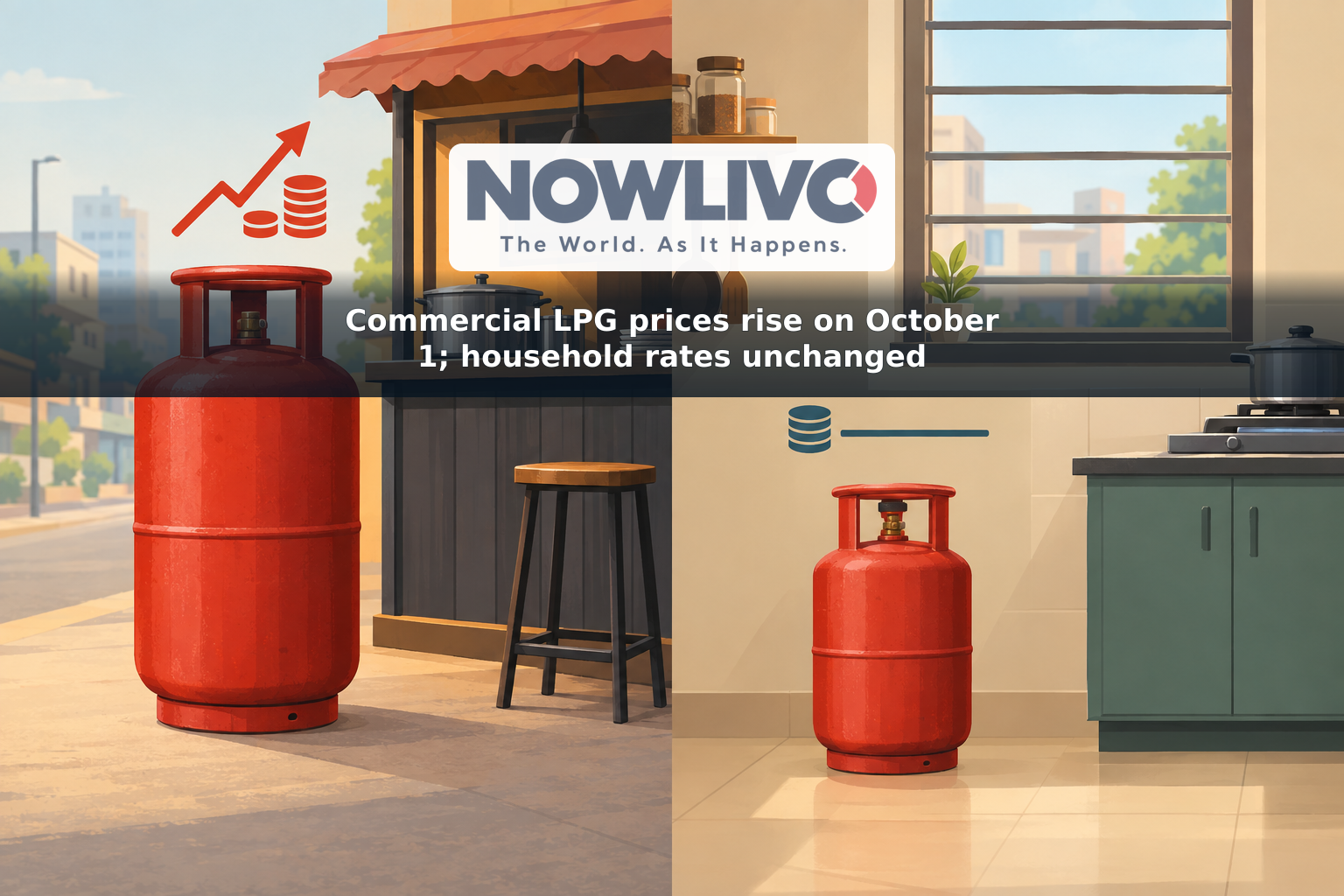
Businesses that cook with commercial LPG face a higher refill bill from October 1, 2026. The price of a standard 19-kg commercial cylinder has risen across major Indian cities, though the increase is not identical everywhere. In Delhi, it now costs ₹2,810, up ₹62.50 from September. In Kolkata, the increase is ₹70, taking the price to ₹2,954.
The change is most directly relevant to restaurants, cafés, hotels, caterers, canteens and other establishments that buy 19-kg cylinders for their kitchens. It does not mean the price of the smaller cylinder commonly used in homes has risen too: the 14.2-kg domestic LPG rate remains unchanged in this October revision.
What does a commercial cylinder cost in each city?
These are the October 1 prices for a standard 19-kg cylinder in four major cities, alongside the September rates and the increase per refill:
| City | September price | October 1 price | Increase |
|---|---|---|---|
| Delhi | ₹2,747.50 | ₹2,810 | ₹62.50 |
| Kolkata | ₹2,884 | ₹2,954 | ₹70 |
| Mumbai | ₹2,701 | ₹2,764.50 | ₹63.50 |
| Chennai | ₹2,916.50 | ₹2,983 | ₹66.50 |
Mumbai remains the least expensive of these four cities for the listed commercial refill, while Chennai is the most expensive. The difference between their October prices is ₹218.50 per cylinder. These are city-specific rates, not a single nationwide price: a business elsewhere should check the rate for its own location rather than budget using the nearest metro’s figure. For example, a 19-kg cylinder is listed at ₹2,898 in Bengaluru and ₹3,100.50 in Patna from October 1.
Who bears the increase?
The immediate cost falls on customers buying commercial cylinders. A Delhi business using 20 such refills in a month would spend ₹1,250 more than it would have at September’s per-cylinder rate, assuming it bought the same number of refills. For a Kolkata business buying 20, the corresponding increase would be ₹1,400. Those examples measure only the change in the cylinder price; an establishment’s total fuel bill also depends on how much gas it uses.
A caterer handling several events or a restaurant operating long kitchen hours may notice the increase more than a business that replaces a cylinder occasionally. Whether customers eventually pay more for meals or services is a separate decision for each business. The LPG revision raises one operating cost; it does not by itself establish a new menu price or a standard surcharge for diners.
What about cylinders used at home?
The familiar household LPG cylinder holds 14.2 kg, while the commercial cylinder discussed here holds 19 kg. They serve different customer categories and have different prices. On October 1, the listed domestic refill remains ₹942 in Delhi, ₹968 in Kolkata, ₹941.50 in Mumbai and ₹957.50 in Chennai. None of those four household rates increased as part of this revision.
That distinction matters when reading a headline about “LPG prices.” A rise in the 19-kg rate is not an equal increase in the household cooking-gas bill. It also does not imply that the two cylinder types should cost the same: both their sizes and their pricing differ. Household customers checking the cost of their next refill should look for the domestic 14.2-kg rate in their city, rather than the commercial figure quoted for restaurants.
For businesses, the practical takeaway is to update October fuel budgets using the local 19-kg price and expected number of refills. For households, this particular October 1 increase does not change the listed domestic cylinder rate.