US Supreme Court’s new term: Which climate, religion and immigration cases come next?
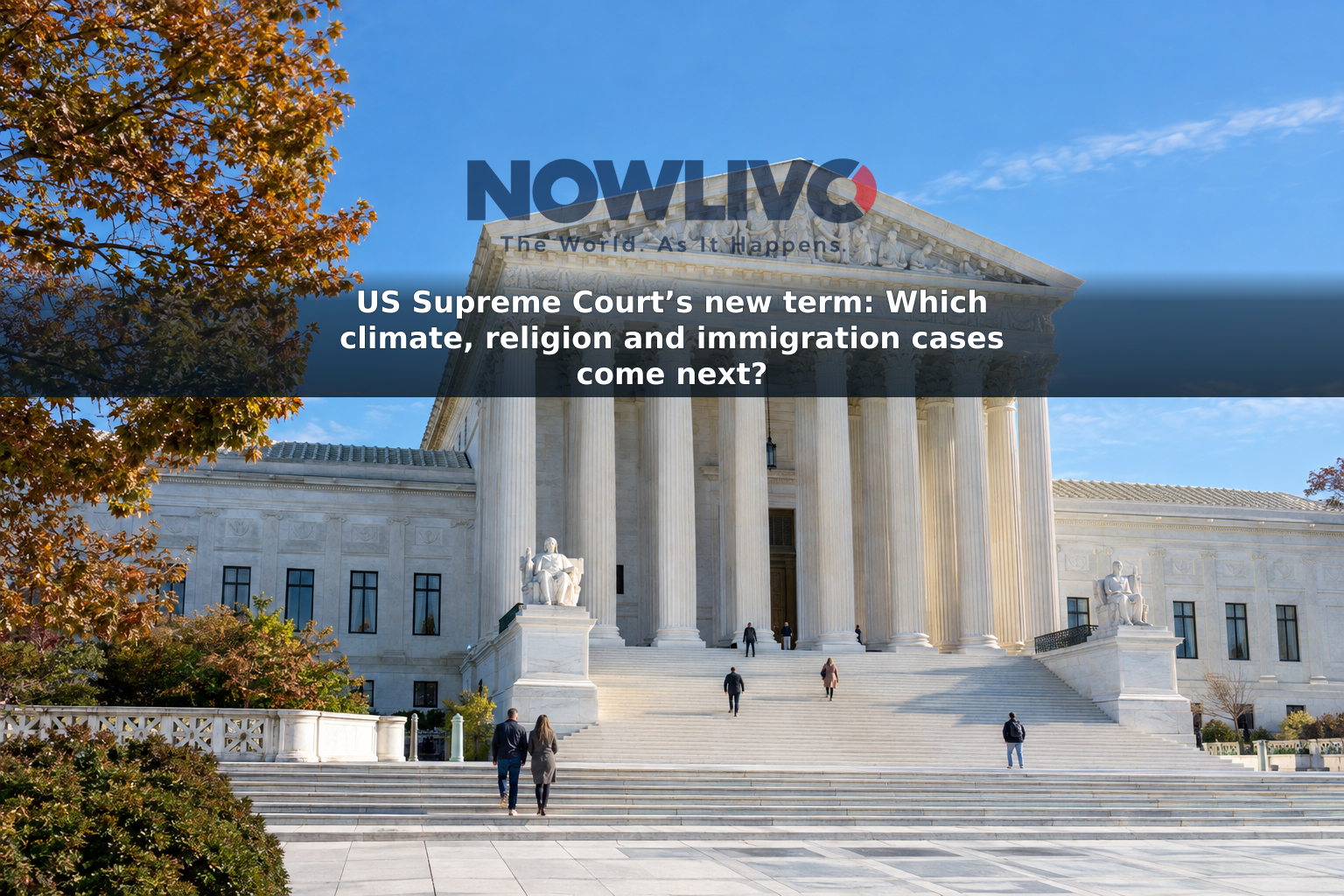
The US Supreme Court begins its new term on Monday, October 5, with a climate case that asks whether federal law blocks Colorado communities from pursuing damages claims against oil companies under state law. In the months ahead, the justices are also scheduled to consider religious schools’ access to public preschool funding, two disputes over immigration enforcement, restrictions on semiautomatic rifles and Arizona voting rules. Those cases raise distinct legal questions; opening day will not settle them all.
Why is the climate case first?
In Suncor Energy v. Commissioners of Boulder County, the city and county of Boulder seek to recover costs they say are linked to climate change. They sued Suncor Energy and ExxonMobil under Colorado law, arguing that the companies should help pay for local harms associated with their products and conduct.
The companies contend that claims involving worldwide greenhouse-gas emissions cannot proceed under state law. The Trump administration supports their position. Boulder’s officials argue that their state-law claims should be allowed to move forward.
The justices are set to hear arguments on October 5. They have also asked whether they have jurisdiction to decide the appeal at this stage. That threshold question matters: the court could resolve the case without giving a broad answer about other climate lawsuits. A ruling allowing Boulder’s case to proceed would not, by itself, establish that the companies owe damages; that issue would remain for further litigation.
What religious-rights disputes are on the docket?
On November 3, the court is scheduled to hear St. Mary Catholic Parish v. Roy, a dispute over Colorado’s publicly funded universal preschool program. The parish says it cannot participate without abandoning faith-based admissions requirements. Colorado says religious providers may join the program but must comply with its nondiscrimination conditions, including rules concerning sexual orientation and gender identity.
The question is not simply whether religious schools can receive public money. The justices will examine how constitutional protections for religious exercise apply when a state offers funding but attaches conditions to participation. The court agreed to review two specified questions about religious exclusions and exceptions to generally applicable rules; it did not agree to reconsider the broader precedent governing those rules.
The justices have also agreed to hear a Kentucky church group’s challenge involving a proposed shrine to the Virgin Mary on residential land beside its church. That separate case asks how federal protections for religious land use interact with local zoning decisions. An argument date has not yet been announced.
Which immigration policies face review?
One case concerns removals to countries other than a migrant’s country of origin. In Department of Homeland Security v. D.V.D., the justices will consider challenges to federal guidance on those removals, including whether people must have an opportunity to raise fears of persecution or torture before being sent to a third country. The court will also address whether the lower court had authority to issue relief covering a class of people. Arguments are scheduled for December 9. Earlier Supreme Court orders allowed the removals to continue while the litigation proceeded; they did not finally decide whether the policy is lawful.
A second case, Rhoney v. Barbosa da Cunha, asks whether federal immigration law requires detention during removal proceedings for people present in the United States who were never formally admitted. The Trump administration argues that the statute requires detention, while the respondent disputes that reading. The practical issue is whether people in that position can seek a bond hearing while their cases proceed. The court accepted the case on October 1 but has not placed it on the published October-through-December argument calendars.
What else should readers watch?
On December 2, the court is scheduled to hear consolidated challenges involving Cook County, Illinois, and Connecticut restrictions on AR-15-style and similar semiautomatic rifles. The challengers say the restrictions violate the Second Amendment; the governments defend them. The central question is whether the constitutional right to keep and bear arms protects possession of those rifles.
Arizona’s voting rules are also due for review. In Republican National Committee v. Mi Familia Vota, scheduled for December 8, the justices will consider a dispute involving proof-of-citizenship requirements and voter-roll procedures. The arguments will concern which parts of the state’s rules can operate alongside federal election law, not a finding that any particular voter is ineligible.
Oral arguments give the justices an opportunity to question the parties, but they are not rulings. After each hearing, the court may issue a decision later in the term, potentially on narrower grounds than the full dispute presented. Additional cases can also be added to the argument calendar as the term proceeds.