Guy Parmelin’s October 5–7 India visit: Planned talks on trade, investment and mobility
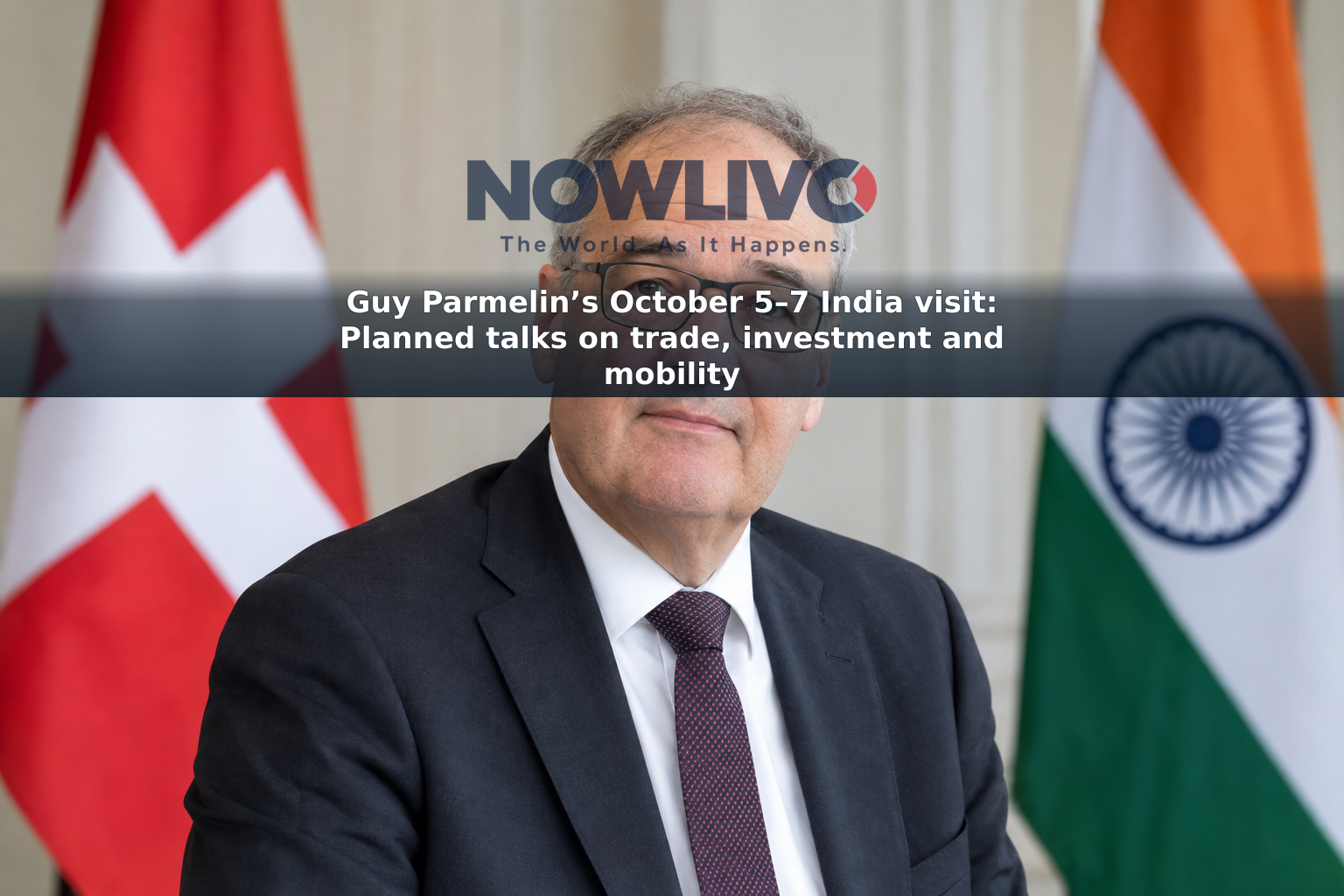
Swiss President Guy Parmelin’s October 5–7, 2026, state visit to India is expected to focus on trade and investment, research and innovation, and mobility and migration. Talks with Prime Minister Narendra Modi and President Droupadi Murmu are scheduled for October 5, followed by business and scientific engagements on October 6 and an India–EFTA summit on October 7. The visit gives both countries a chance to assess their economic partnership one year after a major trade agreement took effect; the announced programme does not, by itself, establish any new deal or change to travel rules.
What is on the official schedule?
Parmelin is travelling at Modi’s invitation with senior officials and a delegation that includes business and academic representatives. India says Modi and Parmelin will hold bilateral discussions on October 5 to review cooperation in trade and investment, science, technology and innovation, mobility, culture and contacts between people. They are also expected to discuss regional and global developments and cooperation in international forums.
Parmelin is scheduled to meet Murmu, who is due to host an official banquet in his honour. External Affairs Minister S. Jaishankar is also expected to call on him. Switzerland’s announced programme places meetings with Murmu, Modi and other Indian government members on October 5, with Swiss investment in India, education, research, innovation and migration among the subjects for discussion.
On October 6, the Swiss programme calls for further government meetings, discussions with business representatives and a high-level scientific cooperation event. Parmelin is also due to visit Noida International Airport, which is operated by a subsidiary of Zurich Airport. The stop offers a concrete example of Swiss commercial involvement in Indian infrastructure, rather than evidence of a new airport agreement.
The visit is scheduled to end on October 7 with the second India–EFTA Prosperity Summit. Government and business representatives are expected to discuss investment and cooperation opportunities alongside delegations from the other members of the European Free Trade Association: Iceland, Liechtenstein and Norway.
Why does the trade agreement matter?
The summit follows the first anniversary of the India–EFTA Trade and Economic Partnership Agreement, or TEPA, which entered into force on October 1, 2025. It covers goods, services and investment cooperation, among other areas. For companies, the practical question is how its provisions translate into market access, commercial partnerships and projects on the ground.
The EFTA countries have set a shared objective of increasing investment in India by $100 billion over 15 years and supporting the creation of one million direct jobs. Those are long-term aims for the four-country group, not money already invested or jobs already created. Nor is the entire target a Swiss pledge. India identifies Switzerland as its largest trade and investment partner among the EFTA members, which makes Swiss participation especially relevant to the agreement’s implementation.
The business and academic delegation, the airport visit and the summit put that implementation question at the centre of the trip. They create opportunities to discuss prospective ventures and assess existing cooperation. Any claim that a particular project, investment or job commitment resulted from the visit would require a separate announcement.
What does mobility mean here?
India has listed mobility among the subjects for the Modi–Parmelin talks, while Switzerland has identified migration as part of the wider agenda. TEPA also contains provisions concerning the movement of people who supply services and the recognition of qualifications. These issues can matter to firms sending specialists across borders, as well as to researchers and institutions building joint work.
That does not mean a new visa route, broader work rights or easier entry for all travellers has been agreed. The official visit announcements describe topics for discussion, not an immigration-policy outcome. Travellers and businesses should distinguish the existing trade framework from any future decision on how people may enter, work or provide services in either country.
This is Parmelin’s first state visit to India, though he travelled to New Delhi earlier in 2026 for the AI Impact Summit. For now, the confirmed news is the three-day programme and its agenda. The results of the October 5 talks and October 7 summit will be clear only through subsequent official announcements.