Is a Regime Change Operation Underway Against India? What the Starlink Row, X Claims and US PERM Suspensions Show
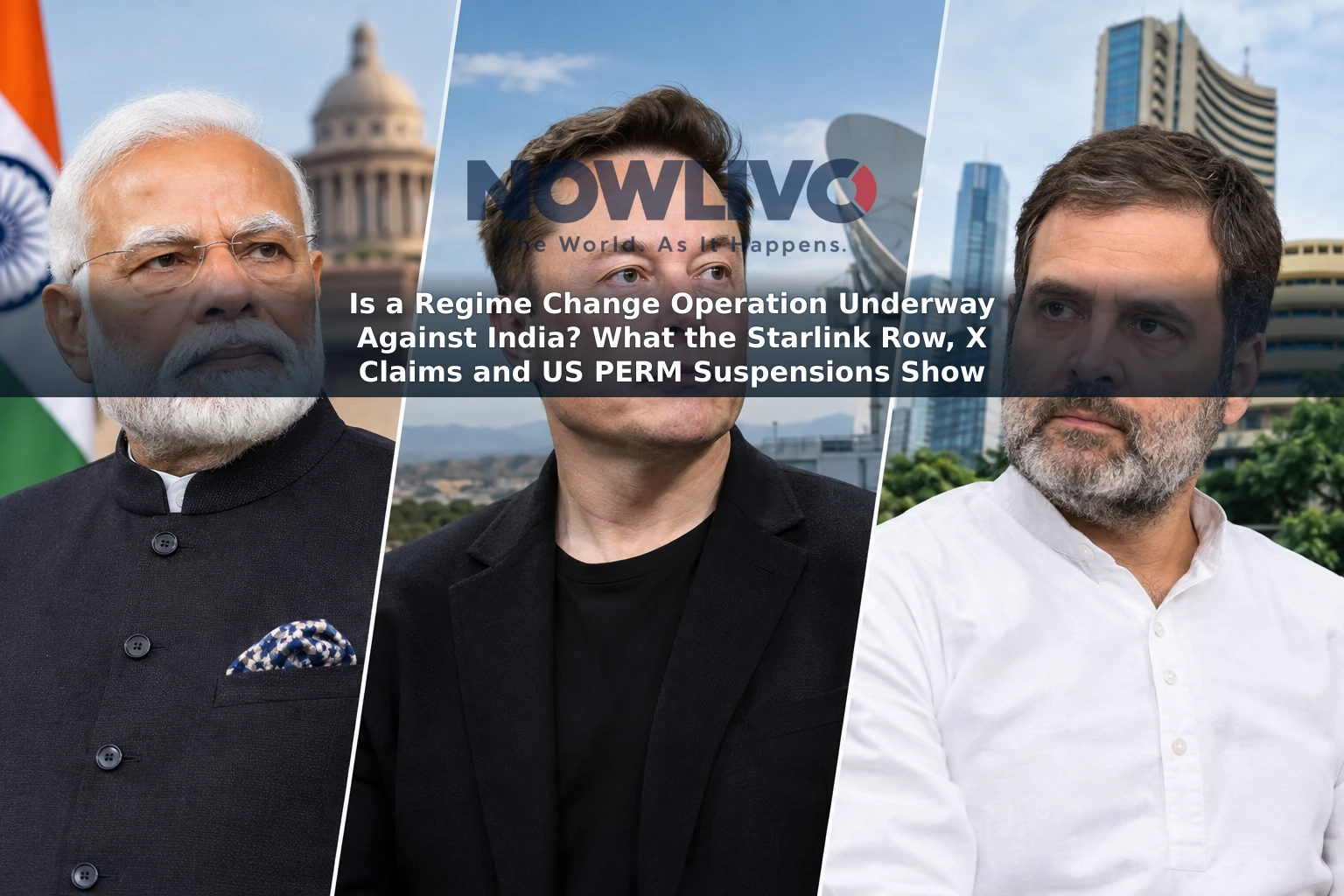
Is a full-scale regime change operation underway against India? There is no verified evidence of one. The claim draws together several real developments—including Elon Musk’s public dispute over Starlink, foreign selling of Indian shares and US restrictions affecting major IT firms—but it also relies on unproven allegations about social-media manipulation and foreign funding. Those developments deserve scrutiny on their own terms; their timing does not establish a coordinated campaign against Prime Minister Narendra Modi’s government.
Has Modi’s X account been shadow-banned?
Claims that X has shadow-banned Modi’s account or deliberately throttled its reach have not been substantiated by an account-specific disclosure from X or an independent audit of its distribution. Post views alone cannot establish a covert restriction: reach can vary with the subject, timing and way a platform ranks content. X acknowledges that it ranks posts and that some posts may have limited reach, but its general policies do not establish what happened to Modi’s account.
What happened between Elon Musk and Rahul Gandhi?
On October 7 and 8, 2026, Musk publicly challenged the delay to Starlink’s commercial launch in India. He alleged that powerful business interests were obstructing the satellite-internet service and then questioned the influence of Reliance Industries chair Mukesh Ambani. Musk did not provide evidence that Ambani had blocked Starlink.
India’s Ministry of Communications rejected the suggestion that its satellite-communications process discriminates against Starlink. It said Starlink and two other licensed operators were at broadly the same regulatory stage and still faced security assessments before they could seek spectrum. Starlink has received key approvals but has not begun commercial service in India.
Rahul Gandhi, the leader of the opposition in the Lok Sabha, replied to Musk’s remarks on X, and Musk responded. Their public exchange is evidence of a political argument over Starlink and Indian business influence—not evidence that the two are working together on a regime-change operation.
Are protest accounts receiving coordinated amplification or foreign funding?
Online posts have alleged that content linked to CJP protests and foreign-funded accounts is being pushed by social-media algorithms. No platform data or independently verified funding trail has established the specific claim of deliberate algorithmic amplification by X or Meta. Separately, authorities have reported identifying accounts that spread manipulated or misleading material around the protests. That finding should not be confused with proof that the protests themselves were foreign-funded or that a platform promoted them as part of a political operation.
Claims that Western influence networks and NGOs have pumped crores of rupees into an effort to unseat the Indian government likewise require identifiable transactions and a demonstrated connection to that alleged objective. The Ministry of External Affairs said in July that it had no information to share when asked about foreign-funding allegations concerning the CJP protests.
What do foreign selling and the US PERM suspensions mean?
Foreign investors have sold substantial amounts of Indian equities. On October 7, exchange figures showed foreign institutional investors selling a net ₹6,121 crore in the cash market while domestic institutions bought a net ₹4,597 crore. Market outflows are real, but the figures do not identify a political motive. Elevated oil prices and Middle East supply risks add pressure to India’s import bill and financial markets without, by themselves, indicating an operation against its government.
On October 8, the Trump administration announced that it was suspending eight technology companies from the US Permanent Labor Certification program, known as PERM. They include Tata Consultancy Services, Infosys, Wipro, HCL Technologies and Cognizant, as well as Microsoft, Adobe and Capgemini. US officials framed the move as part of a crackdown on alleged abuse of employment-immigration procedures. The allegations should not be treated as proven findings against every named company.
The distinction matters: PERM is a labor-certification step used in some employer-sponsored green-card cases. The announcement does not mean that the companies have been shut out of the US market or that their workers’ H-1B visas have been suspended. Nor has evidence been presented that the PERM action, Starlink dispute, market outflows and online allegations are components of a single plan to change India’s government.