Are Americans losing confidence in food safety? Gallup poll finds record lows
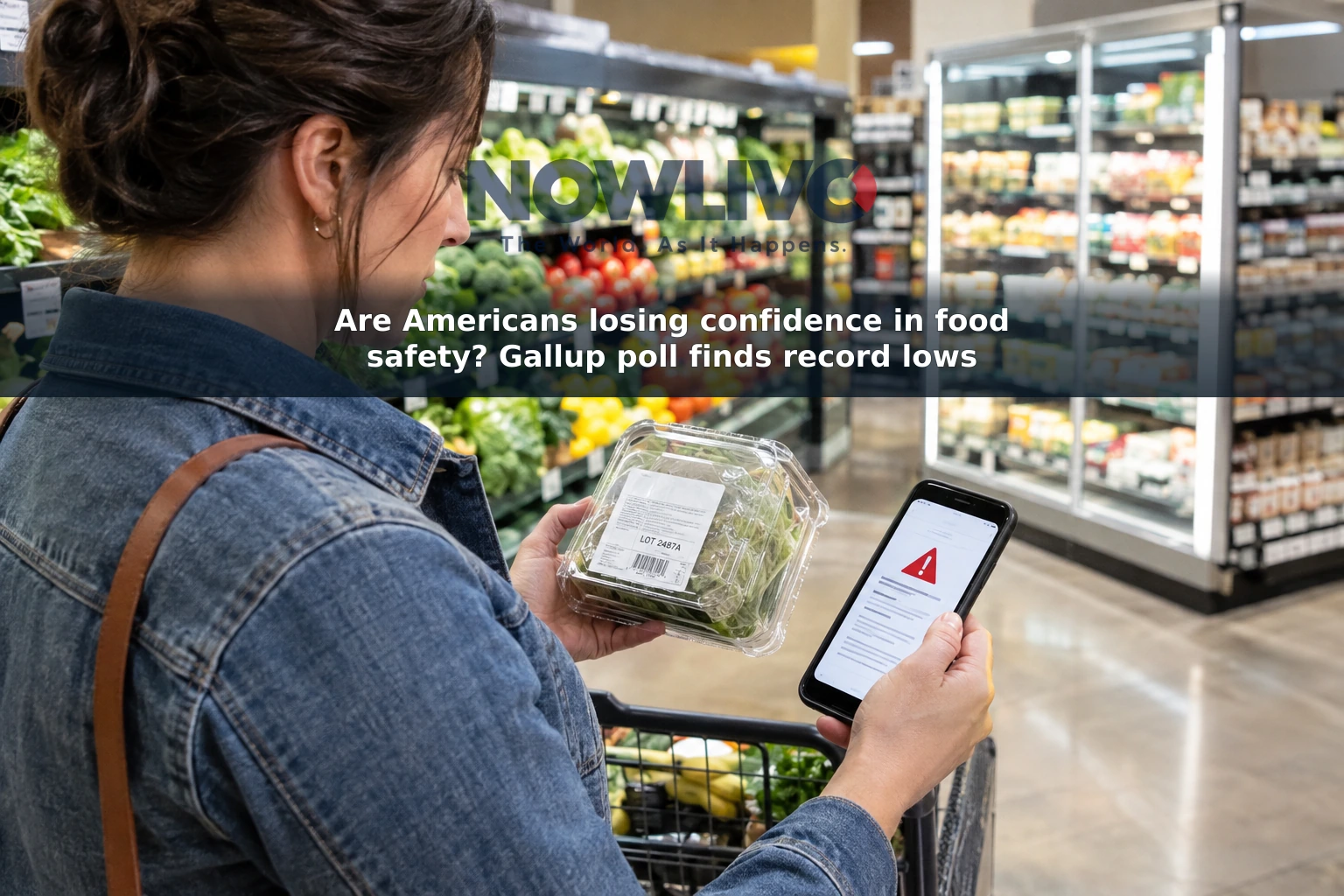
Americans are losing confidence in food safety, according to a Gallup poll published October 8, 2026. Sixty-five percent of U.S. adults said they were very or somewhat confident that food sold at most grocery stores is safe to eat—the lowest share Gallup has recorded. The finding describes how people feel about food in general; it does not determine whether anything in a reader’s kitchen is unsafe.
What did the Gallup food safety poll find?
Confidence in grocery-store food fell from 73% in 2025 to 65% in 2026. It stood at 81% in 2019. Meanwhile, 34% of adults said they were not too confident or not at all confident in the safety of food sold at most grocery stores.
Confidence in federal oversight also reached a low in Gallup’s polling: 47% said they had a great deal or a fair amount of confidence in the federal government’s ability to ensure food safety, down from 53% last year and 68% in 2019. A separate question about restaurants, asked for the first time this year, found that 66% were very or somewhat confident food at most restaurants is safe to eat.
More respondents also reported changing their behavior after a government food safety advisory or product recall. In the past year, 73% said they had avoided buying certain brands or types of food, compared with 53% in 2024. Forty-five percent said they had thrown out or returned food, and 42% said they had worried that something they ate might have been contaminated.
Does the poll show that food recalls are increasing?
No. Gallup asked about confidence and people’s reported reactions to advisories and recalls; it did not count recalls or establish a trend in their frequency. More people saying they avoided a food after a warning does not, by itself, mean more products were recalled. Nor does a fall in confidence measure the contamination rate of the food supply.
The timing matters, but it should not be mistaken for proof of what caused the shift in opinion. Gallup surveyed Americans around a major Cyclospora outbreak linked to processed iceberg lettuce. The Centers for Disease Control and Prevention reported 12,883 cases across 21 states and said the outbreak had ended as of September 11, 2026. The CDC also said the lettuce linked to that outbreak was no longer available in stores or restaurants. Those findings concern that specific outbreak, not iceberg lettuce generally.
Views did not move uniformly across political groups. Compared with 2025, confidence in grocery-store food fell among Democrats and independents but rose among Republicans. Gallup found a particularly wide partisan divide over the federal government’s ability to ensure food safety. That is another reason to read the figures as measures of public confidence, rather than a direct safety test.
How can I check whether a food has been recalled?
Check the actual recall notice before deciding whether a product you own is affected. For most foods, look at the Food and Drug Administration’s recalls and safety alerts or its Enforcement Report. For meat, poultry and processed egg products, check the U.S. Department of Agriculture’s Food Safety and Inspection Service recalls and public health alerts. The FDA notes that not every recall appears on its public warnings page.
Compare the notice with the package, including the brand, product name, size, UPC, lot code, use-by or best-by date, and distribution details. A warning about a category of food does not necessarily apply to every product in that category. If your item matches, follow the notice’s instructions; depending on the recall, that may mean returning it or disposing of it. Do not pass recalled food to someone else. If you think a food has made you ill, contact a healthcare professional.
The distinction: Gallup found a clear decline in Americans’ confidence. To assess a particular food, use product-specific recall and outbreak information—not a national opinion poll.