Why was Hyderabad journalist Jalli Rekha questioned with her baby at a police station?
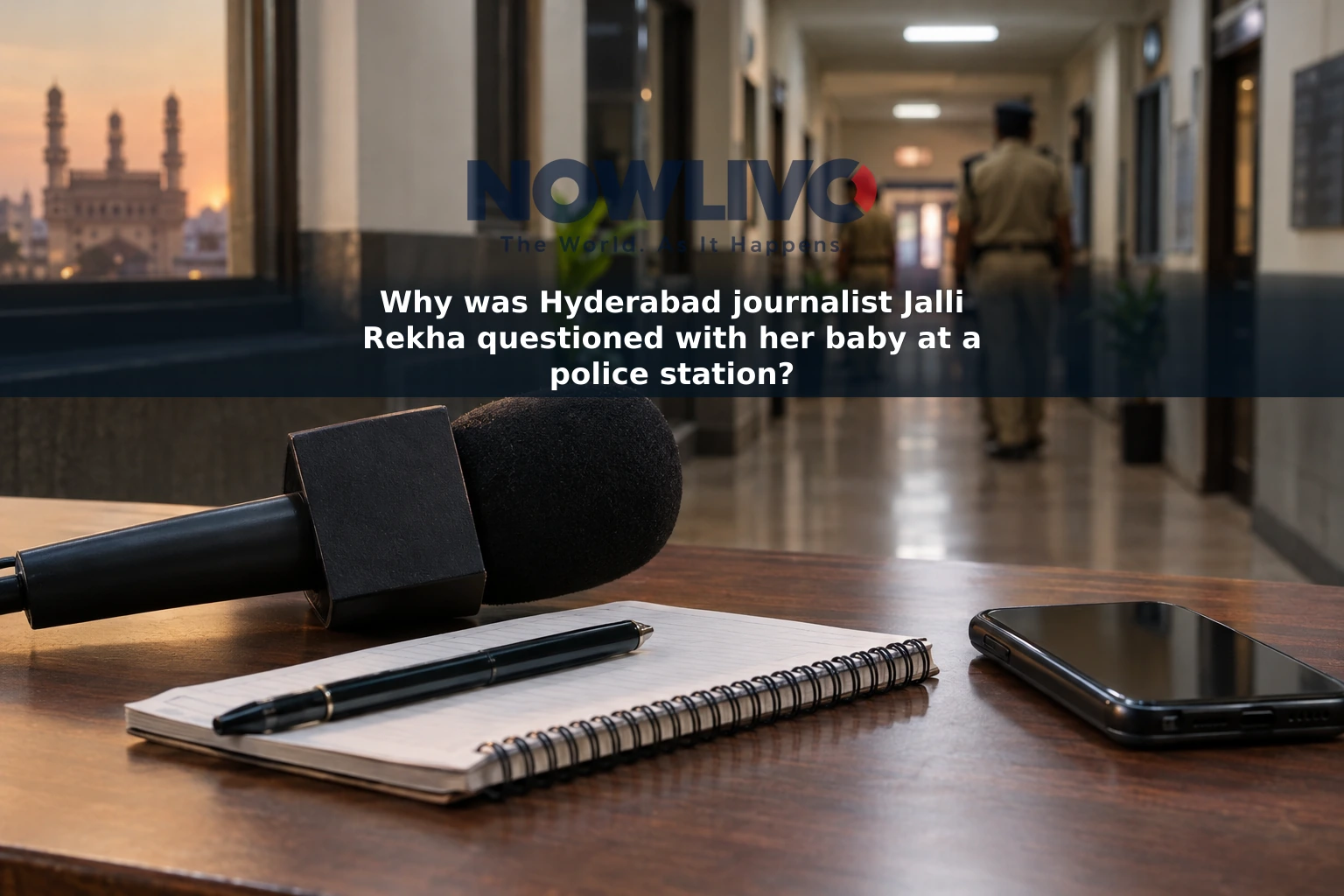
Hyderabad journalist Jalli Rekha was questioned at the Central Crime Station (CCS) on Wednesday, October 7, 2026, in a cybercrime case arising from social media allegations about Telangana Chief Minister A Revanth Reddy’s family. Bharat Rashtra Samithi (BRS) leaders and Rekha’s associates say she remained at the station for nearly seven hours with her six-month-old baby. The questioning has prompted a press-freedom dispute, but the police have not publicly explained why that length of questioning was necessary or addressed the accounts of her treatment.
What happened at Hyderabad’s Central Crime Station?
According to BRS leaders and Rekha’s associates, she was asked to appear at the CCS after officers visited her home around midnight on Tuesday. They say she was at the station on Wednesday with her infant and a three-year-old child, and left late that night. Her associates also allege that no woman officer accompanied the police team that visited her home.
Reports of how long Rekha spent at the station vary slightly: the initial accounts put it at nearly seven hours, while a later BRS statement described approximately eight hours. BRS leaders have also alleged that she was prevented from breastfeeding her baby. Those details have not been independently established, and police have not publicly given their account of the questioning or the arrangements made for her children.
Why was Jalli Rekha questioned?
The questioning has been linked to a cybercrime case involving BRS spokesperson Manne Krishank. A Congress leader complained that social media posts made false allegations about properties and pharmaceutical businesses associated with the chief minister’s family. Police registered a case against Krishank under Sections 353(2) and 352 of the Bharatiya Nyaya Sanhita, provisions concerning certain harmful statements and intentional insult.
Rekha runs the YouTube channel Mr Media Telangana. The BRS says she was summoned because her channel carried the party’s press conference on the allegations. Published accounts say her name figured in the case, but the police have not publicly clarified whether she was questioned as a witness or an accused, or specified which material they wanted to ask her about. It would therefore be premature to describe sharing a particular reel as an established offence committed by Rekha.
Krishank has claimed that the chief minister’s family amassed assets and business interests worth more than Rs 50,000 crore. That figure is an opposition allegation, not a verified valuation or finding of wrongdoing. The complaint against Krishank disputes claims about the family’s business interests. His allegation and the police complaint are separate from the question of whether Rekha’s reporting warranted the way she was questioned.
Why has the case become a press-freedom issue?
BRS working president KT Rama Rao has criticised the police action and offered Rekha legal support. BRS leaders and journalist groups have asked senior officers to explain the questioning and consider the welfare of women and children during police proceedings.
The concern extends beyond the contested number of hours. If a journalist was summoned for carrying an opposition press conference, the public needs a clear account of the investigative reason for questioning her and the safeguards provided while her young children were present. Equally, allegations made at that press conference should be examined on evidence rather than treated as proven because they were broadcast.
As of October 8, the key unanswered questions are Rekha’s status in the case, what police asked her to explain, and what happened at the station. A police account would help establish those facts and allow the press-freedom concerns to be assessed fairly.