Is Cockroach Janta Party founder Abhijeet Dipke linked to Pakistan? What the 2019 complaint shows
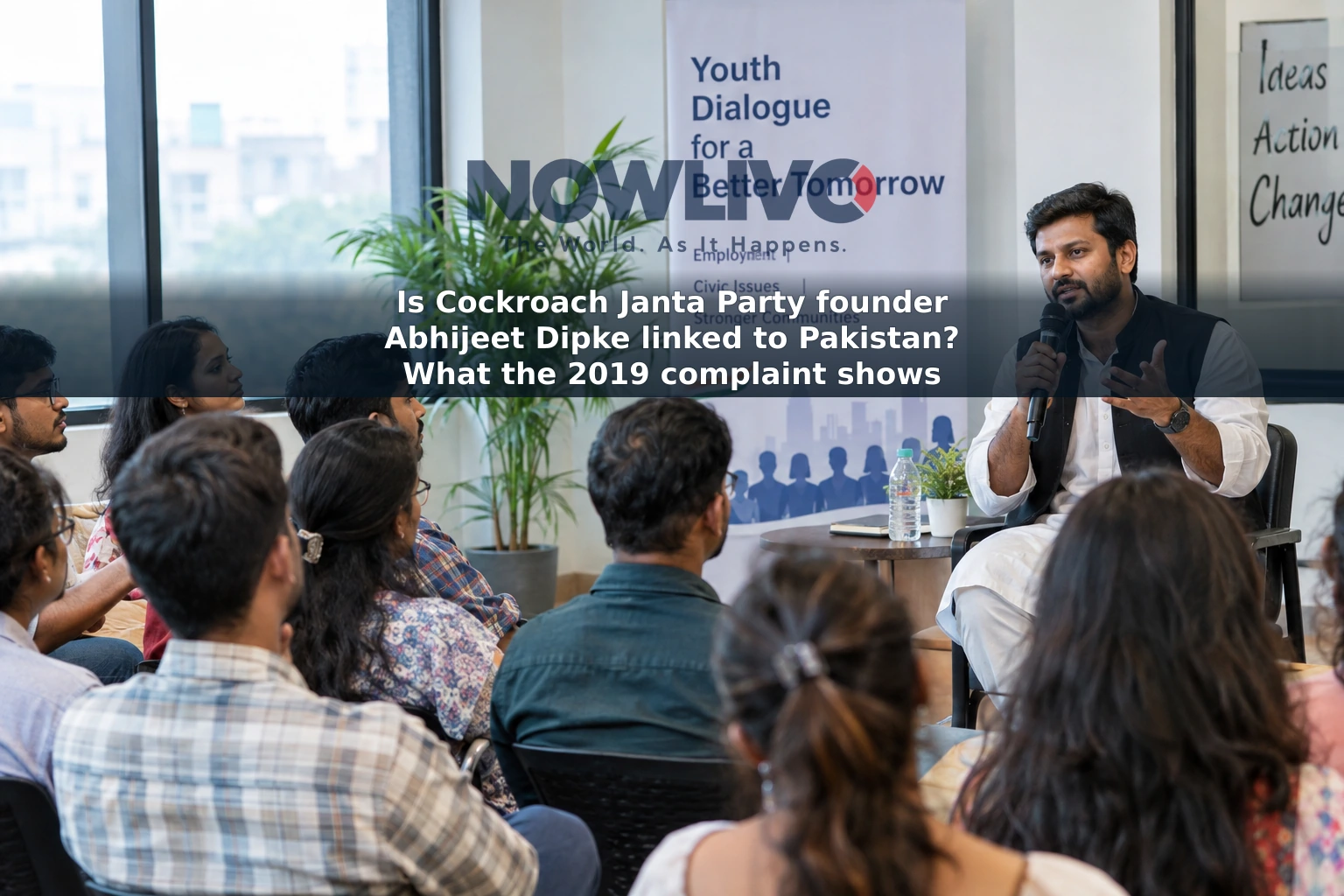
Is Cockroach Janta Party founder Abhijeet Dipke linked to Pakistan? A complaint submitted to Pune Police in 2019 accused him of promoting separatist narratives in social media posts about Kashmir, but it does not establish that he worked for Pakistan or its intelligence agency, the ISI. A separate claim that the movement drew much of its online support from Pakistan has also been disputed by Dipke. The allegations should not be treated as proven findings.
What does the 2019 Pune complaint say?
Legal Rights Observatory submitted a complaint to Pune Police in August 2019, amid debate over the Indian government’s decision to revoke Jammu and Kashmir’s special constitutional status under Article 370. The organisation objected to posts it attributed to Dipke and sought police action, alleging that they promoted narratives sympathetic to Kashmiri separatists.
The complaint resurfaced in May 2026 as Dipke’s Cockroach Janta Party, or CJP, gained attention. Some online posts went further than the documented complaint, claiming that police records identified him as an ISI-paid asset. No publicly substantiated police finding establishing that claim has emerged from the reporting on the complaint.
A representative of Legal Rights Observatory told The Statesman in May 2026 that, despite the organisation’s follow-ups, police had not registered a first information report over its complaint. That account distinguishes a request for police action from a police finding or a criminal charge; it is not, by itself, an official account of every step police may have taken.
Where did the Pakistani-followers claim come from?
That is a different allegation. In May 2026, BJP figures circulated purported social media audience figures claiming that nearly half of CJP’s followers were in Pakistan. Dipke rejected the claim and shared what he described as the movement’s own audience data, saying more than 94% of its audience was in India.
The competing figures were not independently verified in the reporting available at the time. Even a verified count of followers in a particular country would show where accounts were located or classified by a platform—not who controlled the movement, funded it or directed Dipke.
Union minister Kiren Rijiju also criticised people seeking social media followers from Pakistan. Dipke responded by challenging the suggestion that the movement’s Indian supporters should be labelled Pakistani. His rebuttal addresses the audience claim; it does not turn the older complaint into a finding for or against him.
Why did the Cockroach Janta Party attract attention?
Dipke launched the movement in May 2026 after remarks by Chief Justice of India Surya Kant during a court hearing prompted an online backlash. The Chief Justice subsequently said his criticism concerned people entering professions using fake credentials, not Indian youth generally. CJP began as a satirical online response and developed into a youth protest movement focused initially on unemployment and examination issues.
Its activities have continued well beyond the dispute that revived the 2019 complaint. By October 2026, Dipke-led supporters were also protesting over revisions to India’s voter lists. That later activity provides context for the movement’s public profile, but it offers no evidence of a Pakistani intelligence connection.
The distinction is straightforward: an organisation made allegations in a 2019 police complaint; political figures later made separate claims about CJP’s online audience; and Dipke disputed the latter. None of those facts establishes that the CJP founder is an ISI asset or that the movement is directed from Pakistan.