
Delhi Gurdwara Bangla Sahib Video: What It Shows and Why Police Wearing Shoes Drew Criticism
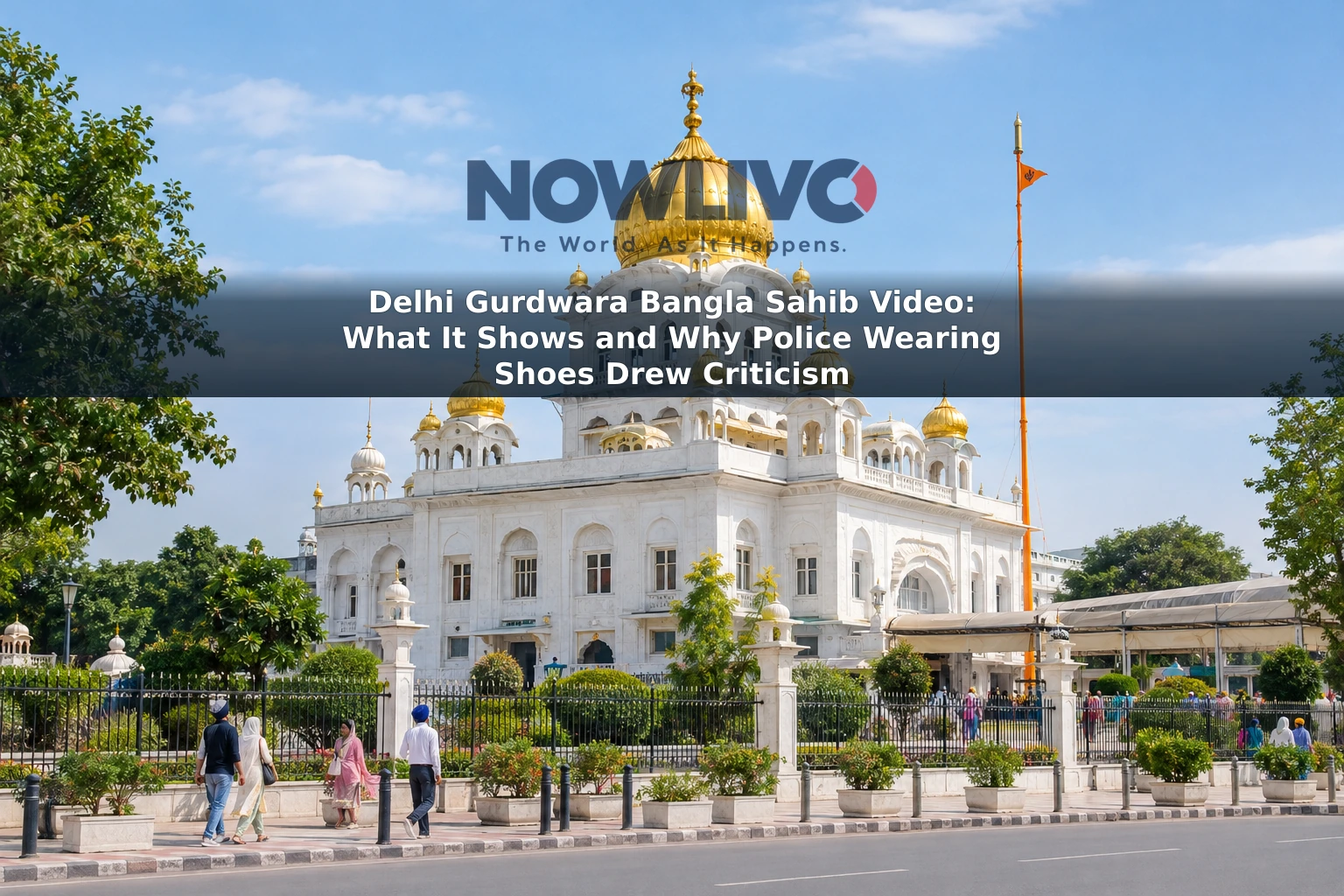
A viral video from Gurdwara Bangla Sahib in New Delhi shows uniformed police officers walking through a passage on the shrine’s premises on October 10, 2026, with some wearing shoes. It circulated as protesters sought shelter at the gurdwara during a police operation against a planned demonstration. Opposition leaders questioned whether the officers had disregarded Sikh customs, but the clip does not establish that they wore shoes inside the prayer area. Delhi Police say the passage is part of the route visitors take before reaching the place where they remove their footwear.
What happened at the gurdwara during the Delhi protest?
Demonstrators opposing Chief Election Commissioner Gyanesh Kumar had planned to gather at Jantar Mantar over alleged irregularities in the revision of electoral rolls. Police denied permission for the gathering and detained protesters across the capital. Some demonstrators went to Gurdwara Bangla Sahib, a Sikh place of worship in central Delhi, seeking shelter. Protesters gathered outside it were also detained.
The police video became a separate point of contention. It shows officers moving through a passage on gurdwara property; some have their footwear on. It does not, by itself, show them crossing the shoe-removal point or entering the hall where prayers take place. Nor does that clip establish whether protesters were chanting slogans inside the shrine or what happened during every police interaction elsewhere on the premises.
Why did the video trigger criticism?
Visitors to a gurdwara remove their shoes and cover their heads as marks of respect. The distinction between a passage leading to a footwear-removal area and the worship space matters when assessing the allegation. Aam Aadmi Party leader Saurabh Bharadwaj questioned the officers’ shoes and head coverings, while other opposition figures criticised the police presence at a shrine where people had sought refuge.
New Delhi Deputy Commissioner of Police Sachin Sharma said the officers filmed wearing shoes were in a common passage used by visitors to reach the shoe-removal point. Police released another video to explain the route. They also alleged that the first clip had been circulated with malicious intent and said legal action was being initiated. That allegation about the circulation of the video is the police’s claim, not a conclusion demonstrated by the footage. Their explanation of the footwear does not specifically address the criticism about head coverings.
Shelter and protest: what is disputed?
The dispute extends beyond the officers’ footwear. Harmeet Singh Kalka, president of the Delhi Sikh Gurdwara Management Committee, said anyone needing food or shelter was welcome, but accused some protesters of bringing political placards and slogans onto the premises and trying to enter a hall. He said the gurdwara should not be used as a protest venue. Those claims concern the protesters’ conduct; they cannot be verified from the viral police-passage clip.
Accounts from the site also differ. A gurdwara staff member told The Indian Express that people had been sitting, sleeping and eating there and that management had refused a police request to send them out. Kalka, by contrast, objected to what he described as political activity inside the complex. Separately, a gurdwara manager said reports of a clash between police and protesters at the shrine were false.
The clearest reading of the widely shared footage is therefore limited: officers, some wearing shoes, were filmed in a passage on Gurdwara Bangla Sahib’s premises. The police say that passage comes before the designated place to remove shoes. Claims that the video proves officers wore footwear in the prayer area, or proves a clash inside the shrine, go beyond what the clip shows.