Supreme Court Orders Rajasthan to Seal Illegal Discharges Into Three Rivers
The latest development
The Supreme Court has directed Rajasthan authorities to seal and dismantle illegal outlets discharging waste into the Jojari, Luni and Bandi river system. It also called for recovery of environmental compensation from those responsible for violations. That distinction is central to understanding the Jojari-Luni-Bandi river pollution enforcement order. A news update can establish that an event or decision occurred without settling the larger controversy around it. Readers are better served by a precise account of the new step than by a headline that turns a limited development into a sweeping conclusion.
How the situation developed
The order was issued on September 29 and reported in detail on October 24. The proceedings began after concerns about severe pollution in the Jojari river, and the court has issued several directions on treatment facilities, industry and river protection. A reliable timeline separates the original event, the response and the newest procedural development. Without that separation, a reader can mistake a resurfaced allegation for a new incident or assume that an issue has been settled merely because it has remained in the news for several days.
What the reporting establishes
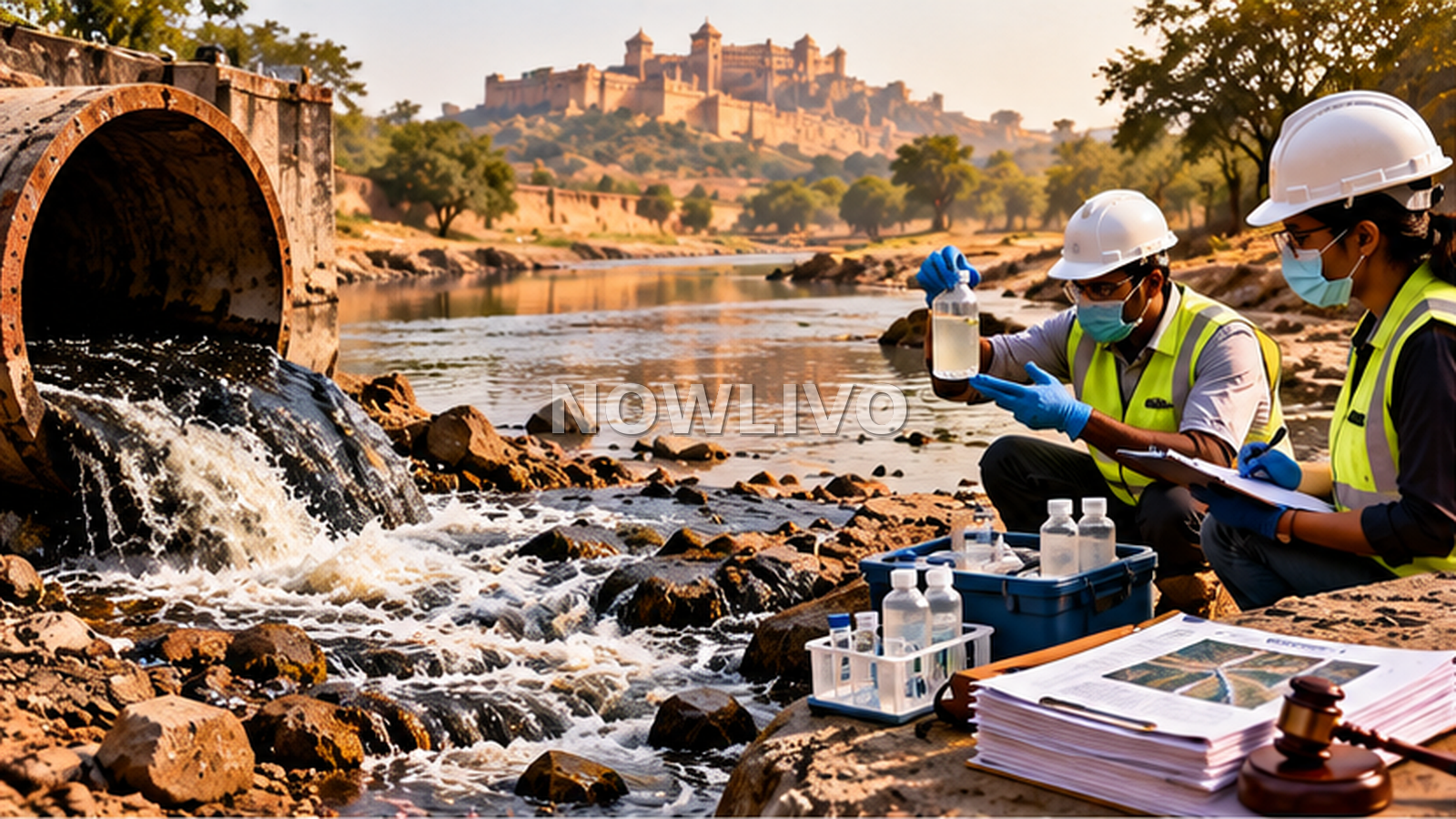
The directions address unauthorised pipelines, bypasses and other discharge points, and require action against unlawful sand mining that damages riverbeds or natural flow. The Rajasthan State Pollution Control Board is to assess and recover compensation for the full period of violations. The available details are sufficient to explain the central development, but not every question that the headline invites. Numbers, documents and named statements have different evidentiary weight. A reported figure should retain its unit, time frame and attribution; an estimate should not silently become a confirmed count.
Different accounts and responses
The court criticised a reactive administrative approach that responds only after damage becomes visible. Rajasthan officials must coordinate enforcement, technical surveys and proposals for treatment-plant improvements; the judicial order is not proof that every facility has already complied. The existence of disagreement is itself newsworthy when institutions or public figures are involved. Still, equal attention to competing claims does not mean every claim has equal support. A fair report names the speaker, explains the basis offered and leaves unproven assertions as assertions rather than conclusions.
The rules and process behind the headline
The matter includes technical work on common effluent treatment plants, possible zero-liquid-discharge upgrades and surveys of bridges and crossings that may obstruct rivers. A committee headed by retired Justice Sangeet Lodha is assisting with restoration issues. It helps to identify which institution has the power to act at each stage. The body that makes a public statement may not be the body that investigates, regulates, judges or implements the next step. Confusing these roles creates false expectations about what the announcement actually changes.
Who may be affected
Communities dependent on river water, farmers and livestock owners have direct stakes in water quality. Pollution controls can also affect factories, local governments and the cost of wastewater treatment, which must be managed without weakening environmental obligations. The public interest is broader than the most familiar names in the story. A policy, dispute or investigation may also affect workers, households, local institutions and people with little opportunity to speak publicly. Describing those possible effects is useful, but they should not be presented as outcomes already measured.
What is still unresolved
The scale of current contamination, the number of illegal outlets already closed and the total compensation ultimately collected are not supplied as final outcomes in this reporting. A court direction is an enforcement mandate, not a completed cleanup. A missing answer is not an invitation to supply a plausible explanation. Where evidence is incomplete, the most informative approach is to identify the missing record or decision that would resolve the uncertainty. That keeps readers from confusing an unanswered question with evidence that one side must be correct.
What to watch next
The state must report compliance, and the case was expected to return for hearing after the latest directions. Credible follow-up will require inspections, verifiable closure records, water-testing data and documented recovery of penalties. The next report should be judged by whether it changes what is known. An official filing, court order, regulatory instruction, reliable data release or direct response can do that. An anonymous prediction or an edited social-media clip may attract attention without adding dependable evidence.
Why the development matters
The order puts institutional responsibility at the center of the story. A lasting improvement requires wastewater systems that operate daily, not only dramatic closures when a case attracts public attention. The immediate story also raises a longer-term question about institutional trust and accountability. Those questions deserve examination, but they are not reasons to leap ahead of the record. Explaining the practical stakes while preserving uncertainty is more useful than predicting a dramatic resolution.
What this report does not claim
This article does not claim the rivers have been restored or that named industries were convicted. The legal requirements and the environmental outcomes should be tracked separately as implementation proceeds. The limits of the record are part of the story. Reporting only what can presently be supported leaves room for later corrections and new evidence. It also prevents a developing dispute from being framed as a closed case before the responsible institutions have finished their work.
A closer look at the context
Environmental disputes combine technical evidence with decisions about land, livelihoods and public authority. Surveys, pollution readings and feasibility studies answer different questions, and none should be treated as a substitute for community participation. For the Jojari-Luni-Bandi river pollution enforcement order, the quality of the evidence matters because environmental consequences may continue long after the immediate controversy disappears from headlines.
The longer-term test
A project proposal or enforcement order has several possible outcomes. Authorities may need to complete studies, identify responsible parties, hear objections and verify compliance. The public can reasonably demand transparent timelines and records without assuming the final decision has already been made. The costs of weak oversight often fall on people who did not control the original activity.
How to judge the next update
The useful follow-up is measurable: water quality, restoration work, inspection records, published impact assessments or evidence that residents were consulted. Dramatic photographs can show a problem but rarely quantify its scale. Equally, a reassuring official statement is not proof that the risk has disappeared. Reliable environmental coverage returns to the data as it changes.