
Delhi’s new pollution command centre: What it tracks and what its cameras can show
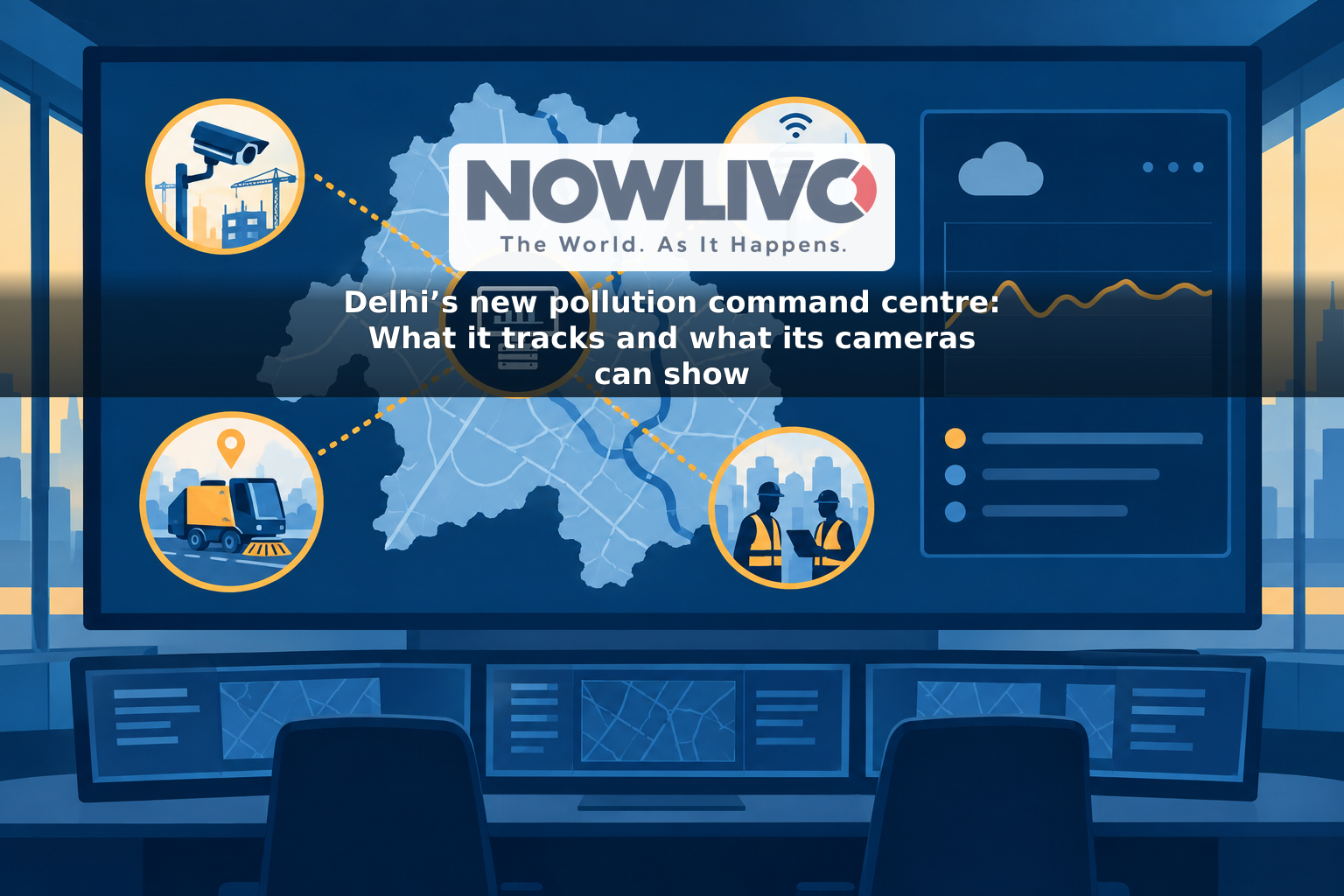
Delhi’s new pollution command centre is designed to track potential pollution sources and the work being done to address them—not just display the city’s air-quality readings. Launched on October 1, 2026, the Delhi Pollution Control Committee’s Integrated Command and Control Centre brings together camera feeds from construction sites, air-quality data, GPS records from mechanical road sweepers, complaints and field-inspection information. Officials say the aim is to identify a problem, alert the responsible department and follow up on its response.
What will the construction-site cameras do?
Delhi Environment Minister Manjinder Singh Sirsa said more than 700 construction sites larger than 500 square metres are being watched through live CCTV feeds and AI-based analysis. The cameras give the centre a way to observe activity at monitored sites without relying entirely on occasional visits. Sirsa said the department concerned and the site owner would be alerted if PM10 levels rise at a monitored site. PM10 refers to airborne particles small enough to be inhaled, including dust.
The distinction matters: a camera can show visible activity and conditions, but footage is not itself a measurement of airborne PM10. The government has described an alert system linking site monitoring with particulate readings; it has not established that a video image alone can measure dust concentrations. An alert would tell officials where to investigate or seek corrective action. It would not, by itself, establish which activity caused a reading to rise or confirm that a site broke a rule.
The centre is also intended to watch for road dust, construction-related problems and open waste or biomass burning. Officials have described additional cameras for spotting burning, alongside reports from inspection teams. Those feeds could help direct a response while an activity is under way, rather than after a complaint has passed through several offices.
How will road sweeping be tracked?
Mechanical road-sweeping machines are being linked to the centre through GPS. Operators will be able to check where a machine went, its route, how far it travelled, how long it operated and whether it reached areas assigned for cleaning. That makes the system useful for checking a basic operational question: did a sweeper appear to cover the road it was scheduled to clean?
GPS has limits, too. A route record does not show how much dust was collected, whether the machine cleaned effectively or whether dust was stirred up again afterward. Those questions need checks on the ground and relevant air-quality measurements. The centre can make missed routes or unusually short runs easier to notice, but a completed trip should not be treated as a measured reduction in pollution.
What happens when the centre flags a problem?
The centre is planned as a round-the-clock hub at the Delhi Metro Rail Corporation’s IT Park in Shastri Park. It will monitor air-quality index stations and examine earlier readings for local patterns. When staff identify a pollution hotspot, the relevant department is to be alerted. Delhi says 78 subdivision-level teams will be used for monitoring and enforcement during winter, with GPS-enabled vehicles showing their movements. Field teams known as Vayudoot will use body cameras to send inspection footage to the centre.
Residents can also submit pollution-related concerns through the Jan Suggestion portal launched alongside the centre. The practical test for the system is what follows a signal: whether a reported problem is checked, whether the responsible agency acts, and whether subsequent observations support that the problem was resolved. Camera coverage, GPS logs and faster alerts can document parts of that process. They are not, on their own, proof that Delhi’s air has become cleaner.