
Gujarat Highway and Canal Agencies Agree Faster Crossing Approvals
India’s National Highways Authority and Sardar Sarovar Narmada Nigam Limited signed an agreement in Gandhinagar to simplify approvals where highways, canals and pipelines cross in Gujarat. Announced on September 22, the arrangement is intended to create a time-bound process and clearer responsibilities between the two agencies.

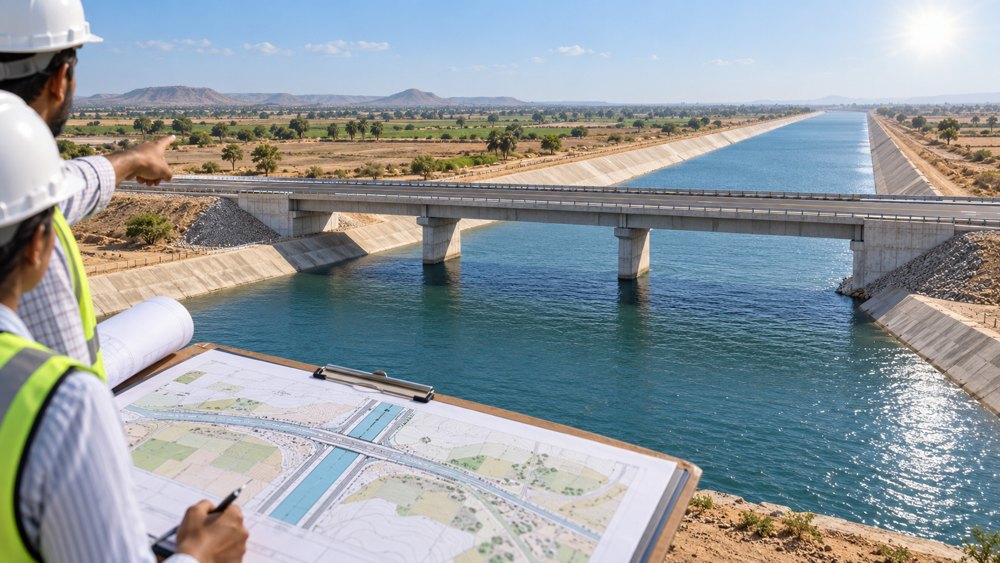
A crossing can involve a road passing over a canal, a pipeline intersecting a highway corridor, or related construction that requires both agencies to coordinate design and permissions. The new memorandum calls for early sharing of project information and standardized engineering practices. It also sets out who is responsible for building and maintaining crossing structures.
What changes—and what does not
The agencies say they will waive various fees, charges and levies between them for covered crossings. That could remove a procedural cost and reduce repeated inter-agency steps, although no project-level savings or new completion timetable was supplied in the announcement. The agreement is a framework for handling future and ongoing proposals, not a declaration that any particular bridge, canal crossing or pipeline is finished.
For residents and businesses, the practical significance depends on implementation. A road scheme delayed while two public bodies settle a crossing design can affect access and logistics; irrigation infrastructure may likewise depend on timely permissions where it meets a highway. A shared process could help only if technical review, construction quality and maintenance responsibilities are carried through on individual works.
The agencies signed the memorandum through their regional and technical officials. The next useful public measures would be the time taken to clear specific crossings, the projects to which the framework applies and whether construction begins or finishes sooner. Those outcomes are not yet established.
This agreement places coordination at the center of Gujarat’s highway and irrigation planning. Its success will be judged in the field, crossing by crossing, rather than by the signature alone.