India’s 2027 ODI World Cup schedule: Group A opponents, dates and venues
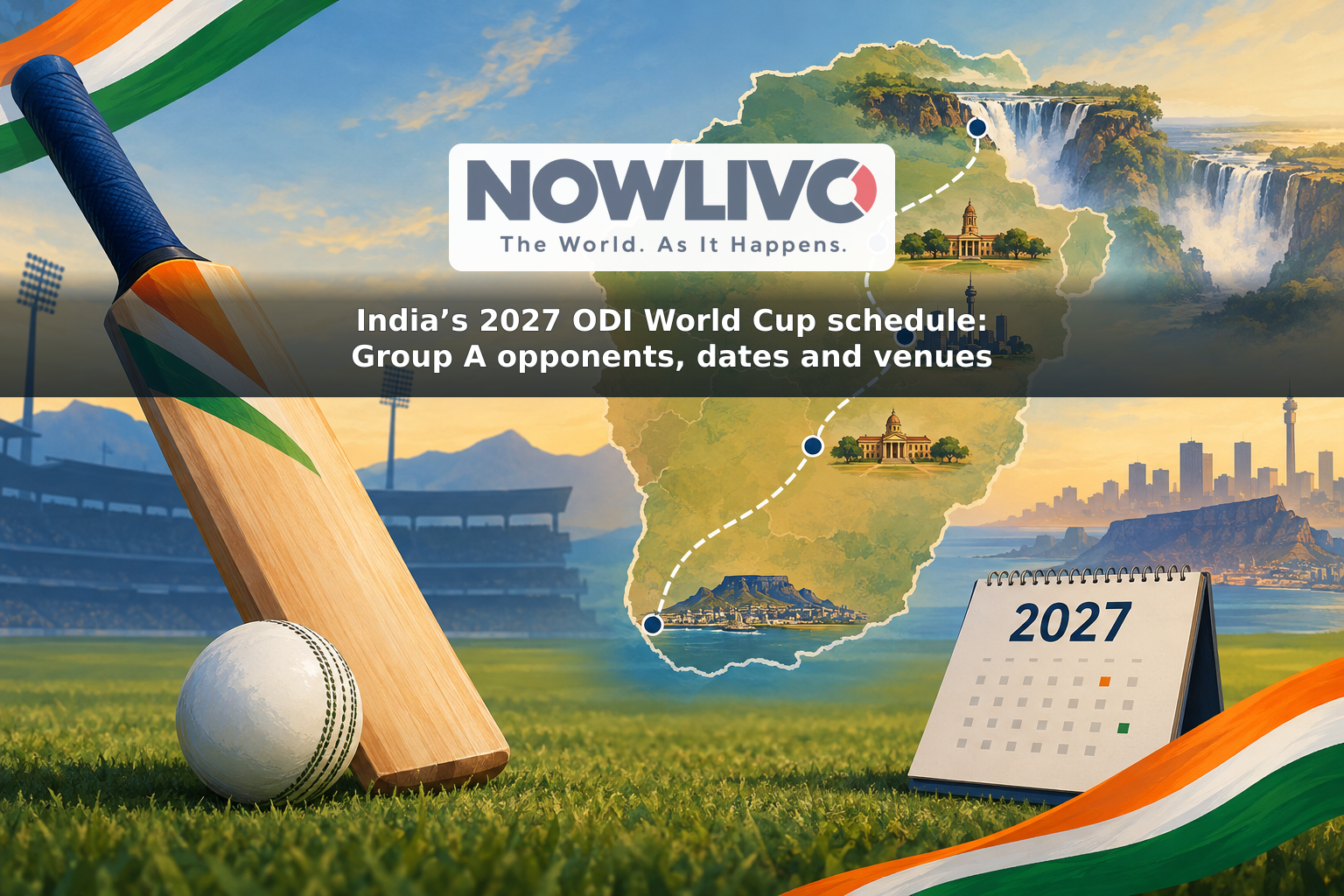
India will play its five 2027 men’s ODI World Cup group matches between October 7 and October 24 in South Africa and Zimbabwe. Its Group A opponents are Australia, Pakistan, Afghanistan, Zimbabwe and Qualifier A, whose identity is not yet known. The newly announced schedule puts India’s opener against Australia in Cape Town on October 7 and its match against Pakistan in Johannesburg on October 10.
India’s Group A fixtures
| Date in 2027 | Opponent | Venue |
|---|---|---|
| Thursday, October 7 | Australia | Newlands, Cape Town, South Africa |
| Sunday, October 10 | Pakistan | Wanderers, Johannesburg, South Africa |
| Thursday, October 14 | Afghanistan | Tshwane, South Africa |
| Sunday, October 17 | Qualifier A | Bloemfontein, South Africa |
| Sunday, October 24 | Zimbabwe | Mosi-oa-Tunya Stadium, Victoria Falls, Zimbabwe |
All five dates above are group-stage fixtures, not possible knockout matches. India’s group schedule includes no match in Namibia, although Namibia is one of the tournament’s three host countries. Qualifier A will be the team that wins the preceding Cricket World Cup Qualifier and enters the group stage directly.
The matches Indian fans may want to mark first
The Australia game opens the group stage and brings together the finalists from the 2023 men’s ODI World Cup, which Australia won. It is also India’s first match of the 2027 tournament. The World Cup itself begins earlier, on October 2, with a three-team Super Series in Windhoek to decide another group-stage place.
India then travels to Johannesburg for the Pakistan fixture on Sunday, October 10. That match is set for the Wanderers, which is also scheduled to host the final on November 21. Fans making plans for either game should distinguish a fixed group fixture from a potential later meeting: India and Pakistan are listed together again in the provisional Super 7 schedule, but that match will happen under those team names only if both progress and retain their seeded places.
India faces Afghanistan in Tshwane four days after the Pakistan match, then plays Qualifier A in Bloemfontein on October 17. The identity of that opponent depends on the qualifier; it should not be treated as a confirmed national team when planning around the fixture.
The group campaign ends against co-host Zimbabwe on October 24 at the new Mosi-oa-Tunya Stadium near Victoria Falls. It is scheduled to be the final match of the group stage and the ground’s first Cricket World Cup match. India’s route therefore moves from four South African fixtures to a closing group game in Zimbabwe.
What happens if India advances?
The 14-team event uses a format beyond the familiar group stage. Three teams first contest the Super Series; its winner joins the other 11 group-stage teams. The 12 teams then play in two groups of six, with each side facing the other five teams in its group once. The top three from each group, plus the better fourth-placed team, advance to a seven-team round-robin stage called the Super 7. Group-stage points do not carry over.
India has been assigned the A1 seed for the provisional Super 7 fixture list. If India qualifies and retains that slot, its six scheduled dates are October 28 against the A2 seed at Victoria Falls; October 31 against B2 in Johannesburg; November 4 against B1 in Paarl; November 7 against A3 in Cape Town; November 11 against the AB4 seed in Gqeberha; and November 14 against B3 in Durban. Those slots currently correspond to Australia, South Africa, New Zealand, Pakistan, England and Sri Lanka respectively. They are not six confirmed opponents: a qualifying team can take the slot of a seeded team that does not advance.
The top four teams after the Super 7 will reach the semifinals, scheduled for November 17 in Cape Town and November 18 in Tshwane. India has no guaranteed semifinal venue or place in the November 21 final in Johannesburg; those depend on results.
For fans hoping to attend, the ticket ballot opened alongside the schedule announcement and runs until November 21, 2026. Entering is free and is not a ticket purchase. The ballot is not first-come, first-served, so an entry made later within the window does not lose priority solely because of its timing.