
Jim Farley says AI will change Ford’s skilled trades, not replace the hands-on work
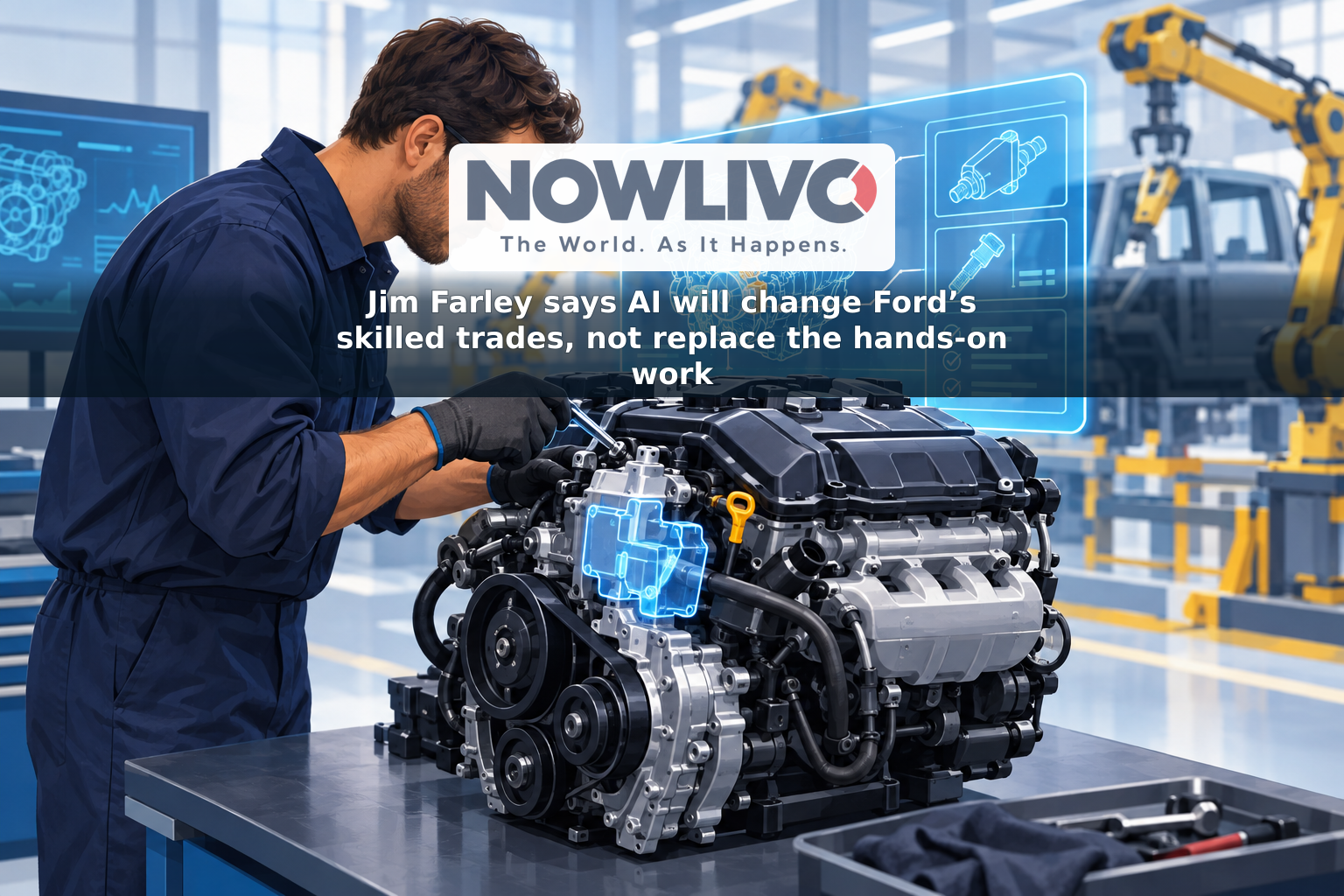
Ford CEO Jim Farley says artificial intelligence is more likely to assist skilled-trades workers than replace them. At a September 30, 2026, gathering in Detroit, he described AI as a tool that can help technicians tackle unfamiliar repairs and help factory workers manage increasingly complex equipment. His point was not that mechanics and other tradespeople will be untouched by automation: it was that their jobs still require people who can work on physical systems, diagnose problems and make practical decisions.
How AI could change a mechanic’s job
Farley offered a vehicle repair as an example. Removing the engine from a Ford Super Duty truck can require extensive disassembly, and even an experienced mechanic may not have performed that particular job before. Ford Pro, he said, is using AI to walk dealership technicians through such unfamiliar work. The technician still carries out the repair; the software helps supply guidance at the point it is needed.
That distinction matters because AI assistance is not the same as an automated repair bay. A system may help a worker find the next procedure or interpret information, but taking apart a vehicle, checking what has actually failed and putting it back together remain hands-on tasks. Farley’s example illustrates a way to extend a technician’s knowledge, not a claim that Ford has removed the need for trained mechanics.
Why Farley says factory roles are changing
The shift reaches beyond dealerships. Farley said Ford’s skilled-trades employees increasingly work with robots, automated equipment, fiber connections and digital manufacturing systems, rather than maintaining only traditional mechanical machinery. In newer operations, he said, the division between a tradesperson’s work and a manufacturing engineer’s work is becoming less clear.
A worker maintaining a robotic system or diagnosing battery-production equipment may need mechanical skill alongside an understanding of software, sensors and data. That does not make the two jobs identical. It does mean that training built solely around older machinery may leave workers unprepared for the equipment they are asked to maintain.
Farley also drew a contrast with some office-based work. He expects AI to change or eliminate certain tasks and jobs involving routine screen-based work, including some in finance, call centers and entry-level programming. That is his forecast, not a settled measure of how many jobs will disappear. His narrower argument about the trades is that AI can change how the work is done without readily substituting for the person doing it.
The shortage behind Ford’s push
Ford’s interest in AI-assisted work sits alongside its effort to expand skilled-trades training. A report released September 30 by the Alliance for America’s Skilled Trades, which Ford helped establish, estimates that the United States will need to fill about 1.7 million trades openings annually through 2035 as jobs grow and workers leave occupations. The alliance estimates that training programs currently produce 55 workers for every 100 needed.
Those numbers are the alliance’s estimates across 124 occupations, not a count of vacancies at Ford or a prediction that every opening will go unfilled. They help explain why the company is interested both in bringing more people into the trades and in giving current workers tools to handle complex assignments.
The report also identifies a training hurdle: about half of people who enter skilled-trades programs finish them, according to the alliance. At the same time, it says completion exceeds 90% in high-quality apprenticeship programs. The comparison points to a practical challenge that AI guidance alone cannot solve. Workers need routes into training, time to learn and support to stay through completion.
What workers should take from his comments
Farley’s message is not a promise that every skilled-trades job is safe from technological change. AI-enabled inspection and automation can alter duties, and the skills needed to work on new equipment will keep evolving. He also said workers must trust how employers use data gathered by AI systems; otherwise, they may resist tools intended to help them.
For a prospective mechanic or factory maintenance worker, the practical distinction is between learning a trade and learning to use AI instead of a trade. Farley is arguing for the former: hands-on expertise supported by digital tools, with training that keeps pace as vehicles and factories become more software-driven.