Justice Department Seeks Emergency Review in California Ballot Case
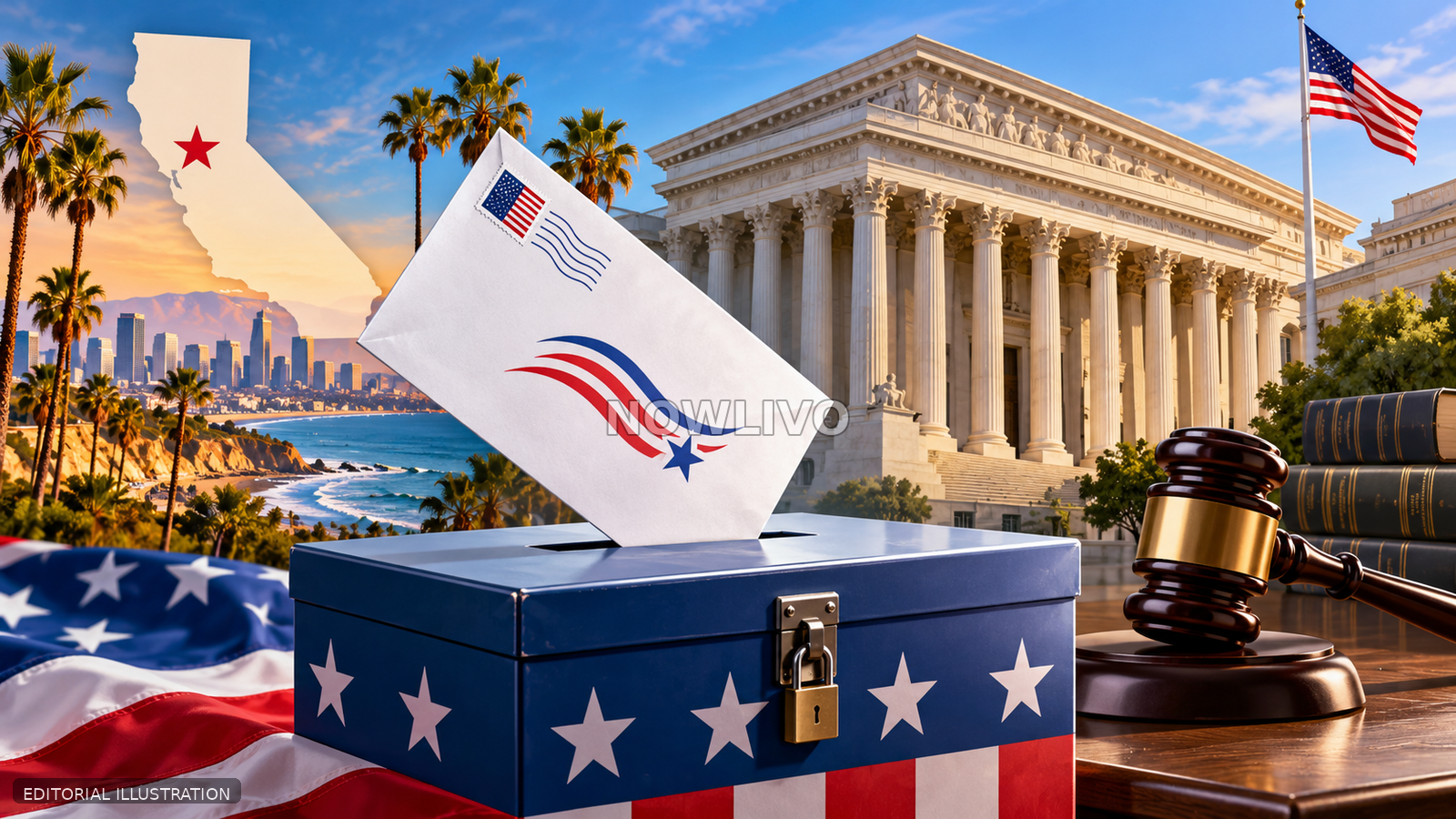
The U.S. Justice Department has asked the Ninth Circuit Court of Appeals to intervene in a lawsuit seeking to prevent California from counting more than 20,000 mail-in ballots in the November 3, 2026, midterm elections. Reuters reported that the department’s lawyers argued the voters associated with the ballots were likely not U.S. citizens and wanted citizenship verified before the votes were counted. That assertion is the administration’s position in the case, not a court-established finding about each ballot or voter. A federal judge had scheduled a hearing for the following week rather than immediately granting the requested order. The dispute puts election administration, voter eligibility and the timing of emergency appeals into public focus shortly before Election Day.
What the Justice Department is asking for
The department’s request seeks emergency intervention from the federal appeals court in a case over more than 20,000 California mail ballots. According to Reuters, the administration argued that the ballots were associated with people it believed were likely not citizens and sought verification before counting. The government described the appeal as necessary after the district judge did not issue the temporary block by a deadline requested by federal lawyers. That procedural posture matters: the appeals court is being asked to intervene while the underlying dispute remains unresolved. The request is not itself proof that the ballots are unlawful, and the ultimate question depends on evidence, applicable election law and judicial review.
Why the judge’s timing matters
The district judge, David Carter, had scheduled a hearing for the following week to consider the requested emergency order. The Justice Department treated the absence of an immediate ruling as a constructive denial and sought an appeal, according to the report. Courts generally manage emergency requests while weighing the need for rapid action against the consequences of changing election procedures close to a vote. A party’s dissatisfaction with timing does not automatically establish that a judge has legally denied the request, and courts can set hearings to give opposing parties an opportunity to respond. The distinction between a scheduling decision and a final ruling is central to understanding this stage of the case.
Eligibility claims need ballot-specific evidence
The administration’s argument concerns citizenship, but a broad claim about a group of ballots must be tested against the actual records and legal standards. Voter eligibility is governed by law, and election administrators have established processes for registration and ballot verification. The public report does not establish that every voter associated with the disputed ballots is ineligible, nor should it be read that way. A court must determine what evidence can be used, what proof is required and what remedy is appropriate. In political disputes, the careful distinction is between a government allegation, an evidentiary finding and a final judgment. They are separate milestones and should not be collapsed into one headline.
Why mail voting is under scrutiny
Mail voting involves several stages: registration, ballot distribution, completion, return, signature or identity checks where required, and counting under state law. Different states use different rules and deadlines, and a legal challenge in one state does not automatically determine the rules elsewhere. Supporters of mail voting point to its convenience and accessibility; critics raise concerns about verification and administration. Those debates are best grounded in evidence about the actual process and its outcomes rather than assumptions about a category of voters. In this case, the immediate legal question is narrower: whether the specific ballots at issue can be counted while the government’s challenge is considered.
The election calendar raises the stakes
With the November 3 midterms approaching, even temporary legal restrictions can affect administrators’ planning, voter communication and the certainty of final results. Election offices need to know whether ballots should be processed, segregated or held pending a ruling. Voters also need clear information about what a court order means for their own ballot rather than relying on social posts that generalise from the case. The closer a dispute comes to Election Day, the more important timely, precise judicial orders become. That urgency does not remove the need for due process; it makes clarity about scope, deadlines and who is affected especially valuable.
How courts balance urgency and disruption
Emergency relief often requires a court to consider the likelihood of legal success, possible irreparable harm, effects on other parties and the public interest. Election cases can be difficult because both action and inaction may carry consequences, and changes close to polling can confuse voters or administrators. The legal standard does not permit a court simply to choose a political outcome. Instead, judges evaluate the record and whether the requested remedy is justified under the governing law. A careful reader should look for the court’s reasoning and the exact order, not infer the result from the fact that an appeal was filed or a hearing was scheduled.
What to watch before November 3
The next material events are the scheduled district-court hearing, any ruling on the emergency request and the appeals court’s response. Readers should check whether later reporting identifies a written order, the number of ballots covered and what administrators must do while litigation continues. If a court declines to block the ballots, that would resolve the immediate request but might not end every underlying legal claim. If it grants relief, the scope and duration would still matter. Until a ruling is issued, the central facts remain that the department has sought intervention and that the eligibility claims are being contested.
The broader test for election confidence
A credible election system must apply eligibility rules consistently, maintain auditable records and provide a fair way to challenge suspected errors. It must also avoid disenfranchising eligible voters through broad assumptions or poorly communicated procedures. This case will be watched as part of the larger debate over federal and state roles in elections, but its legal outcome should turn on the applicable rules and evidence. Readers should distinguish a lawsuit from a proven violation, and a temporary order from a final resolution. The stakes are substantial because the dispute comes close to a national election, making both legal accuracy and clear public communication essential.