Mars Rocks Reveal Ancient Lakes, Groundwater and Hydrothermal Activity
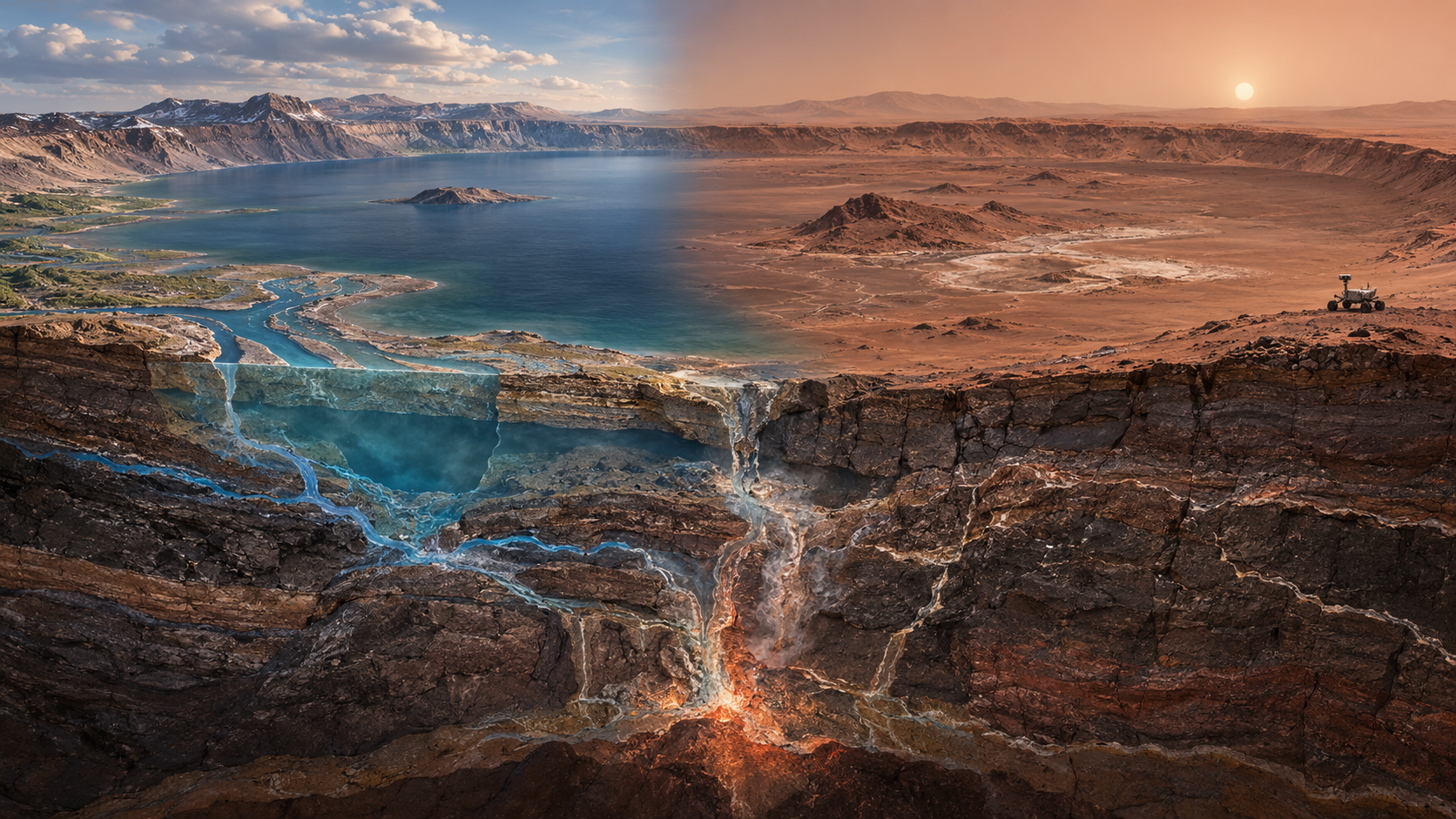
Rock measurements collected by NASA’s Perseverance rover indicate that part of Mars’ Jezero Crater was shaped by a complex sequence of ancient lakes, groundwater and hot fluids moving through the crust.

The findings concern the Margin Unit, a geological area along the inner edge of the crater rim. Scientists had expected to find layered sedimentary rocks associated with the shoreline of an ancient lake, but the rover instead identified igneous material formed through volcanic or magmatic processes.
Minerals inside those rocks preserved evidence of repeated interaction with water. The record suggests that liquid water affected the area through more than one process, rather than through a single lake environment.
Perseverance’s SuperCam instrument supplied the measurements by analysing light reflected by rocks and the plasma produced when its laser strikes selected targets. The rover has examined more than 185 bedrock targets across the unit.
The study adds detail to the history of water in Jezero Crater and may help scientists identify which Martian environments were most capable of preserving evidence about past habitability. It does not establish that life existed on Mars.