
Small-savings rates unchanged for October–December 2026: What Indian savers will earn
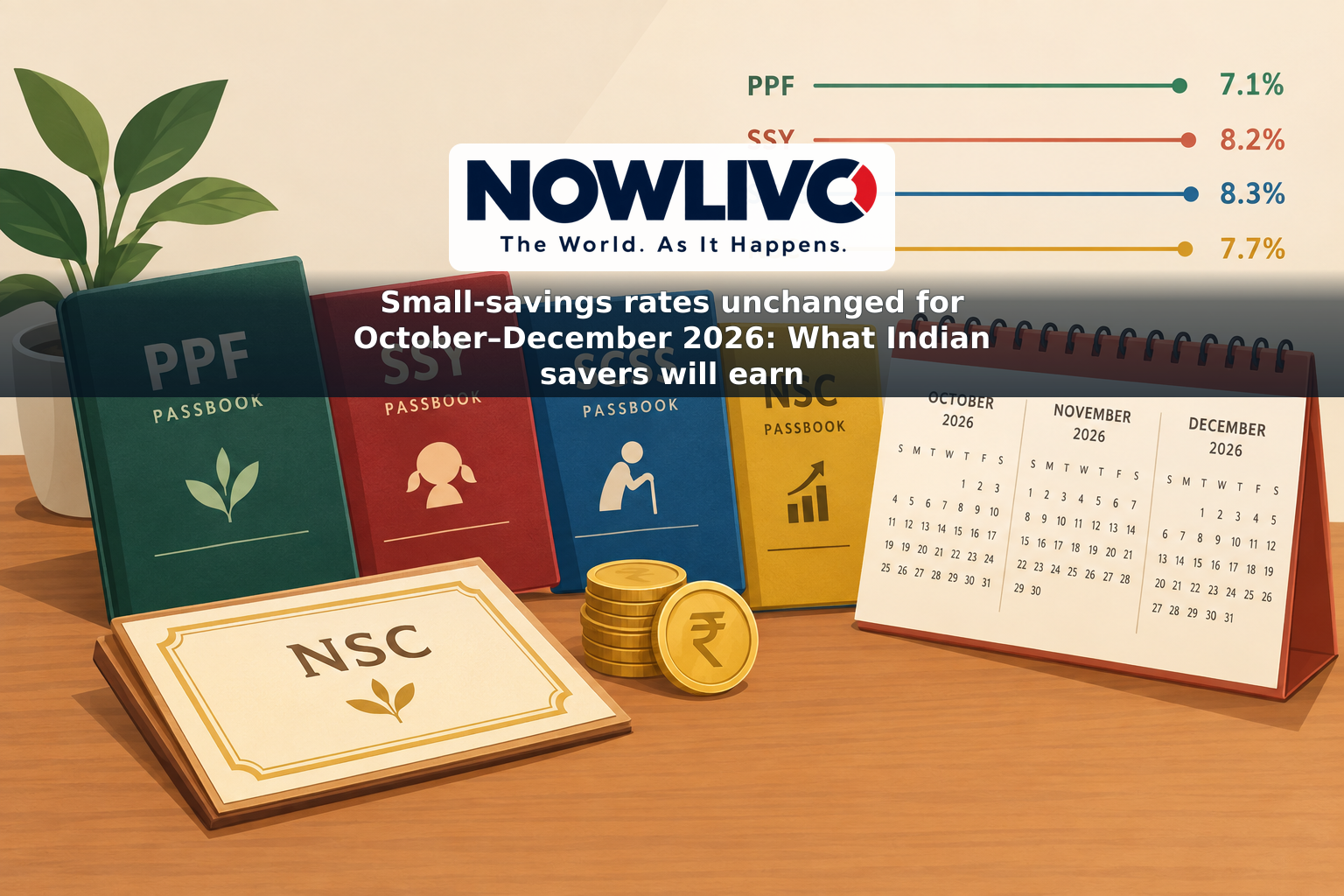
India’s Finance Ministry has kept interest rates on small-savings schemes unchanged for the quarter from October 1 to December 31, 2026. The decision leaves the Public Provident Fund (PPF) at 7.1% a year, the Sukanya Samriddhi account for girls at 8.2%, and the Senior Citizens Savings Scheme (SCSS) at 8.2%.
For savers, the distinction is between a rate that applies to an existing balance and one set when a new deposit is made. PPF and Sukanya Samriddhi rates can change with later quarterly reviews, including for money already in those accounts. For products such as National Savings Certificates (NSC) and post-office time deposits, the rate applicable when an investment is made generally remains in place for its term.
Rates for October–December 2026
| Scheme | Annual interest rate |
|---|---|
| Post-office savings account | 4.0% |
| One-year time deposit | 6.9% |
| Two-year time deposit | 7.0% |
| Three-year time deposit | 7.1% |
| Five-year time deposit | 7.5% |
| Five-year recurring deposit | 6.7% |
| Post-office monthly income account | 7.4% |
| Senior Citizens Savings Scheme (SCSS) | 8.2% |
| National Savings Certificate (NSC) | 7.7% |
| Kisan Vikas Patra (KVP) | 7.5% |
| Public Provident Fund (PPF) | 7.1% |
| Sukanya Samriddhi account (SSY) | 8.2% |
These are annual rates, not quarterly returns. How interest is credited or paid differs by scheme. The monthly income account, for example, pays interest each month rather than letting it compound in the account; SCSS pays interest quarterly. KVP investments made at the current rate are scheduled to mature in 115 months.
Who should pay attention?
People building long-term savings: PPF holders will continue to earn 7.1% at the current rate. Its long investment horizon makes it a different choice from a short-term deposit. A person opening or adding to a PPF account should be comfortable with its withdrawal rules and remember that 7.1% is not a promise for every future quarter.
Parents and guardians saving for a daughter: Sukanya Samriddhi remains at 8.2%, making the unchanged decision relevant both to existing account holders and families considering an eligible new account. It is designed for a long-term goal, not money that may be needed at short notice. Future quarterly rate decisions can alter the return earned on the balance.
Retirees seeking scheduled income: SCSS continues at 8.2% with quarterly interest payments. The post-office monthly income account remains at 7.4% with monthly payments. Those payout schedules may matter as much as the difference in headline rates to someone meeting regular expenses. Eligibility, deposit limits and access to the principal also need checking before either product is chosen.
Savers with a fixed target date: NSC stays at 7.7%, while post-office time deposits range from 6.9% for one year to 7.5% for five years. A five-year recurring deposit remains at 6.7% for those who prefer regular contributions. Choosing among them means matching the term and deposit pattern to when the money will be needed, rather than selecting the highest rate alone.
Check the after-tax return, not just the rate
Tax treatment can materially change the comparison. Eligible deposits in certain small-savings products can count towards the aggregate deduction for specified savings investments under the old tax regime, subject to its limit. That deduction is generally unavailable under the new tax regime. Interest and maturity proceeds do not receive identical tax treatment across schemes: PPF and Sukanya Samriddhi differ from products whose interest is taxable.
The practical takeaway is that no rate change does not mean every saver should make the same choice. Existing PPF and Sukanya Samriddhi holders can note the rate for the coming quarter; anyone making a new investment should compare the payout timing, lock-in, tax position and available alternatives against their own goal. The next quarterly rate decision will determine whether variable small-savings rates remain at these levels from January 2027.