
Tamil Nadu withdraws RTI exemption for law-and-order department after criticism
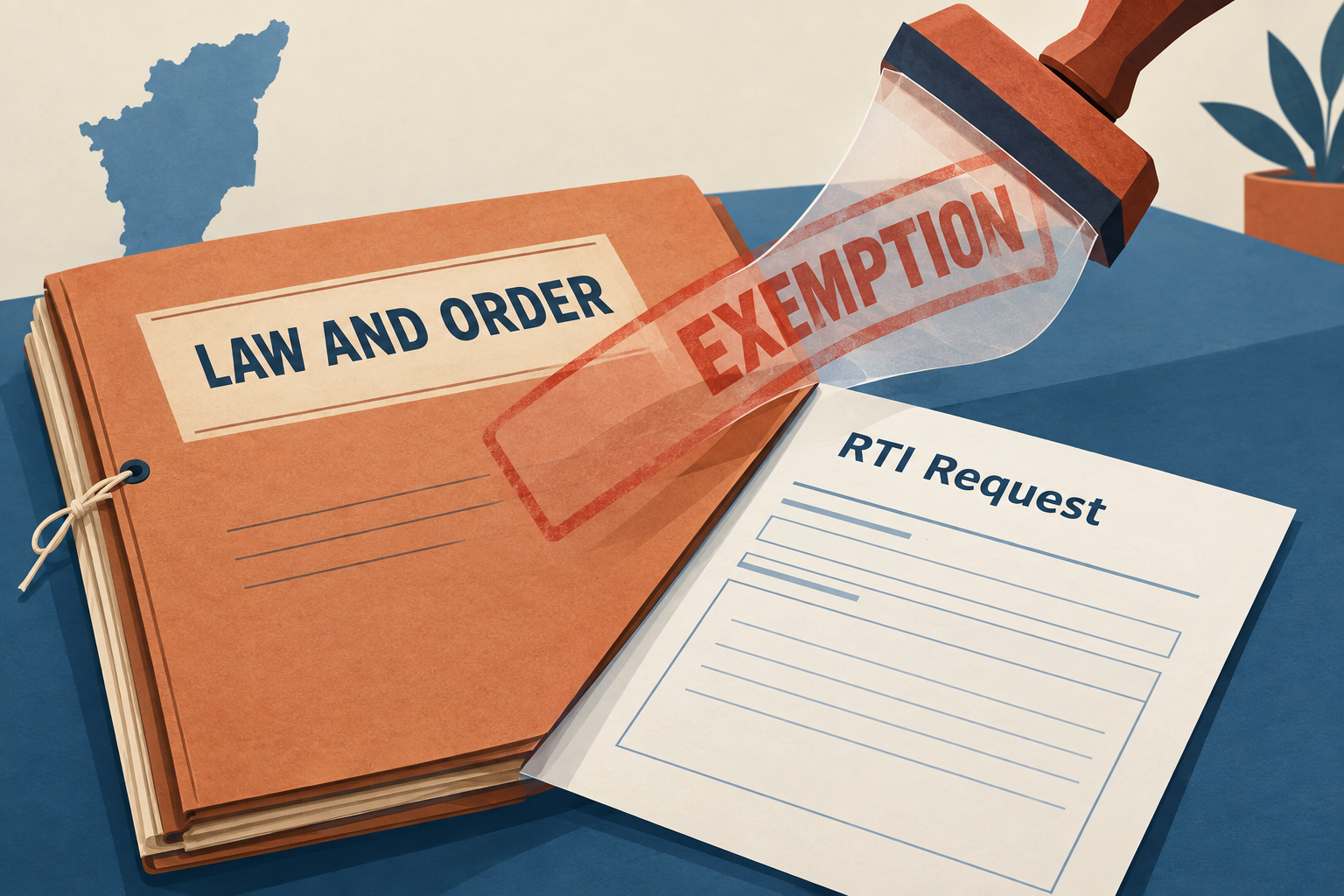
Tamil Nadu has withdrawn an order that would have placed its Public (Law and Order) Department outside the ordinary reach of the Right to Information Act, 2005. The reversal followed objections from political allies, opposition leaders and a transparency group over the breadth of the exemption and the kinds of records the department handles.

The distinction in the dates matters. The Human Resources Management (R) Department’s Government Order Ms. No. 57 was dated September 21, 2026. It drew wider public attention on Sunday, September 27, and the government revoked it that same day. This was a same-day reversal after the dispute became public, not an order first issued and withdrawn on September 27.
What did the original order cover?
The September 21 notification invoked Section 24(4) of the RTI Act, which permits a state government to specify an intelligence or security organisation established by it for exemption from the law. Tamil Nadu’s notification designated the Public (Law and Order) Department as such an organisation. It did not say that only particular categories of records or a few sections within the department were exempt. Nor was it an order exempting every police office in Tamil Nadu.
That distinction made the wording consequential. The department’s work extends beyond intelligence matters. It handles subjects including communal and caste-related disturbances, political agitations, preventive detention, and reports or inquiries concerning police firing and deaths in custody. It also deals with human-rights references and representations connected to detention. Critics argued that applying an organisation-wide exemption to a department with this range of responsibilities could make routine scrutiny of important government decisions harder.
Even while it was in force, Section 24 would not have created an absolute bar on every request. The Act preserves access to information concerning allegations of corruption and human-rights violations for exempt organisations. Requests concerning alleged human-rights violations require approval from the State Information Commission and are subject to a separate 45-day timeframe. The concern was that requests outside those exceptions would have faced the broader organisational exemption rather than being considered under the usual RTI framework.
Who objected?
Su Venkatesan, a Communist Party of India (Marxist) member of Parliament, called for the order to be withdrawn, arguing that it would curtail scrutiny of law-and-order administration. Congress MP Karti Chidambaram objected that narrowing RTI access set a poor precedent and said the law’s reach should be expanded rather than reduced. Viduthalai Chiruthaigal Katchi leader Thol Thirumavalavan also urged a rollback, warning of consequences for human-rights accountability. Their objections were notable because parties supporting the Tamilaga Vettri Kazhagam-led government were among those pushing back.
The opposition Dravida Munnetra Kazhagam criticised the move as well. Its MP Kanimozhi accused the government of trying to avoid questions about its handling of law and order. That was her political criticism, not a finding about the government’s motive. Arappor Iyakkam, an anti-corruption group, challenged the premise that all information held by the law-and-order wing should be treated as intelligence-related and demanded withdrawal of the order.
Before the reversal, minister C.T.R. Nirmal Kumar described the government’s intention more narrowly, saying it was concerned particularly with requests about communal clashes and that only some of the department’s sections were meant to be affected. That explanation did not resolve the objection to the notification’s wording, which designated the department itself. The government’s withdrawal order revoked the September 21 measure without setting out a detailed reason for doing so.
What can people seek now?
The revocation removes the specific Section 24(4) exemption created by Government Order Ms. No. 57. People can seek information held by the Public (Law and Order) Department through the RTI process without that order serving as a department-wide reason to turn them away. A person could, for example, request an identifiable record concerning a law-and-order review, a detention-related decision or an inquiry, if the department holds it.
That does not guarantee disclosure of every document. Officials must still assess each request under the RTI Act, including any applicable protections for investigations, security, privacy or other information the law permits authorities to withhold. The practical change is that the department can no longer rely on the withdrawn notification as a blanket organisational exemption. The September 27 decision restores the earlier starting point: requests can be made, and any refusal must rest on a provision that still applies.