
UPI payments above ₹2,000: Who pays under the plan the Supreme Court declined to pause?
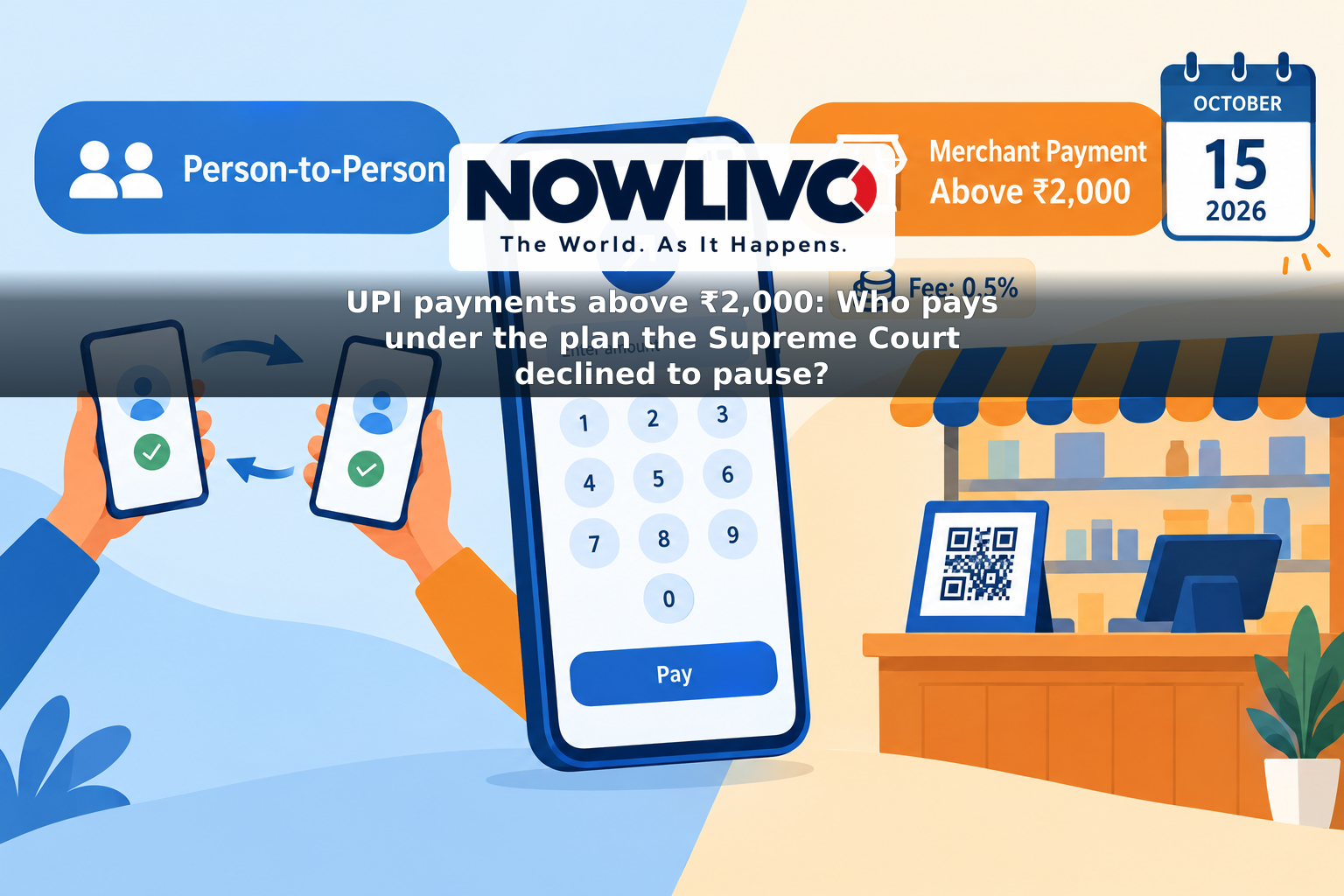
The Supreme Court’s refusal on September 28 to pause India’s new merchant discount rate, or MDR, framework does not mean shoppers will be charged for every UPI payment above ₹2,000. The planned charge applies to specified payments made to merchants, not transfers between individuals, and is scheduled to take effect on October 15, 2026.

The court declined an interim stay while hearing a petition challenging the framework. It sought responses from the Centre, the Reserve Bank of India and other parties. The case remains open: declining to stop a policy before a full hearing is not the same as deciding that the policy is lawful.
Who would pay the charge?
MDR is a payment-processing charge within the merchant payments system. Under the announced framework, the standard rate for an eligible person-to-merchant UPI transaction above ₹2,000 is 0.4% of the payment. That would be ₹20 on an eligible ₹5,000 purchase. For a transaction of ₹75,000 or more, the MDR is capped at ₹300. The proceeds are to be shared among participating payment providers, including banks and UPI app providers; the Finance Ministry says the charge is not a tax collected by the government.
There are important exceptions. Eligible transactions above ₹2,000 in sectors including railways, telecommunications, insurance, fuel and agricultural inputs are assigned a flat ₹5 MDR rather than the standard percentage. Payments involving mutual funds, securities, stockbrokers and dealers have a rate of 0.02%, capped at ₹300. These are charges within the merchant payment system, not amounts a customer is supposed to add to the price at checkout.
Nor does crossing ₹2,000 automatically trigger MDR. Merchant payments of ₹2,000 or less remain at zero MDR. Small merchants receiving up to ₹1 lakh a month through UPI QR codes in the designated person-to-person-merchant, or P2PM, category are also covered by a zero-MDR provision. Whether that exemption applies depends on how the recipient is classified, not simply on whether a shop looks small to a customer.
Will consumers see a higher bill?
Customers are not meant to pay MDR directly. The Finance Ministry says person-to-person UPI transfers remain free regardless of amount, and it has advised banks to ensure merchants do not pass MDR on to customers. It also says UPI app providers may not impose platform fees or hidden charges under the framework. There is no announced monthly quota after which ordinary person-to-person transfers become chargeable.
That distinction matters when reading a payment screen. Sending ₹3,000 to a friend is different from paying ₹3,000 to a merchant classified under the chargeable category. In the second case, the merchant-side payment may attract MDR, but the customer is not supposed to receive a separate MDR charge for using UPI. A buyer who is asked to pay an additional “UPI fee” should distinguish that request from the official policy, which places MDR within the merchant payment system.
There may still be indirect effects. A business facing a new processing cost could try to absorb it, adjust its general prices or steer customers towards another payment method. Those are possible commercial responses, not a new government-imposed fee on shoppers. The petition before the court raises concern that merchants could become less willing to accept UPI for larger purchases despite the stated safeguard against passing on the charge.
What happens next?
The Centre says roughly 96% of merchant UPI transactions will be unaffected, either because they are no more than ₹2,000 or because they qualify for zero-MDR treatment. That estimate concerns the number of merchant transactions; it does not mean all larger purchases are exempt.
The petitioner has challenged the basis and design of the framework. In seeking responses, the Supreme Court raised questions about the nature and legal authority of the charge but did not block its planned start. For now, October 15 remains the operative date, subject to any further government action or court order. The practical question for merchants is whether their transactions fall within a chargeable category; for consumers, it is whether a checkout price changes—not whether UPI itself has become a paid service for everyone.