
What Did Navi Pillay Say After Winning the 2026 Nobel Peace Prize? Her Warning on International Law
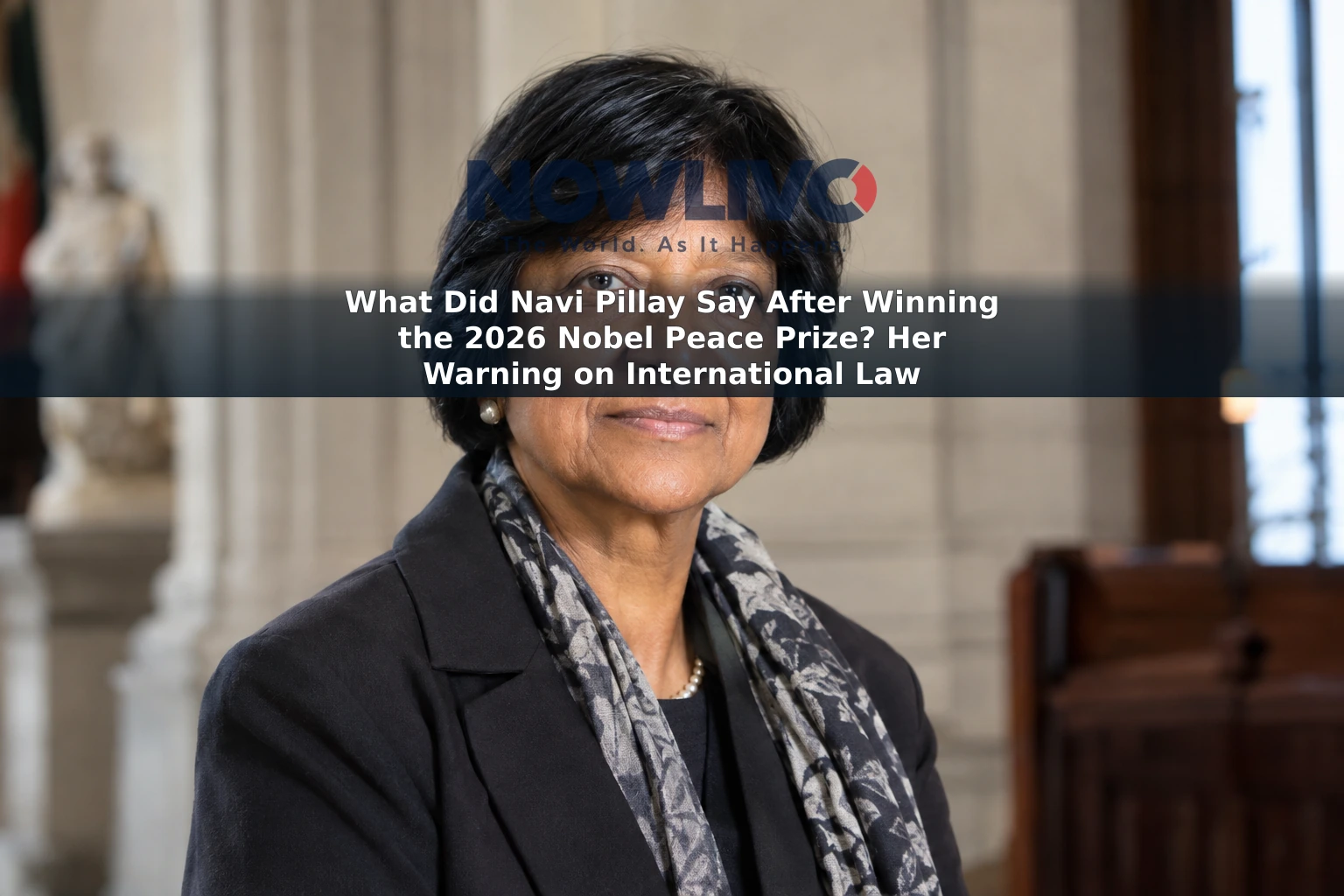
After winning the 2026 Nobel Peace Prize, Navi Pillay dedicated the award to survivors of international crimes and the people working to secure justice for them. In a statement dated October 9, she warned that political attacks on international law and courts could undo decades of progress and return the world to one where power determines whose suffering matters.
The South African jurist called for a united defense of the rule of law, independent courts and legal principles applied consistently. Her response focused less on the honor itself than on the people and institutions she said the prize should help protect.
What was Pillay’s post-award message?
Pillay said she was deeply honored by the award, then dedicated it to survivors and to practitioners and defenders of international justice. She singled out attacks on the International Criminal Court as an especially visible sign of pressure on international law and human rights.
Her central warning was that weakening international criminal justice puts at risk the progress made since the trials of Nazi leaders after World War II. Without credible courts and rules, she argued, the suffering of victims could be treated differently according to the power of those responsible. She urged people to stand together for courts that can act independently and a legal order based on principle rather than selective enforcement.
Pillay was attending the Nuremberg Forum in Germany when the Norwegian Nobel Committee announced its decision on October 9. She learned of the award in Courtroom 600, the historic setting of the Nuremberg trials. In her statement, she reflected on the significance of receiving the news there while warning against losing the legal progress that followed those trials.
Why did international courts feature so prominently?
Pillay’s message drew on institutions where she has worked. She served on the International Criminal Tribunal for Rwanda, later became a judge at the International Criminal Court and was the United Nations High Commissioner for Human Rights from 2008 to 2014. She has also chaired a UN commission of inquiry on the Occupied Palestinian Territory and serves as an ad hoc judge at the International Court of Justice in a case brought by The Gambia against Myanmar.
The two courts have different roles. The International Criminal Court prosecutes individuals accused of the gravest international crimes; the International Court of Justice hears disputes between states. Pillay’s appeal concerned the broader principle behind both: that legal accountability should not depend on political power.
Her comments came on a day when the United States announced sweeping sanctions against the International Criminal Court. The announcement followed the Nobel decision, but Pillay’s written statement addressed attacks on the court generally; it did not describe the newly announced sanctions as the cause of her remarks.
Why did Navi Pillay win the Nobel Peace Prize?
The Norwegian Nobel Committee awarded Pillay the 2026 Peace Prize for her efforts to promote peace and international law. It highlighted her work across national and international courts and her contribution to efforts to hold perpetrators of war crimes, crimes against humanity and genocide accountable.
The committee also emphasized the importance of resolving conflicts through law rather than force. Pillay’s first message as laureate brought that idea back to the people affected by international crimes: she presented the award as recognition not only of legal institutions, but of survivors’ right to be heard and to seek justice.
The prize was announced on October 9; its presentation is scheduled for December 10. Pillay’s remarks were a post-announcement response, not an acceptance speech at the prize ceremony.