Why was Delhi locked down on October 10? Protest detentions, Metro closures and train cancellations explained
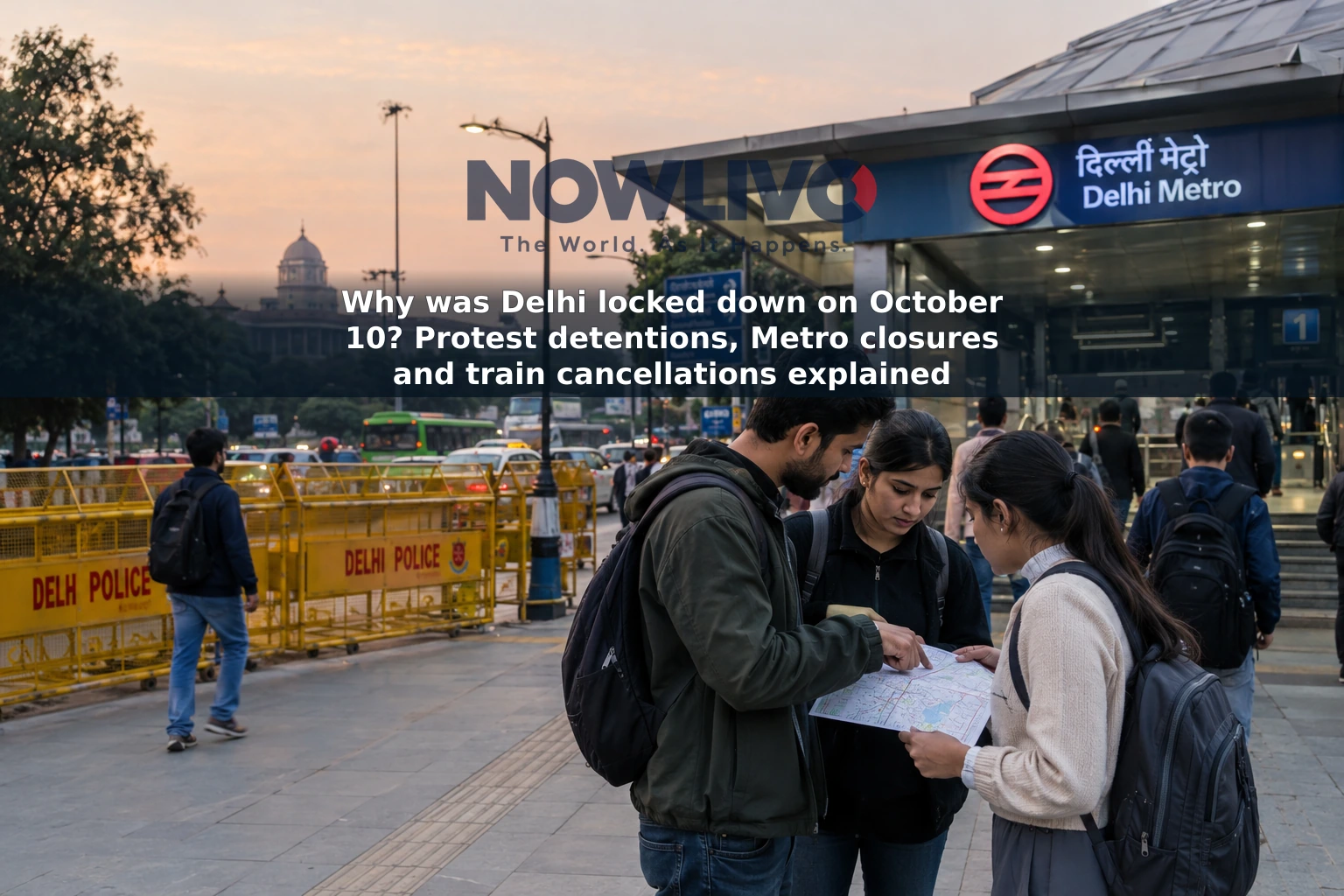
Delhi was not placed under a citywide curfew on October 10, 2026. But extensive security restrictions made parts of the capital difficult to reach or cross. Police sought to prevent a planned protest at Jantar Mantar, detained thousands of people and set up checkpoints. Entry and exit gates at 45 Delhi Metro stations were shut, some trains serving the city were cancelled, and mobile internet was restricted in parts of central Delhi. Those measures affected commuters and other travellers whether or not they intended to join the demonstration.
Why were protesters gathering?
The youth-led group calling itself the Cockroach Janta Party, alongside other activists and opposition supporters, planned to demonstrate at Jantar Mantar. They demanded the resignation of Chief Election Commissioner Gyanesh Kumar over the Election Commission’s Special Intensive Revision of voter lists.
Critics say the revision has wrongly removed eligible voters and allege that it favours Prime Minister Narendra Modi’s Bharatiya Janata Party. The Election Commission and the government deny political manipulation. They say the exercise is intended to remove duplicate and ineligible entries. The protesters’ allegations are disputed; the travel restrictions and detentions are separate, observable parts of the October 10 response.
Why did police detain protesters?
Delhi Police said it had refused permission for the Jantar Mantar gathering because the application was submitted too late. Police also cited concerns about compliance with directions at earlier demonstrations and said restrictions were needed to maintain public order. Organisers rejected the refusal and said they had a right to protest peacefully.
On October 10, officers stopped people travelling toward Jantar Mantar, broke up attempted gatherings and detained protesters, including movement leaders and opposition figures. The Associated Press reported that thousands were detained. Barricades, vehicle searches and police deployments extended beyond the protest venue to routes into the capital. The breadth of that operation helps explain why the disruption was felt well outside Jantar Mantar.
Which Delhi Metro stations were closed?
The final restriction affected entry and exit gates at 45 stations, including Rajiv Chowk, New Delhi, Central Secretariat, Patel Chowk and Kashmere Gate. An earlier announcement referred to 57 stations; the revised 45-station figure describes the gate closures put into effect. This was not a shutdown of the entire Metro network: interchange remained available at affected stations except New Delhi Metro station under the earlier service arrangement.
For passengers, the distinction mattered. A train could still run while someone could not enter or leave at their usual stop. Travellers had to use another station or change their onward route, adding to pressure on roads already subject to checks and diversions. The Delhi Metro announced late on October 10 that entry and exit gates across its network had reopened and interchange access had been restored.
Were trains cancelled, and why was road travel affected?
Yes. Rail authorities cancelled a number of services serving New Delhi and Hazrat Nizamuddin railway stations around the planned protest. The cancellations affected people travelling into or out of Delhi, not just passengers heading to Jantar Mantar. Travellers should check the status of a specific train rather than assume that all rail services were cancelled.
Police checkpoints on routes into the capital and barricades near central Delhi also slowed road travel. Mobile-internet restrictions in parts of the city made it harder for people there to use online journey information or coordinate a change of plans. Businesses around Connaught Place were advised to close, adding to the day’s disruption.
Was the scale of the restrictions challenged?
Yes. On October 9, India’s Supreme Court directed authorities to reconsider broad transport restrictions and ensure public transport was not brought to a complete halt. The following day’s station-gate closures and rail curbs nevertheless became part of the protest response.
Police presented the measures as necessary for security and public order. Protest organisers and opposition figures argued that they were aimed at preventing a lawful demonstration. For everyday travellers, the immediate result was clear: restrictions designed around one planned gathering interrupted access to major stations, rail journeys and roads across a much wider area of Delhi.