Why Was Tahir Hussain Convicted? Delhi Riots Verdict Concerns Dayalpur Rioting, Not Ankit Sharma’s Murder Case
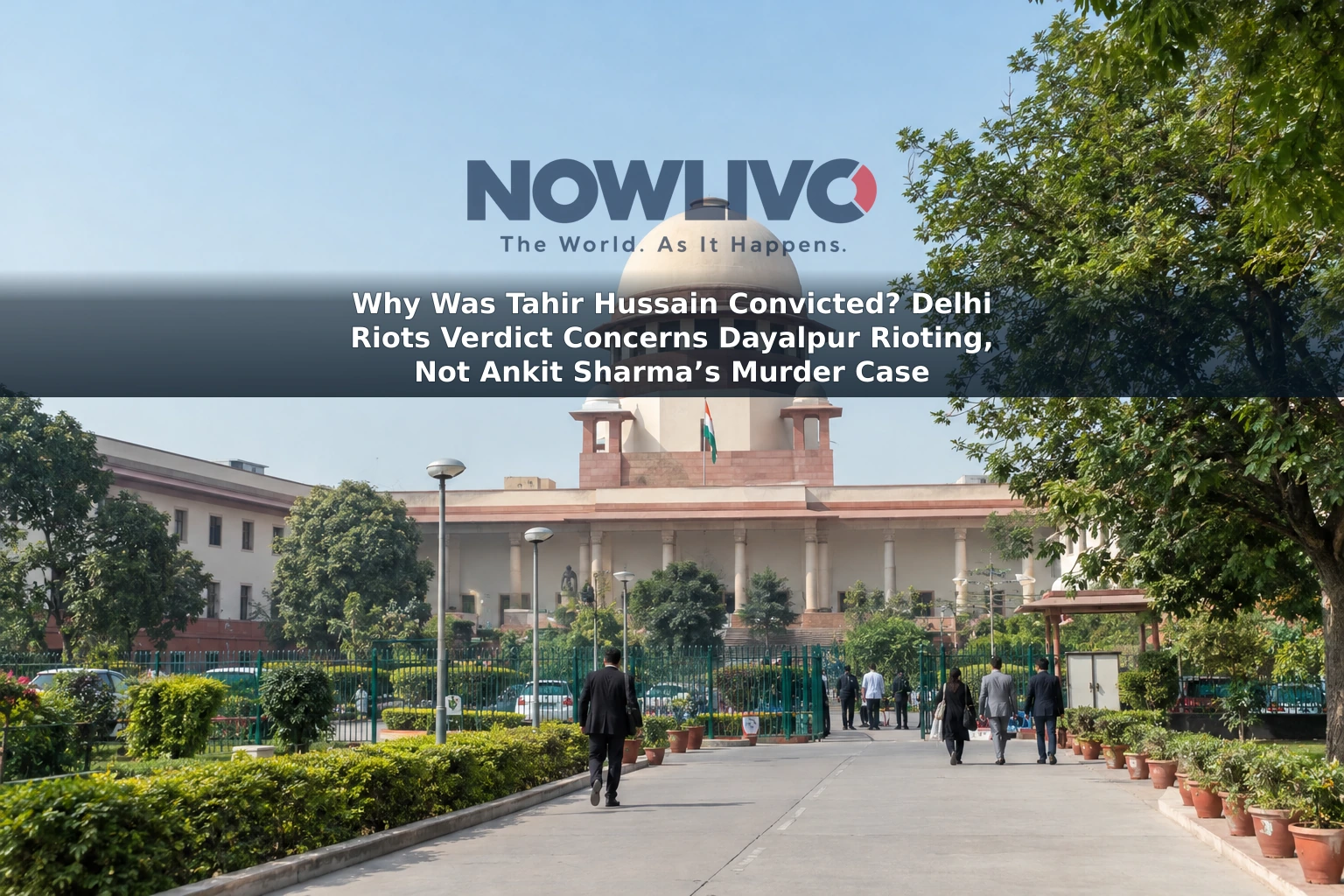
Why was Tahir Hussain convicted on October 10, 2026? A Delhi court found that the former Aam Aadmi Party councillor abetted rioting during the February 2020 violence in Dayalpur by allowing a mob to use the terrace of his building to throw stones. The court convicted him under Section 147, which concerns rioting, read with Section 109, which concerns abetment, of the Indian Penal Code. It acquitted the 12 other accused in the case of all charges.
This verdict concerns violence near Chand Bagh Pulia and Main Karawal Nagar Road on February 24, 2020. It is not a new verdict in the murder case of Intelligence Bureau staffer Ankit Sharma, although both cases arose from the northeast Delhi riots and involve Hussain.
What did the court find in the Dayalpur case?
The prosecution’s case included allegations that rioters looted and burned shops in the area. One complaint led to FIR No. 120 of 2020 at Dayalpur police station. Hussain and the other accused faced charges that included rioting, property damage, arson and criminal conspiracy.
In its October 10 ruling, the court drew a distinction between the rioting it found Hussain had abetted and the attacks on individual shops. It found that a mob gathered on his terrace and threw stones at people and nearby properties. Hussain maintained that the rioters had entered his building by force and that he could not stop them; the court rejected that defence.
The court did not find sufficient evidence to convict Hussain of the other charges against him, including those relating to arson and damage to shops. It also acquitted his 12 co-accused of all charges. The ruling therefore does not mean the court found Hussain guilty of every act alleged in the Dayalpur case, nor does it mean the other accused were convicted alongside him.
Was this the Ankit Sharma case?
No. Hussain’s conviction in the Ankit Sharma case came on July 13, 2026. On July 31, 2026, a court sentenced him and four others to life imprisonment in connection with Sharma’s killing during the riots. That was a separate prosecution from the Dayalpur case decided on October 10.
The distinction matters when reading accounts of the Delhi riots case verdict. The life sentence belongs to the earlier Sharma case; it was not imposed by the court in this latest rioting verdict. Likewise, Hussain’s acquittal on some charges on October 10 does not overturn his conviction in the Sharma case.
What happens after the October 10 verdict?
The court convicted Hussain in the Dayalpur case but did not announce a new sentence with the verdict. Arguments about punishment are to be heard separately. Until that happens, the outcome of this particular case is a conviction for abetment of rioting, an acquittal for Hussain on its remaining charges, and acquittals on all charges for the 12 other accused.
The proceedings stem from the communal violence that swept parts of northeast Delhi in February 2020, killing 53 people. Separate incidents generated separate cases, so a verdict in one cannot be treated as the resolution of every proceeding arising from those riots.