Xi Invites 100,000 Young Americans to China in New Exchange Push
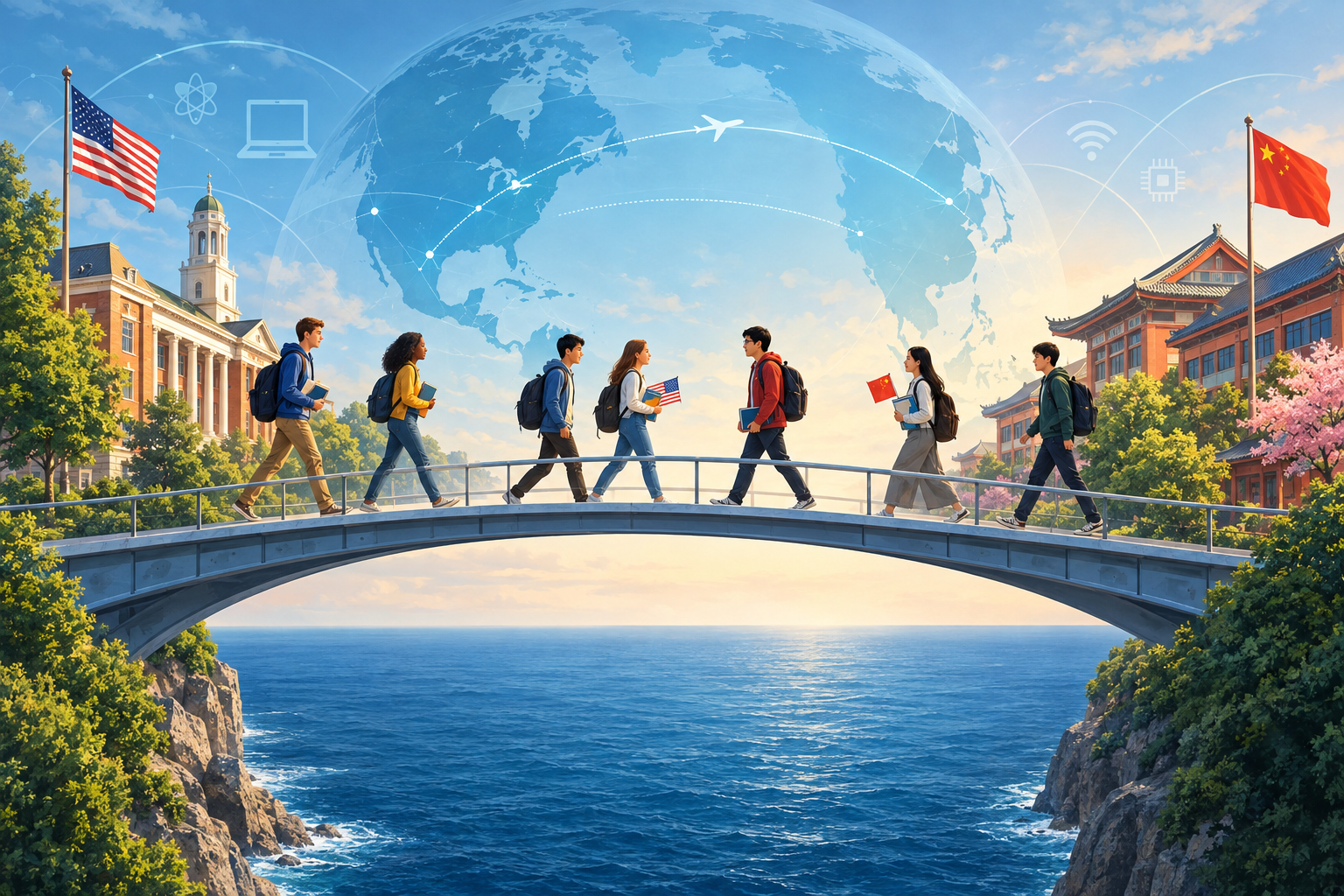
Washington: Chinese President Xi Jinping has announced that China will invite 100,000 young Americans for exchange and study programmes over the next five years, placing youth diplomacy at the centre of his latest effort to stabilise relations with the United States.

Xi made the announcement during the White House arrival ceremony on September 24, 2026, as part of a state visit that continued into September 25. The timing matters because the wider summit with US President Donald Trump was shaped by difficult questions involving trade, artificial intelligence, advanced technology, Taiwan and international security.
Against that backdrop, the invitation offered a concrete and easily understood initiative. Instead of focusing only on tariffs, military risks or strategic competition, it presented direct contact between students and young professionals as a long-term investment in the relationship.
What the invitation could include
The figure does not necessarily mean 100,000 full university scholarships or degree places. China has not yet publicly provided detailed eligibility rules, funding arrangements or a breakdown of the proposed programmes.
Based on the structure of earlier exchanges, participation could cover short educational tours, cultural visits, summer programmes, university exchanges, internships and longer periods of study. Schools, universities, local governments and friendship organisations could all play roles in selecting or hosting participants.
The new target builds on Xi’s November 2023 pledge to invite 50,000 young Americans to China over five years. The Chinese government said in May 2026 that more than 50,000 participants had already travelled under programmes linked to that initiative, reaching the target about two and a half years early. The latest invitation effectively doubles the ambition for the next phase.
A softer message from a hard-power summit
The Washington meetings produced warm public language but no sweeping settlement of the disputes separating the world’s two largest economies. Trump described the relationship in positive terms, while Xi argued that competition should remain controlled and should not become confrontation.
Both leaders supported continued dialogue on artificial intelligence, including its risks and potential misuse. However, sharp differences remained over advanced chips, market access, tariffs, critical minerals and Taiwan. The summit therefore appeared aimed more at managing rivalry and preventing escalation than at delivering a comprehensive reset.
That made the youth proposal one of the visit’s most visible public-facing announcements. For Beijing, it supports the argument that political disagreements should not sever connections between ordinary people. It also gives China an opportunity to present itself directly to a generation of Americans whose views may otherwise be shaped largely by strategic tensions.
Supporters of exchanges argue that firsthand experience can reduce stereotypes, improve language skills and create professional networks able to survive political downturns. Sceptics may question how participants are selected, how programmes are funded and whether tightly organised visits offer an independent view of China. Those concerns will make transparency and academic freedom important tests as the plan develops.
Why India and the wider world should pay attention
For India, the initiative is relevant beyond education. The condition of US-China relations affects global supply chains, technology markets, shipping, energy prices and the strategic balance across the Indo-Pacific. Even a limited reduction in tensions can influence economic and diplomatic choices in New Delhi.
The proposal also demonstrates how major powers use universities, travel and cultural familiarity as instruments of influence. India has its own advantages in English-language education, technology, democratic institutions and a large global diaspora. A sustained Chinese exchange campaign could encourage Indian universities and policymakers to examine whether the country is doing enough to attract international students and build durable youth networks.
Globally, the plan will be watched as a test of whether people-to-people diplomacy can remain open while governments compete over security and technology. Its significance will depend less on the headline number than on implementation: who can participate, what financial support is available, how freely visitors can engage with Chinese society and whether exchanges continue during future political disputes.
The invitation cannot resolve the structural rivalry between Washington and Beijing. It does, however, create a channel through which thousands of young Americans could experience China directly. At a summit dominated by the management of great-power competition, that was a notable attempt to give diplomacy a human and generational dimension.