
Delhi protest detentions: What the Supreme Court ordered and whether Metro stations are open
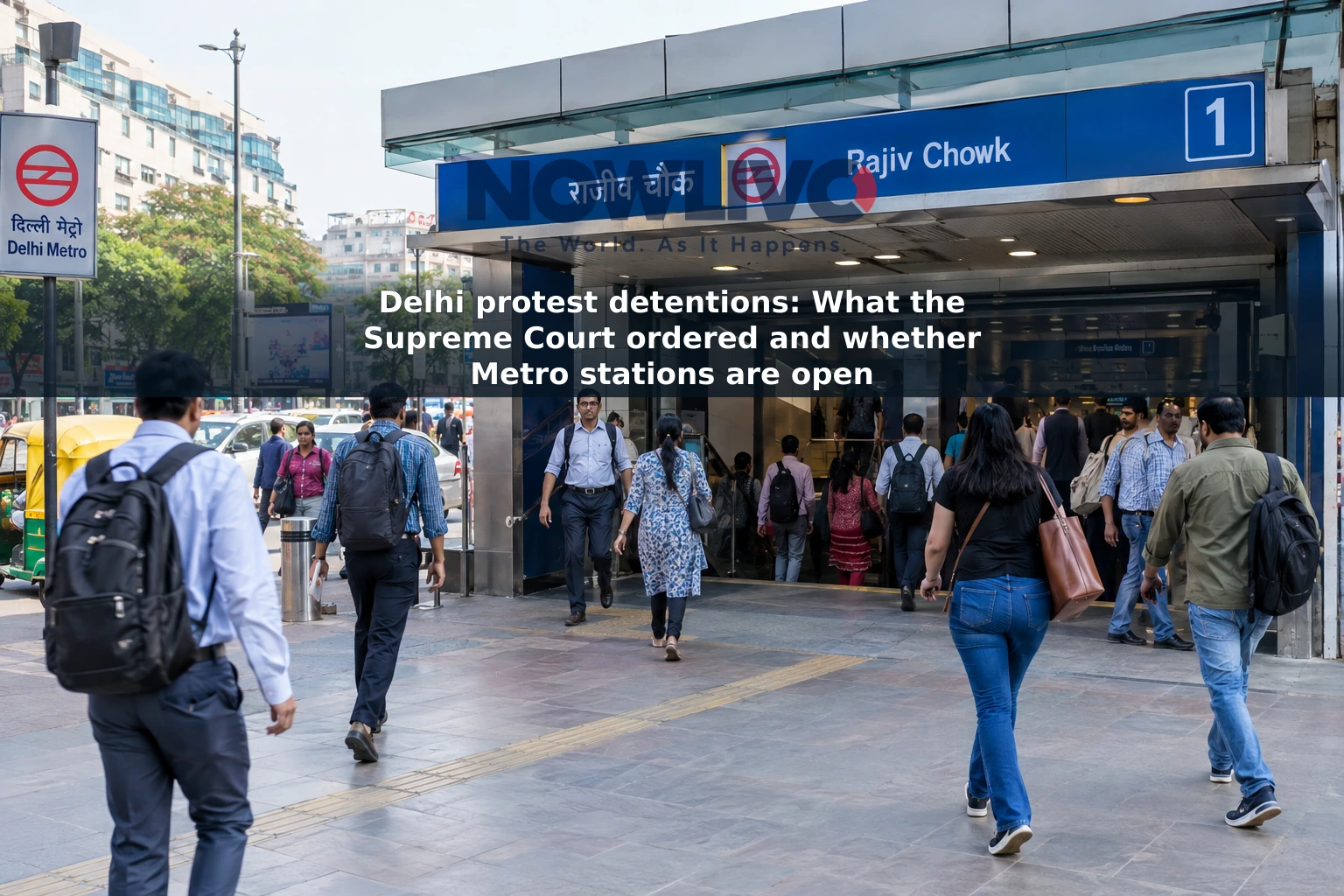
The Supreme Court said on Sunday, October 11, that there must be no illegal detention during the Delhi protests, particularly of people assembling peacefully and without weapons outside areas covered by prohibitory orders. Its interim order also directed that Metro trains and railway facilities function normally, that people be able to move around the city subject to law-and-order and traffic requirements, and that road barricades be reviewed immediately. It did not ban every detention or rule out targeted travel restrictions.
What did the Supreme Court say about Delhi protest detentions?
Justices Joymalya Bagchi and V. Mohana issued the directions at a special sitting after petitions challenged detentions on October 10 and alleged that authorities had disregarded an earlier court order on public transport. The written order says there shall be no illegal detention, with particular emphasis on peaceful, unarmed gatherings beyond areas where restrictions under Section 163 of the Bharatiya Nagarik Suraksha Sanhita are in force.
That distinction matters for protesters: the order protects against unlawful detention, but it is not permission to assemble anywhere regardless of restrictions. Authorities must act within the law, and the court has not yet decided whether the detentions challenged in the petitions were unlawful. The government denied that anyone had been illegally detained and told the court that the people named in one petition had been released.
The bench issued notices in the detention case and in a contempt petition concerning transport restrictions. It found that the contempt petitioners had made a preliminary case requiring a response—not a final finding of contempt—and directed the authorities to file responses and a compliance report by October 13, when the matters are due for further consideration.
Are Delhi Metro stations open, and what changes for commuters?
Delhi Metro Rail Corporation said late on Saturday, October 10, that entry and exit gates at all Metro stations had reopened and interchange facilities were available again. The government told the court on Sunday that all stations had been open since 10 p.m. Saturday, trains were running normally and internet connectivity had been restored.
The Supreme Court directed Metro trains and railway facilities to function normally unless regulation is needed under the constitutional framework for reasonable restrictions. Its order is therefore not a guarantee that every station gate or route will remain accessible at every moment. Commuters heading through central Delhi should check current Delhi Metro Rail Corporation and traffic advisories before travelling, especially if their route passes a demonstration or a security cordon.
For road travel, the bench ordered authorities to review barricades immediately and ensure free movement while accounting for law-and-order conditions and traffic regulations. It also directed that internet facilities function unhindered. These directions address citywide access; they do not eliminate ordinary traffic controls or lawful, specific restrictions.
Why were people detained in Delhi?
Police detained people amid demonstrations planned around Jantar Mantar against Chief Election Commissioner Gyanesh Kumar and the revision of electoral rolls. Organisers and opposition figures sought to protest alleged irregularities; those allegations are not findings made by the Supreme Court in Sunday’s order. Petitions before the bench alleged widespread detentions and restrictions on transport, movement and internet access. The government disputed allegations that it had violated the court’s earlier directions.
The court had already said on October 9 that authorities should reconsider sweeping Metro closures and regulate public transport rather than prohibit it outright. On Sunday, it also directed the removal, if still present, of a notice announcing Section 163 restrictions at the Supreme Court premises so people would not fear being blocked from reaching the courts. Lawyers, journalists and other professionals must not be hindered in carrying out their work, the bench said.
For now, the practical position is clear but conditional: public transport should run normally, movement should not be needlessly blocked, and peaceful people must not be detained illegally. Whether particular detentions or transport curbs breached those requirements remains before the court.