US Cuts Staffing at Four Middle East Embassies Amid Iran Threat Warnings
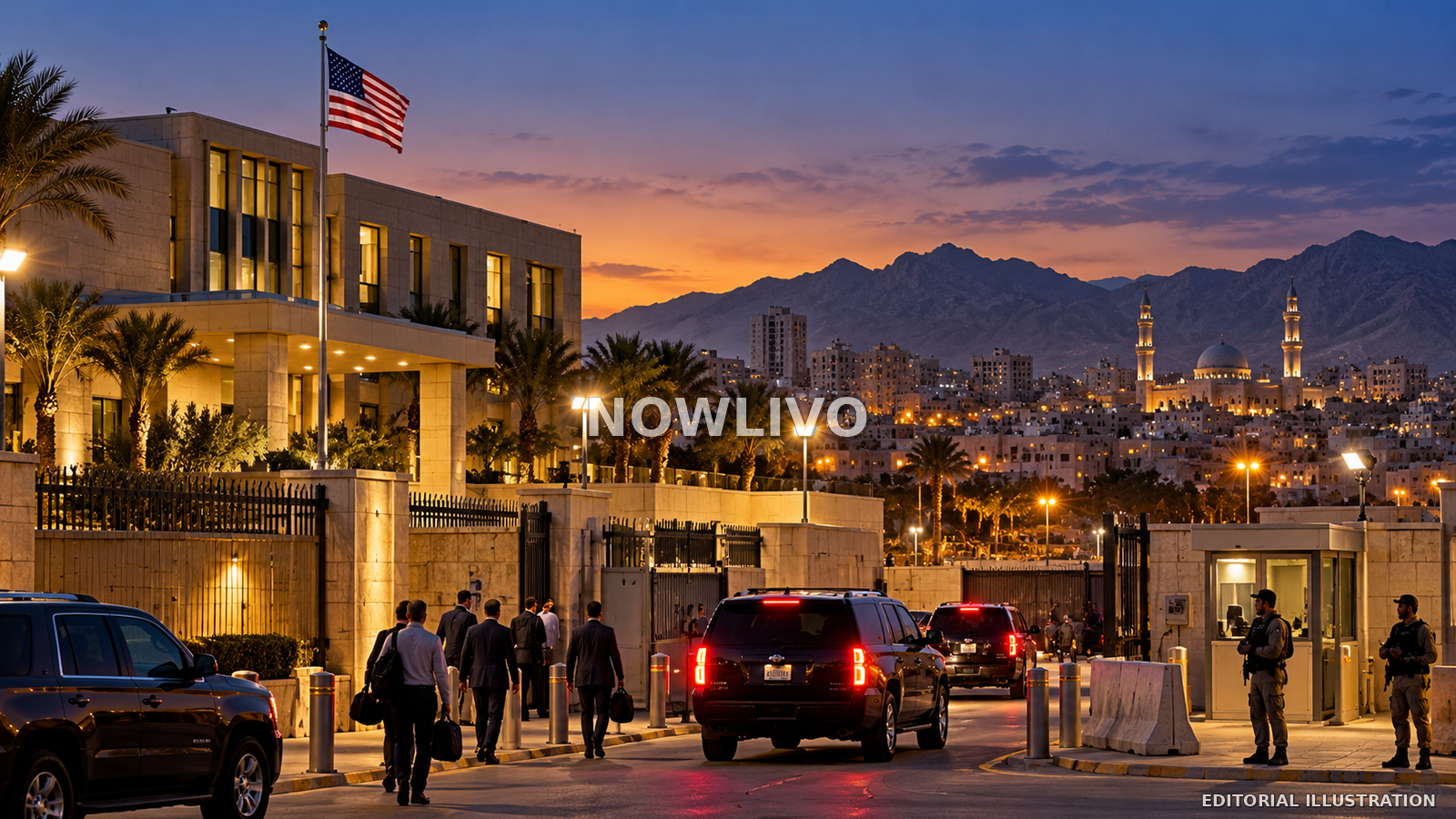
The US State Department is reducing staffing at four Middle Eastern embassies following intelligence warnings that Iran has stepped up efforts to target American personnel, the Associated Press reported. The affected diplomatic posts are in Jordan, Lebanon, Qatar and the United Arab Emirates. The embassies remain open, but operations are being restricted. Officials said the move followed increased threats linked to Iran and Houthi rebels in Yemen. They also denied that the staffing changes were connected to a decision to launch new US or Israeli strikes against Iran, illustrating how governments may adjust security arrangements while trying to avoid signalling a broader military move. The full intelligence behind the decision was not made public in the initial reporting.
Which diplomatic posts are affected
The staffing reductions apply to US embassies in Jordan, Lebanon, Qatar and the United Arab Emirates, according to AP. Officials said the embassies would remain open with restricted operations rather than closing entirely. The change reflects a security posture in which a diplomatic post continues core functions while limiting the number of people exposed to potential threats. A drawdown can reduce staff presence without ending communication with the host government or suspending every consular service.
The action should not be confused with a blanket closure of US missions across the region. The operating status of each embassy can differ, and travel or visa services may be affected by local decisions. People seeking assistance should consult the relevant embassy’s current notice rather than assume all services have been suspended. The practical impact depends on the individual post, the tasks considered essential and whether further security changes are announced.
What prompted the staffing change
The report said Director of National Intelligence Jay Clayton warned Secretary of State Marco Rubio that Iranian plots against US citizens had reached advanced stages in the Middle East and other locations. Officials also cited threats from Iranian-backed Houthi rebels in Yemen. The specific intelligence underlying the warning was not made public in the initial account, which limits what outside observers can independently assess about the threat level at each embassy.
The administration initially cited increased Houthi threats without directly naming Iran in its first explanation, before later officials described Iranian activity as part of the picture. Public statements can reveal only part of a security assessment, especially where officials seek to protect sources or prevent disclosure of operational information. Even so, the government’s explanation matters because it helps Americans understand why staffing is changing and which services or travel plans may be affected.
The difference between a drawdown and ordered departure
The embassies in the four countries remain open under restricted operations. Separately, nonessential staff and their families in Saudi Arabia had been ordered to depart. Those are different measures: a drawdown can reduce exposure while maintaining essential diplomatic functions, whereas an ordered departure removes designated people from a location. The wording of each notice is important for understanding the government’s assessment and what action is expected from personnel.
The distinction also matters for American citizens and employees trying to understand what assistance remains available. Embassy status notices may specify whether routine services, emergency assistance, consular appointments or public events are affected. Instructions can vary by location and by category of personnel. People should avoid assuming that a regional headline represents a uniform policy across all countries, because security conditions and operational decisions are not necessarily identical.
How the regional conflict raises risk
The staffing decisions come during a period of elevated tension involving Iran, Israel, the United States and armed groups operating across the region. The Strait of Hormuz is a strategic passage for commercial shipping, and Iran’s Revolutionary Guard has threatened US military bases over American assistance to shipping traffic. Threats to diplomatic personnel sit alongside broader concerns about energy routes, maritime access and regional military activity.
Officials are trying to manage immediate risks while diplomatic efforts to restart formal talks remain stalled. President Donald Trump has suggested further military action unless Tehran agrees to negotiations, while administration officials have denied that the embassy drawdowns are tied to a specific decision to strike. These statements should be reported separately: a warning about possible action is not an announcement that an operation has been authorised. The embassy move is a security measure; its broader political significance remains uncertain.
What the public has not been told
The initial reports did not provide a detailed breakdown of the alleged plots, the specific intelligence indicators or the expected duration of the staffing restrictions. Those gaps make it difficult to assess the level of threat at each post. It would be speculative to assign a particular planned attack or incident to any one embassy without additional confirmation from officials or other credible evidence.
Security briefings often protect operational details, but the public can still expect basic information about services, safety guidance and how citizens should obtain assistance. Clear communication can prevent rumours and help people avoid unnecessary travel to an embassy that is operating on reduced capacity. If officials update the restrictions, the important questions include which staff categories are affected, whether appointments will be rescheduled and how emergency communications will continue.
Implications for Americans in the region
US citizens may need to check travel advisories, register contact details where appropriate and pay attention to instructions from the local embassy. People with upcoming appointments should confirm whether services are available before travelling. In a fast-changing security situation, advice can change with little notice, and a previously valid itinerary may no longer be advisable. The government’s notices provide more relevant direction than speculation about what a staffing change might mean.
The drawdown does not automatically mean all Americans should leave the four countries. Travel decisions depend on the advisory for each destination, personal circumstances and any official departure instruction. A careful approach is to follow location-specific guidance and avoid treating social-media rumours as a replacement for government notices. Families of staff may also need clear information about relocation timing, support arrangements and the status of essential embassy functions.
What happens next
The next developments to watch are updated embassy notices, any further staff departures, changes to travel advisories and public statements from US or regional officials. If the threat assessment changes, staffing levels may be revised again. The initial reports did not establish that a new military strike was imminent, and the government explicitly denied that the embassy changes were tied to such a decision.
For now, the clear facts are that four embassies are reducing staffing, they remain open under restricted operations and officials cite increased threats to American personnel. The precise intelligence and future duration of the measures remain undisclosed. The practical guidance for travellers and residents is to rely on location-specific embassy notices and to separate verified safety instructions from broader speculation about the next stage of the regional conflict.