India and Azerbaijan Seek Diplomatic Reset After Operation Sindoor Tensions
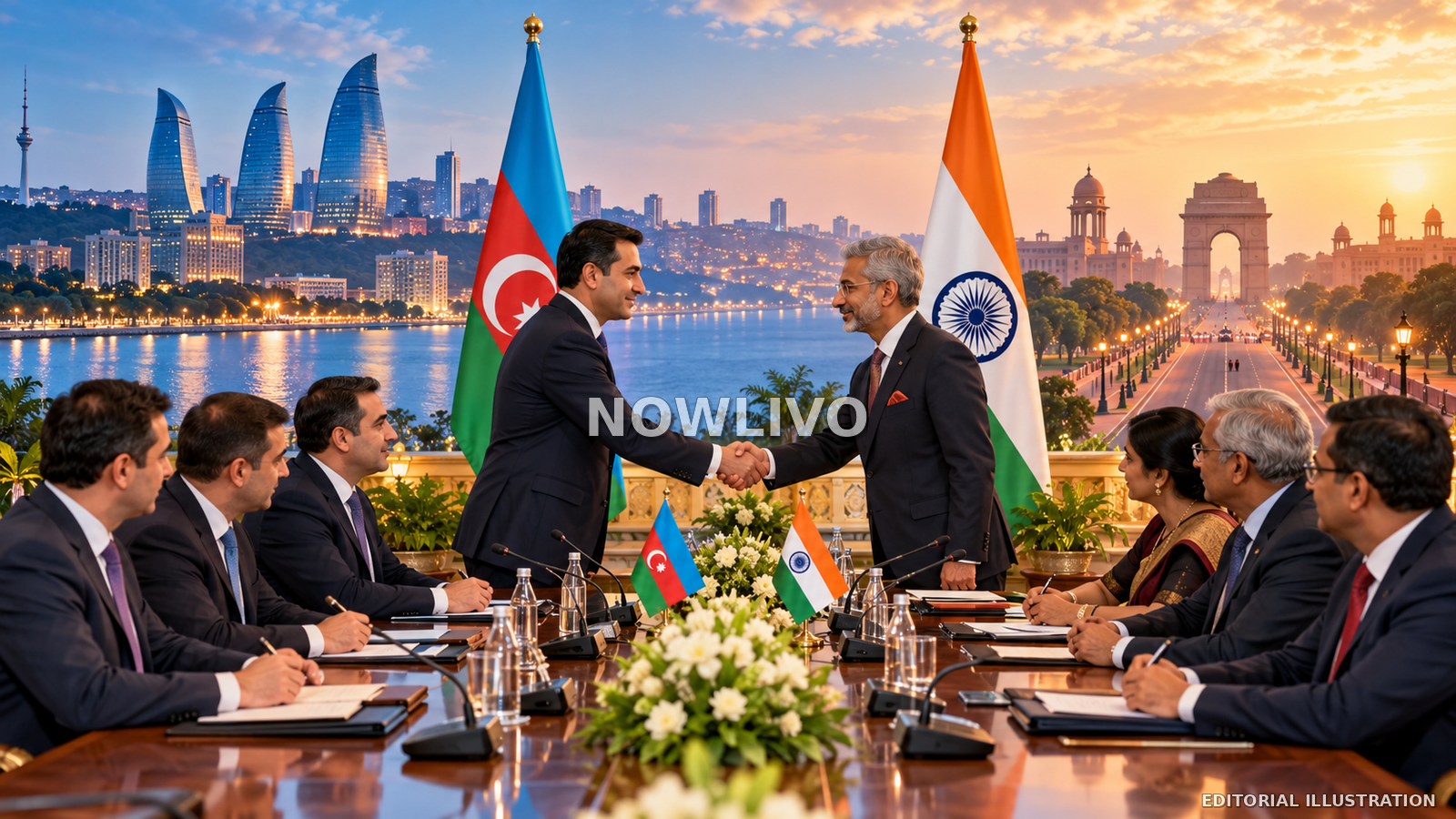
India and Azerbaijan are seeking to rebuild bilateral ties after relations deteriorated over Baku’s alignment with Pakistan during the period surrounding Operation Sindoor. External Affairs Minister S. Jaishankar visited Baku on October 23 and met Azerbaijani Foreign Minister Jeyhun Bayramov and President Ilham Aliyev, describing his discussions with Bayramov as productive. The sides signalled interest in expanding cooperation in energy, trade, investment and connectivity. The visit does not erase the policy differences that strained relations, but it creates a diplomatic channel for both countries to pursue practical interests while discussing regional security and wider geopolitical developments. The durability of the reset will depend on what follows after the meetings.
Why the relationship cooled
Relations between India and Azerbaijan became more strained after Azerbaijan expressed support for Pakistan during the period surrounding Operation Sindoor. India’s defence relationship with Armenia has also been part of the regional context. Those positions touched on strategic alignments in a region where security, military partnerships and transport routes often intersect, making bilateral sentiment more vulnerable to events beyond direct trade or consular issues.
Diplomatic disagreements do not necessarily stop every form of engagement, but they can weaken political trust and make public statements more pointed. Jaishankar’s visit signals an effort to work through the disagreement without claiming the two governments now see every regional issue in the same way. The language of a reset suggests a deliberate attempt to restore room for dialogue. It is a step toward managing differences, not proof that those differences have disappeared.
What the Baku talks covered
Jaishankar said the talks addressed energy and economic cooperation, including trade and investment. The sides also discussed connectivity and the importance of coordination on the International North-South Transport Corridor, which links routes between India, Iran, the Caucasus and markets further north. The corridor aims to diversify cargo movement and can become more attractive when businesses seek alternatives to established maritime routes.
Connectivity initiatives take time because they depend on ports, railways, customs rules, border procedures, insurance and political stability across multiple jurisdictions. A diplomatic statement is an opening step, not proof that trade volumes will rise immediately. The visit’s value will depend on whether both governments turn broad language into working groups, business exchanges, practical agreements or clear project timelines. Those follow-up steps matter more to long-term commerce than a single high-level meeting.
Energy and trade as practical starting points
Energy is a natural area of interest for both countries, and Jaishankar said the two sides discussed expanding cooperation in that sector. Trade and investment provide additional opportunities where companies can evaluate commercial projects separately from differences in foreign policy. The ministers also indicated there was scope to broaden bilateral business engagement, suggesting that economic contacts are one way to put the relationship on a more practical footing.
Governments can make progress by identifying areas where interests align, such as energy supply, transport corridors, investment, business exchanges and professional training. Concrete projects require predictable rules and an environment in which companies can assess political risks. If the reset remains mostly symbolic, it will have limited commercial impact; if it produces clear channels for businesses, the relationship may become more resilient when disagreements arise elsewhere.
The International North-South Transport Corridor
The International North-South Transport Corridor is intended to connect India with Iran, the Caspian region, Azerbaijan and other markets through combined maritime, rail and road links. Its attractiveness depends on cost, transit times, customs coordination and the ability to move goods reliably across borders. Improved diplomatic contact can help address administrative friction that no single company can solve on its own.
Regional conflict and sanctions can complicate investment decisions and insurance arrangements. Governments may support a route in principle while businesses remain cautious about whether it is commercially dependable. The talks therefore matter most if they lead to practical coordination on transit rules, infrastructure gaps and predictable treatment of goods moving through the corridor. A transport proposal becomes commercially meaningful only when firms can use it with reasonable confidence about time, cost and compliance.
The people-to-people dimension
Jaishankar thanked Azerbaijan for helping Indian nationals, particularly students, evacuate from Iran during conflict earlier in the year. That acknowledgement shows that bilateral relations are not limited to political declarations or major infrastructure projects. Consular assistance, student exchanges, tourism and professional mobility can be direct points of contact between governments and citizens, offering a practical basis for cooperation when strategic issues are difficult.
The minister also suggested Azerbaijan could send more professionals to India through the Indian Technical and Economic Cooperation programme. Training opportunities can build institutional links and give both sides a more tangible reason to maintain contact. Education and technical exchanges are not substitutes for resolving policy disagreements, but they can preserve relationships while governments address difficult questions. Such initiatives also give the public a clearer understanding of what a bilateral relationship provides beyond official visits.
Regional security and wider diplomacy
The ministers discussed international developments across the Middle East, Europe and Eurasia. Jaishankar welcomed the August peace agreement between Azerbaijan and Armenia and expressed hope that it would lead to durable peace. India’s stated preference for resolving disputes through dialogue provides a framework for its diplomatic engagement, although outcomes depend on choices by the parties directly involved and on whether commitments are carried out in practice.
Azerbaijan’s location places it near several regions experiencing geopolitical competition. India also has interests in energy security, transport connections and the safety of its citizens abroad. A working relationship can allow the two countries to exchange views even where their positions diverge. The challenge is to keep channels open without suggesting that a bilateral meeting has settled regional disputes or guarantees that future tensions will not affect the relationship again.
What happens next
The governments have identified energy, trade, investment, connectivity and professional exchanges as areas for potential progress. The next signs to watch are announced working groups, additional visits, business agreements or practical steps to improve corridor coordination. A visit alone is not evidence that previously strained ties have fully recovered, and official descriptions of productive talks do not establish that every issue has been resolved.
The diplomatic challenge is to make cooperation more resilient while accepting that India and Azerbaijan may continue to differ on relationships with neighbouring states. The Baku meetings provide a route to manage those differences and focus on shared interests. Whether that route becomes a durable reset will be measured by what both governments do next, including whether new projects advance and whether the two sides can maintain dialogue when regional pressure rises again.