White House Says Melania Trump Helped Broker Local Ukraine Ceasefire for Aid
The White House says Melania Trump helped broker a local ceasefire between Russia and Ukraine to allow humanitarian aid deliveries and civilian evacuations from Oleshky, a Russian-occupied city in Ukraine’s southern Kherson region. The agreement was announced on Friday and was expected to begin Tuesday, lasting several days. Ukrainian and Russian negotiators, with US involvement, agreed to a limited arrangement focused on relief and safe passage rather than a general halt to the war. Ukrainian negotiator Dmytro Lubinets described implementation as difficult but potentially important for future humanitarian operations. The announcement provides an opening for aid, but it is not proof that the pause has begun or that all conditions will be respected on the ground.
What the limited ceasefire is meant to do
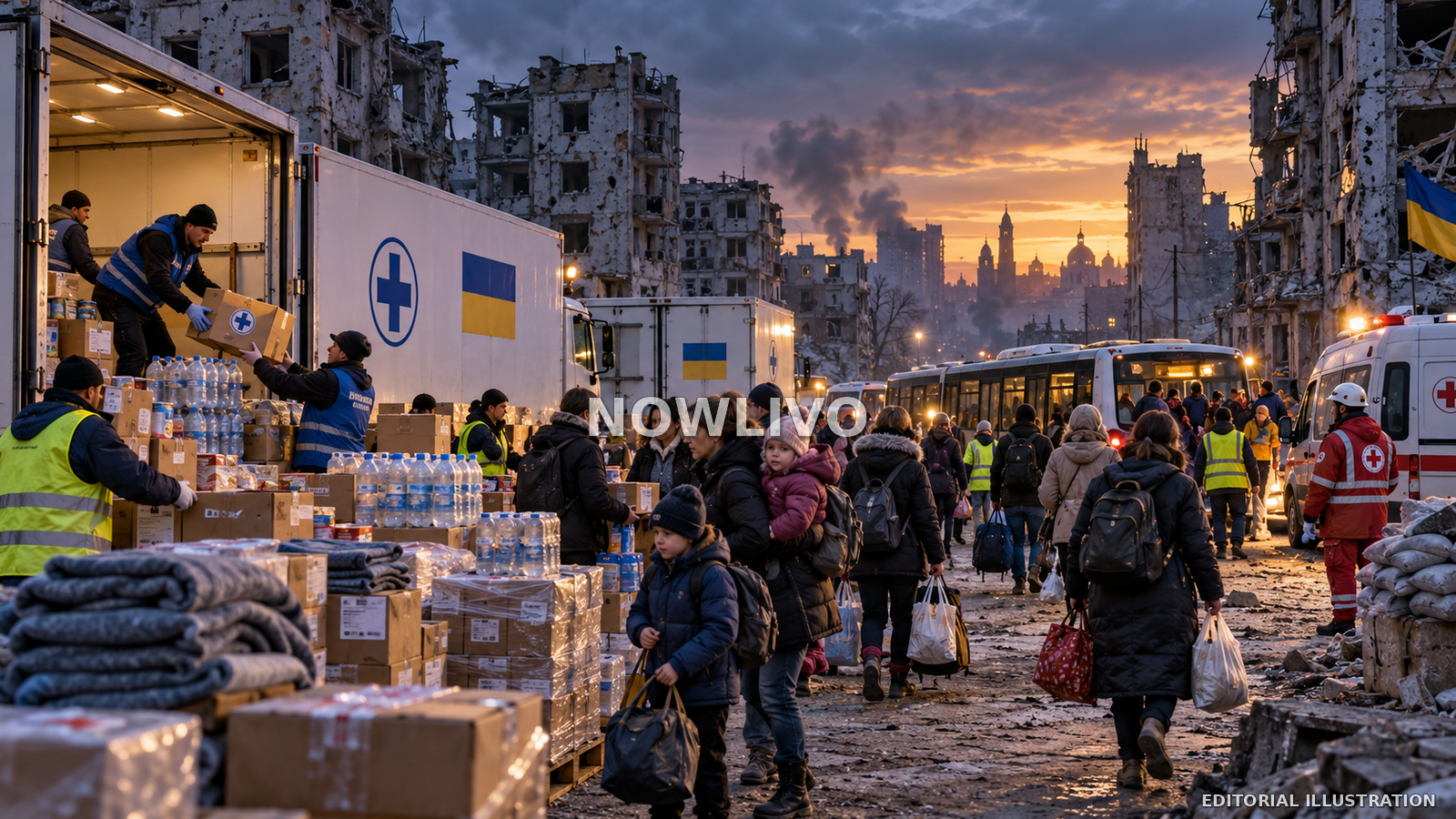
The plan calls for mine clearance followed by the delivery of food, medicine, hygiene supplies and other essentials. It also provides for the evacuation of civilians who want to leave. The sequence matters because aid vehicles and buses cannot move safely if routes remain mined or if parties do not agree on where convoys may travel. Humanitarian pauses depend on practical rules as much as political statements, including which roads are open, who communicates with local units and when movements can take place.
The announcement describes a local and time-limited arrangement, not a ceasefire across the entire front. Its success depends on whether forces on the ground follow the agreed conditions, whether humanitarian teams can reach the area and whether civilians can travel without being exposed to renewed fighting. The plan will need practical coordination at checkpoints and along designated routes. A pause can help even if it does not resolve the war’s larger questions, but it should be measured by what actually happens to people.
Why Oleshky needs humanitarian access
Oleshky has faced severe conditions during the war, including shortages of food and medical supplies, interruptions to electricity, heating and running water, and continuing danger from hostilities. The city has been under Russian occupation since early in the invasion. It was further affected by flooding after the 2023 Kakhovka Dam collapse, which damaged settlements and altered living conditions across parts of the region. Residents may need both urgent supplies and a safe way to leave if they choose to do so.
A humanitarian pause can create a narrow opportunity to move supplies and people, but it cannot by itself rebuild infrastructure or resolve the city’s political status. Residents may need sustained access to medicine, shelter, water and communications after the initial convoy passes. Relief agencies will also need to assess how many people remain and which forms of support are most urgent. The value of the agreement is immediate and practical, even if wider diplomatic negotiations remain stalled.
Melania Trump’s reported role
The White House said the first lady initiated discussions in September after reports of a worsening humanitarian crisis in the city. The administration credited those contacts with helping bring Ukrainian, Russian and US negotiators toward an arrangement. The role is notable because first ladies do not usually lead formal military negotiations, although humanitarian advocacy and direct communications can sometimes open channels that governments then develop through official talks.
The public record still matters. The White House’s description should be attributed to the administration, and it does not mean Melania Trump alone negotiated every military detail. The agreement involved negotiators from the governments concerned, whose responsibilities include defining the area, duration, access procedures and conditions for safe passage. The practical terms, and whether the parties uphold them, will determine the outcome more than the identity of any single facilitator.
Russia and Ukraine’s stated commitments
Russian officials confirmed the agreement and pledged to facilitate safe passage for humanitarian convoys. Ukrainian negotiator Lubinets described implementation as challenging. Those statements indicate that both sides acknowledged a limited arrangement, but the most meaningful test will be whether the promised access occurs and civilians can reach safety. A public announcement is not a substitute for monitoring movements or confirming which areas have been cleared.
In previous conflicts, humanitarian pauses have depended on specific maps, timing, communications and local command discipline. A failure to agree on operational details can leave aid workers unsure which route is safe or whether a convoy will be allowed through. That is why the technical terms—not simply the announcement—will determine whether the pause helps people. Independent accounts of convoy movements and civilian departures would help establish how well the agreement was implemented.
Why mine clearance comes first
Mines and unexploded ordnance can remain dangerous long after front lines shift. A route that appears open may still be unsafe for trucks, ambulances or families on foot. The reported plan places mine clearance before relief deliveries, reducing the risk that the operation itself creates more casualties. Mine clearance is often slow and technically demanding, especially when markings are missing or fighting has damaged roads and buildings.
The parties will need to identify which routes are to be cleared, coordinate who performs the work and communicate when a section is safe enough to use. Even after clearance, aid workers may need to reassess conditions as the operation proceeds. Humanitarian teams also need reliable information about checkpoints, local security and the location of civilians who want to leave. Without these arrangements, an agreed pause can fail to translate into safe access.
The broader diplomatic context
The local deal comes amid continuing efforts to restart broader negotiations and rising tensions over military assistance and the terms of any end to the war. A small humanitarian agreement can show that the sides are able to coordinate on a limited practical task, but it does not settle larger disputes over territory, security guarantees or the future political status of occupied areas. Those issues require separate political decisions and broader negotiations.
UN Secretary-General António Guterres welcomed the initiative and expressed hope that it could support wider peace efforts. Such support reflects the humanitarian value of a workable pause, while leaving the larger diplomatic process unresolved. A local arrangement can still be useful if it saves lives and creates a pattern of cooperation for future missions. But it should not be described as a breakthrough in the overall war unless there is evidence of wider agreements and sustained compliance.
What happens next
The key date in the initial announcement was Tuesday, when the local ceasefire was expected to begin. Subsequent updates should clarify whether the pause started as planned, how many civilians were evacuated, what assistance was delivered and whether the arrangement lasted for the promised days. The status of the operation should not be inferred from the announcement alone; implementation is the relevant test.
For civilians in Oleshky, the immediate value is the possibility of safer access to necessities and a chance to leave. The broader political meaning will depend on results. If the arrangement holds, it could provide a practical model for other limited humanitarian missions; if it fails, the reasons will matter for future efforts. The best assessment will focus on the safety of residents, the delivery of aid and what both sides did to uphold their commitments.